What Is Flag Day?
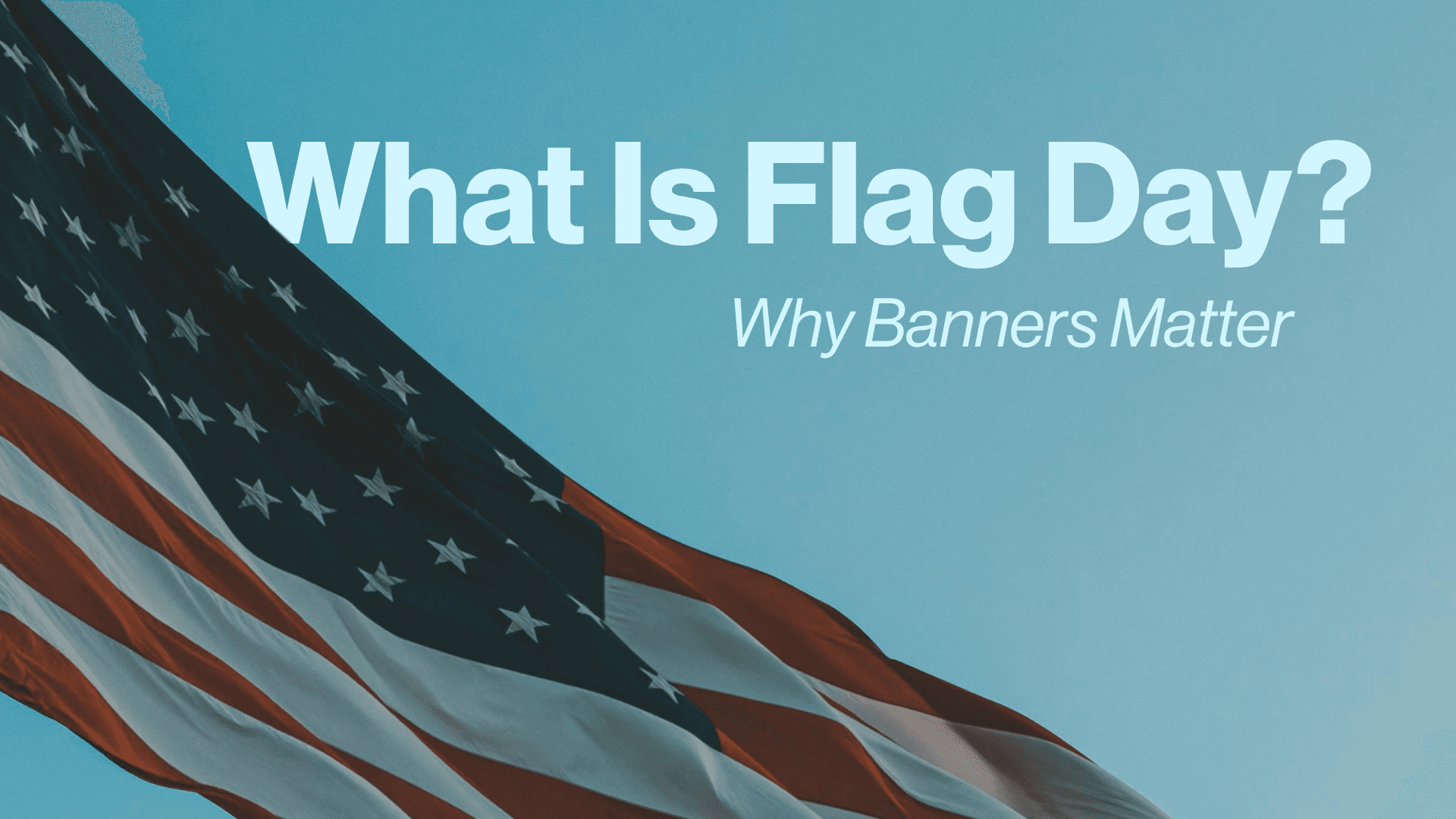
On June 14th, 1777, during the Second Continental Congress, the United States officially adopted its flag. The Flag Resolution said “that the flag of the thirteen United States be thirteen stripes, alternate red and white; that the union be thirteen stars, white in a blue field, representing a new constellation.”
Flag Day is celebrated in honor of this resolution. The holiday was first proposed in 1861 in efforts to gain support for the Union side of the Civil War. In 1916, President Woodrow Wilson officially proclaimed June 14 as Flag Day.
The Significance of the American Flag
The American flag was originally designed for military use, as a way of identifying U.S. ships and forts. It eventually came to represent the Union in the American Civil War. After Union victory, the flag was adopted as the national flag.
The American flag is a symbol of freedom. Each element is intentionally designed and holds unique significance: the 13 red and white stripes represent the 13 original colonies; the 50 white stars represent the 50 states that make up our country. The red stripes stand for valor and bravery; the white stripes stand for purity and innocence, and the blue background stands for vigilance, perseverance, and justice.
Why Banners Matter to the Christian
On the surface, a flag or a banner is just a piece of cloth that has no power in itself. But what it represents is much more significant. A flag can unite people, serve as the rallying symbol of a group endeavor, or stir people to action for a specific cause.
But banners have great biblical significance as well. In Exodus chapter 17, the Israelite army, with Joshua at its head, is at war with the Amalekite army. Moses, his brother Aaron, and a man named Hur are standing at the top of a hill, observing and praying over the battle. Whenever Moses lifts God’s staff in the air, Israel prevails over Amalek. But when he lowers the staff, Amalek prevails over Israel. So Aaron and Hur find a rock for him to sit on. They lift his arms for him when he gets tired. With their support, Moses is able to keep the staff raised until the sun goes down, and Joshua and the Israelites defeat the Amalekite army.
After the battle is over, God speaks to Moses. He says, “‘Write this down on a scroll as a permanent reminder, and read it aloud to Joshua: I will erase the memory of Amalek from under heaven’” (Exodus 17:14 NLT). Moses builds an altar there and names it “Jehovah Nissi, The LORD Is My Banner,” because God delivered the Israelites from defeat (17:15 NLT).
In this story, God’s banner represents His power and victory in every battle, and, more broadly, His eternal victory over death.
And in Song of Solomon 2:4, we see God’s banner displayed in another way: “He brought me to the banqueting house, and his banner over me was love” (ESV). In context, this verse is referring to a bride and groom delighting in and declaring their love for each other in anticipation of their wedding night. More broadly, it’s a picture of Christ (the groom) declaring His love for and devotion to His Church (the bride). It’s a beautiful representation of the comfort, security, and safety we have in Jesus.