
Micah Fiechter was visiting his family in December 2024 when his father, a longtime pastor, looked up from the laptop where he was preparing his next sermon.
He needed help.
Could Micah find a way to put the fourth chapter of First John to music? There was just one condition. He couldn't change the words.
It seemed like a small request. And for Micah, the answer was simple.
"Your dad asks for something, you do it," he tells K-LOVE news.
But when that song played during his father's Sunday service, Micah experienced something he hadn't anticipated.
As the congregation listened and followed the Scripture on the screen, a question began stirring in his heart.
"What would it look like if the entire Word of God was sung for the world?"
That question would change the direction of his life.
And eventually, it would bring him together with Michael Blanton, the legendary Christian music executive who helped shape the careers of Amy Grant, Michael W. Smith, and Rich Mullins.
One man had the vision. The other had decades of experience bringing music to the world.
Together, they would discover that sometimes God brings different generations together to accomplish something neither could do alone.
Join K-LOVE's Crystal Thornton for a conversation with The Music Bible founder Micah Fiechter and executive producer Michael Blanton in our podcast below.
A Pastor's Son Discovers His Own Faith
When he was seven, his family moved from Indiana to Florida to plant a church. His father continues to pastor that same congregation.
Church was part of practically everything Micah knew.
But being raised in a Christian home didn't automatically mean he had developed a personal relationship with Jesus.
That changed when he was 16.
"The Lord really showed me my identity in Christ and that I was His despite my performance or despite anything I could do for Him," Micah recalls.
He began to understand that God's love wasn't something he had to earn.
That realization transformed his faith and eventually led him to Moody Bible Institute in Chicago, where he earned a degree in biblical studies.
Still, Micah didn't expect to spend his career developing a new way to share Scripture.
He loved business, sales, technology, and building teams.
He had helped develop software projects as a teenager, organized large-scale radio drama productions while in college, and pursued business opportunities.
He assumed his future would involve using those talents in the business world.
But looking back, he sees how those seemingly unrelated experiences prepared him for an assignment he hadn't yet imagined.
"All of that, I feel like, has been layered on, layered on, layered on," he says.
When the opportunity to put Scripture to music arrived, he suddenly found himself drawing on years of experience assembling teams, solving problems, and turning ambitious ideas into reality.
There was just one unusual detail.
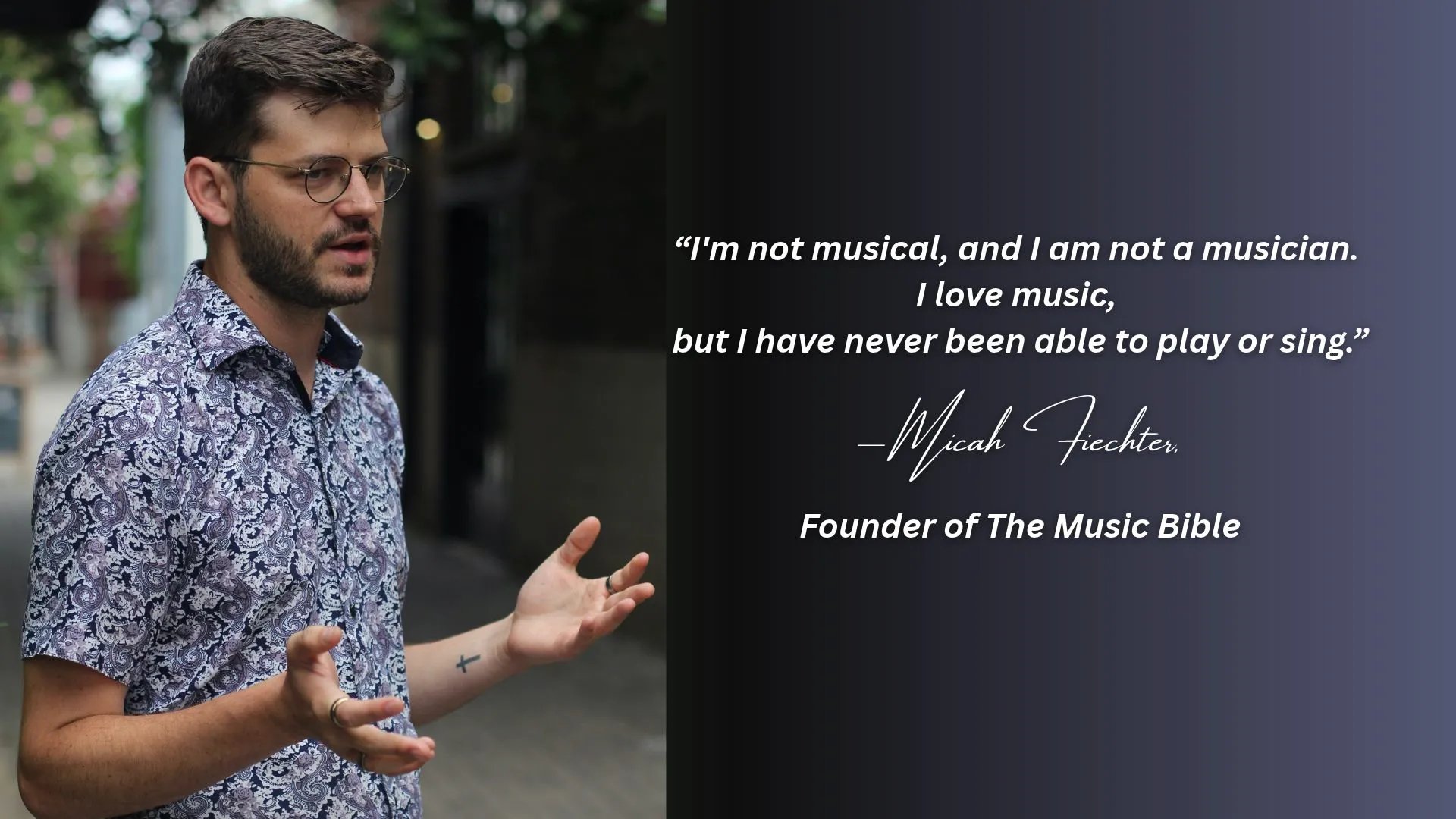
Micah wasn't a musician.
"I'm not musical, and I am not a musician," he readily admits. "I love music, but I have never been able to play or sing."
What he did possess was a vision, a love for God's Word, and the ability to bring gifted people together.
The project quickly grew beyond the single chapter Micah's father had requested.
Micah began exploring how artificial intelligence could help transform the words of Scripture into music while preserving the biblical text.
His goal was not to rewrite the Bible or create new lyrics inspired by its teachings.
He wanted people to hear the words themselves, chapter by chapter, book by book.
And he wanted them to hear those words in musical styles they already loved.
Country. Jazz. Hip-hop. Rock. Worship. Choir.
What began as a sermon illustration developed into The Music Bible, an ambitious project designed to make the entire 66-book Protestant Bible available through song in multiple genres.
But building it wasn't easy.
While working a full-time job in Chicago, Micah spent evenings and weekends assembling the team and developing the project.
He remembers commuting an hour to work, then returning home to continue building the vision.
There were questions about how everything would come together.
Yet Micah says the size of the assignment never frightened him as much as figuring out how to accomplish it.
"I felt like from day one, that Sunday, I felt like the Lord put a seed in my heart of you're going to put the entire Word of God into song."
By the time of his interviews with K-LOVE, the project had grown to include a 72-person team working across 11 countries.
Micah says every song undergoes human review to ensure that the biblical wording is preserved and the finished music meets quality standards.
The technology may help generate the songs, but people remain responsible for reviewing and refining them.
"There's something about the soul of the artist and the soul of the human revision process that AI will never, I don't ever believe, will be able to replace," Micah explains.
The project uses the New American Standard Bible under license, with its team reviewing the songs to preserve the sequence and wording of Scripture.
And as the vision expanded, Micah encountered someone whose experience could help take it even further.
A Christian Music Pioneer Finds An Unexpected New Chapter
Michael Blanton has spent decades recognizing the potential of music.
As a co-founder of Reunion Records, he helped shape the careers of artists whose songs became part of Christian music history.
He remembers Michael W. Smith bringing him the song "Friends," and the decision to use it to help launch Smith's recording career rather than offer it to Amy Grant.
He remembers Rich Mullins arriving with a cassette recording of "Awesome God."
Blanton recognized its potential immediately, even though he questioned whether congregations would sing some of the lyrics.
Mullins stood by his words.
The song would become one of Christian music's most beloved worship anthems.
But after decades of success, Blanton understood that the industry was changing.
"Typically the music business, you age out," he tells Thornton. "The older you get, they kind of move you on down the road and say, 'Good luck. God bless.'"
He continued mentoring artists and developing new ideas, but he wasn't expecting his next major opportunity to come through an entrepreneur creating Scripture songs with artificial intelligence.
Then he met Micah.
"When I first heard it, Crystal, I literally fell out," Blanton recalls. "I was so surprised at the quality of the music."
He was astonished that biblical passages could be presented musically while maintaining their original sequence.
But beyond the innovation, he recognized something familiar in Micah: the vision and determination of someone who believed deeply in what he was creating.
Blanton saw an opportunity to use his experience in service of a new generation.
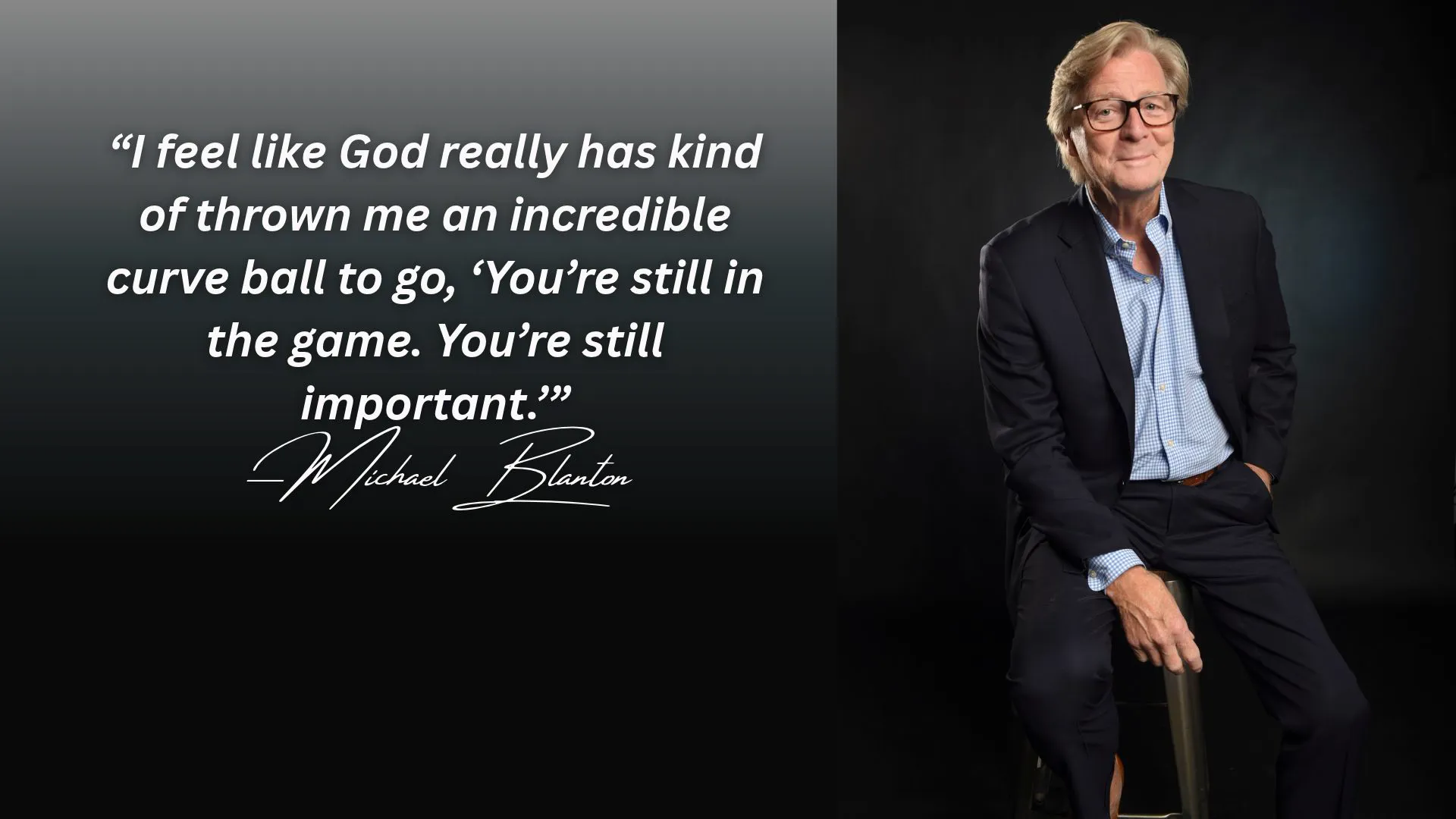
"I feel like God really has kind of thrown me an incredible curve ball," he says. "'You're still in the game. You're still important.'"
He joined The Music Bible as executive producer.
For Micah, the partnership brought more than musical expertise.
It brought mentorship.
"I can bring the young energy, the technology, the team to make it actually happen," Micah explains. "But Michael, he actually can give it depth and he can give it reach."
Blanton is equally enthusiastic about the younger man's leadership.
"He's a visionary for how to make something really come alive," he says.
Their relationship has also opened discussions about involving established recording artists in singing Scripture themselves.
Micah says invitations have already been extended to more than 30 artists.
For Blanton, the opportunity is especially meaningful because his spiritual foundation was established long before his music industry success.
His mentor, Nashville pastor Don Finto, encouraged him to remain rooted in God's Word.
"You never want to get out of this, the Word of God," Blanton remembers him saying.
Now, after decades of helping musicians communicate faith through songs, Blanton is helping bring the actual words of Scripture to listeners through music.
And he sees God's hand in the timing.

The Stories Behind The Songs
For Micah and Michael, the real measure of success isn't the number of songs produced or the size of the team.
It's what happens when people listen.
Micah remembers meeting a man during a run and introducing him to The Music Bible.
A few days later, the man sent him a photograph of his daughter dancing.
Every night before bed, father and daughter had started dancing together to Scripture set to music.
"Those testimonies are what success looks like for Music Bible," Micah says.
Other families have shared similar experiences.
One woman wrote to describe how playing Scripture songs throughout her home had changed the way her family engaged with God's Word.
"We hear it, sing it, remember it, and talk about it," she wrote, according to Micah.
But her greatest encouragement was seeing what she described as a change in her husband's relationship with God.
"I have watched this app help bring my husband closer to God, and that alone means more to me than I could possibly put into an email."
Another mother reported that her daughter, who had struggled to fall asleep, began listening to The Music Bible at bedtime.
According to the mother, her daughter eventually memorized more than 100 Bible verses simply through listening.
For Micah, those stories are reminders of why he began the project.
And for Michael, they affirm the value of making Scripture accessible through musical styles that connect with different listeners.
He remembers a man telling him he believed the entire Bible should be in hip-hop.
"I love hip-hop. It's like literally God speaking," the man told him.
Blanton was delighted.
"I'm thrilled that you found that niche and it's speaking to you like that," he remembers responding.
The two men may have different backgrounds, but they agree on the heart of the mission.
The music is a means of helping people encounter God's Word, not an end in itself.
The Scripture That Brought Micah To Tears
For Micah, spending so much time with Scripture has also changed his own spiritual life.
One passage in particular has stayed with him: John 11, the account of Jesus raising Lazarus from the dead.
He has read it many times.
But hearing the story presented through jazz, with orchestral accompaniment, affected him in a way he hadn't experienced before.
"Scripture and music like that hits you in a different way and it gets into your soul in a different way," he explains.
The passage reminds him of the compassion of Jesus, who wept with Mary and Martha before raising their brother.
"There's something so human in Christ in that story that has always meant a lot to me," Micah says.
Michael finds himself returning repeatedly to another familiar passage: Genesis 1.
He enjoys introducing people to the opening chapter of the Bible in one musical genre, then switching to another so they can hear the same words in a completely different way.
For him, the experience demonstrates how music can invite people to listen more closely to words they may have heard all their lives.
As the project grows, the team is looking beyond English.
Micah says three complete Spanish-language musical Bibles have been produced, with teams based in Guatemala, Cuba, and Mexico.
Plans also include developing Scripture songs in languages such as Mandarin, Hindi, and Urdu, working with local teams to preserve both the biblical text and culturally appropriate musical styles.
The goal is ambitious: help more people experience Scripture in the languages and musical traditions familiar to them.
Two Generations, One Purpose
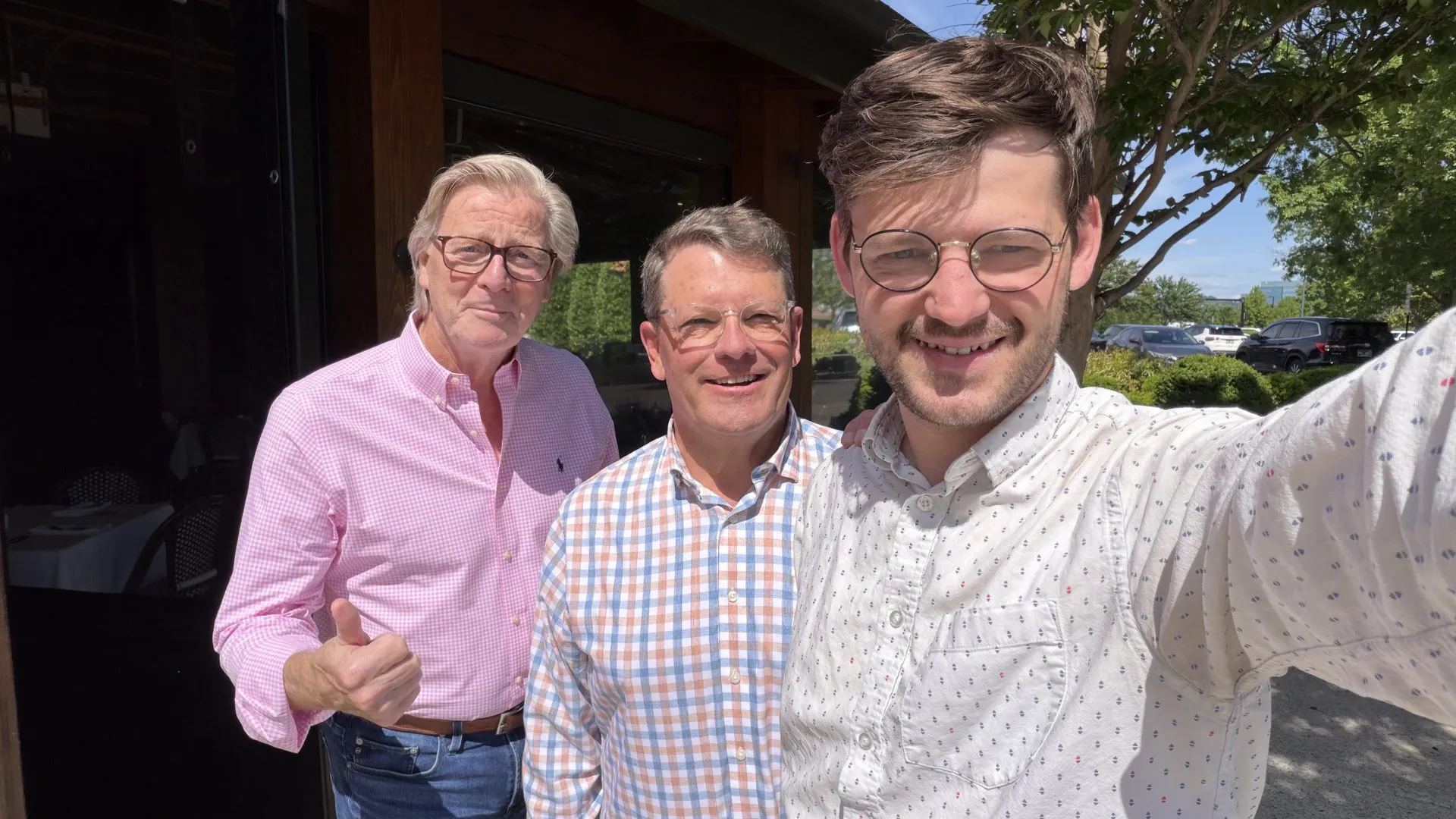
Alongside Executive Director Joe Pringle, Micah Fiechter and Michael Blanton are helping lead a growing team dedicated to making Scripture accessible through music.
As The Music Bible prepares a Bible-in-a-year listening plan for 2027, Micah and Michael hope more people will discover opportunities to engage with Scripture throughout their daily routines.
Whether someone listens while driving, exercising, spending time with family, or preparing for bed, the invitation is the same.
Open your heart to God's Word.
But beneath the technology, the musical genres, and the global ambition is another story.
A father asked his son for help with a sermon.
A young man said yes, not knowing where that simple act of obedience might lead.
And a seasoned music executive, who might have wondered whether his greatest professional contributions were behind him, discovered another opportunity to use the gifts and experience God had given him.
Neither man could have built this partnership alone.
And both say the experience has strengthened their faith.
"Through all of this, God has really shown me to not doubt what He can do with my simple 'yes,'" Micah reflects.
"My faith has increased."
For Michael, the lesson is equally profound.
His desire remains to point people toward the heart of God.
"If they will pursue the heart of God, no matter where they are in their struggles," he says, they will learn to trust Him because they know His heart.
One man discovered that a small act of obedience could become a calling far greater than he imagined. The other discovered that a lifetime of experience could prepare him for an entirely new assignment.
And together, Micah Fiechter and Michael Blanton are working to help people discover something that has endured through every generation: the power of God's Word to speak to the human heart.
Experience The Music Bible
The Music Bible is available as a free app for iOS and Android. Search for “Music Bible” in your phone's app store or visit TheMusicBible.org to explore Scripture set to music in genres ranging from worship and country to jazz and hip-hop.
As founder Micah Fiechter explains, “We will never charge for the Bible. We will never gatekeep the Bible behind a paywall.”