
When Russ Ewell's first son, Jonathan, was born, a doctor said something that would shape the way Russ saw his son and eventually thousands of other people living with disabilities.
Jonathan had Down syndrome, something Russ and his wife, Gail, had not known before his birth.
Russ admits he knew virtually nothing about Down syndrome at the time. But a geneticist at Children's National Hospital helped him understand something important.
"You have a baby that happens to have Down syndrome," the doctor told him. "You don't have a Down syndrome baby."
The distinction was simple, but profound.
Jonathan was a child first.
Several years later, Russ and Gail's second son, Jordan, began losing speech he had previously developed. He would eventually be diagnosed with autism.
Suddenly, a family that had not planned to enter the disability community found itself learning how to navigate a world that was not always designed to include their sons.
And somewhere along the way, Russ says God began changing him too.
Listen to Crystal Thornton’s full conversation with Russ Ewell in the podcast below.
His Son's Taught Him What Love Really Means. God Used The Lesson To Change Thousands Of Lives.
When There Wasn't a Place, They Made One
One of the family's first challenges appeared in a place where Russ believed belonging should have been natural: church.
The children's ministry they attended simply wasn't equipped to meet Jonathan's needs.
Rather than accept that their son would always have to be separated from other children, Russ and Gail helped establish a ministry in 1996 that brought children with disabilities into the same classrooms and activities as neurotypical children.
It was an early lesson in the difference between simply making accommodations for someone and truly including them.
The lesson followed Russ onto the playing field.
When Jonathan was around eight years old, Russ wanted him to experience something he had loved growing up in Michigan: playing sports while family and friends gathered on the sidelines.
Russ found a baseball program for children with disabilities. He appreciated what the program offered, but after several games, he looked at Jonathan in the rearview mirror on the drive home and realized something was still missing.
His son was playing sports, but he wasn't playing alongside the friends he already knew.
Russ began wondering whether there was another way.
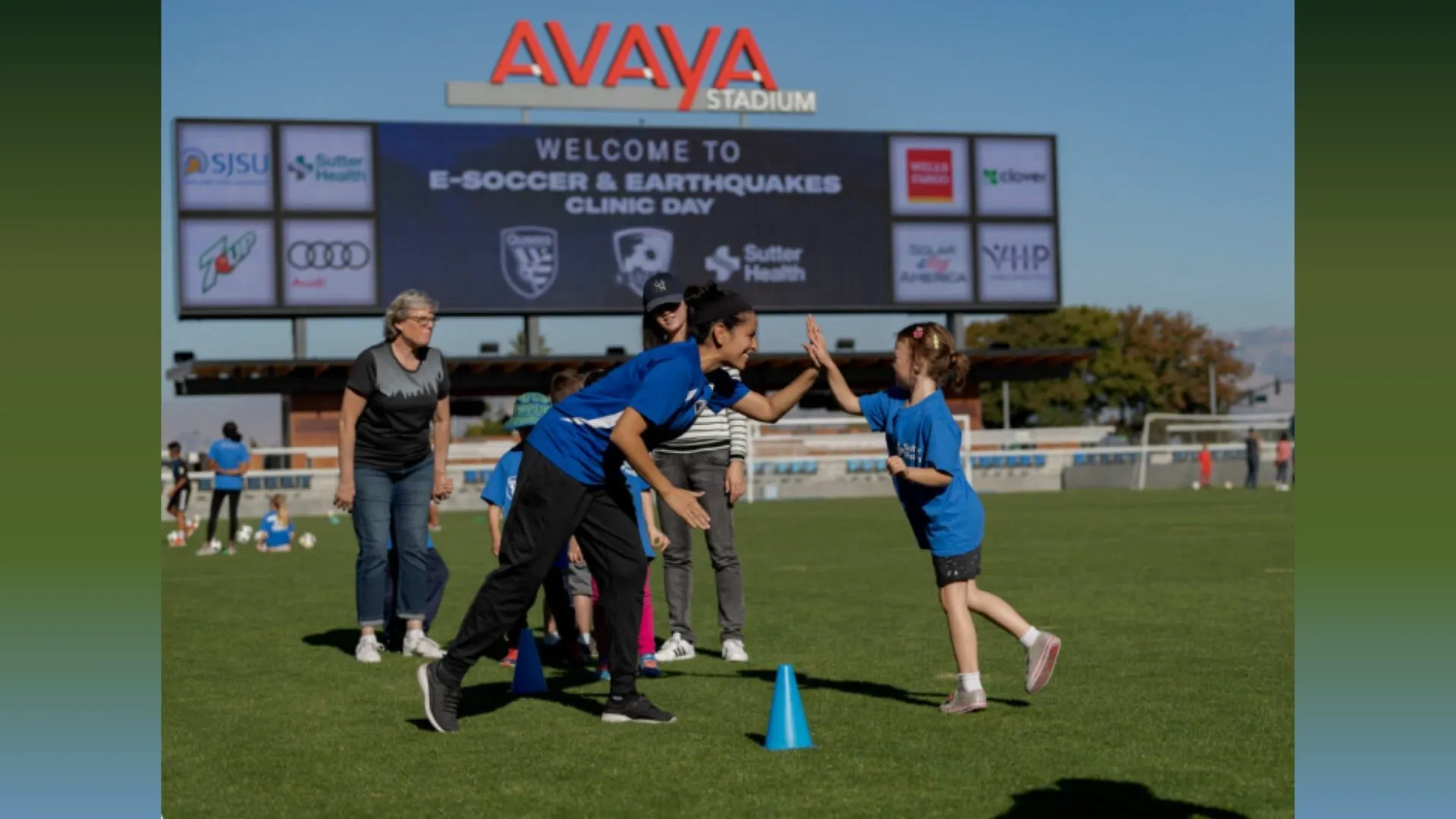
Soon, a small inclusive soccer program was born across the street from the Ewell family's home. It started with roughly eight children with special needs, eight neurotypical children and a group of adult coaches.
There was nothing glamorous about it. Russ even remembers clearing goose droppings from the field before they could play.
But something much bigger than soccer was taking root.
That small gathering eventually grew into what is now known as eLife, with dozens of programs and hundreds of volunteers throughout the San Francisco Bay Area.
Children who might never have met became teammates.
Teammates became friends.
And some of those friendships lasted for decades.
Russ recalls watching his son later stand beside childhood friends as a groomsman in their weddings.
Another young man named Larry entered the family's church ministry having never spoken a word. Russ says Larry eventually spoke his first words there, later graduated from San Jose State University and even received an opportunity to appear on local television pursuing his dream of becoming a sportscaster.
For Russ, those moments reveal what inclusion can become when people stop looking at differences as reasons for separation.
A Movement, Not a Program
What started with eight kids and a few coaches on a field across the street from Russ's house has grown into something far bigger than one family's soccer program.
eLife now runs 28 programs with 500 volunteers across the Bay Area, reaching children and adults through sports, recreation and community.
And Russ believes the need is far greater than many people realize.
He points to an estimated 70 million Americans living with a significant disability and approximately 1.3 billion people worldwide.
For Russ, those numbers make one thing clear: inclusion isn't a niche concern.
It is a human one.
The growth of eLife has also caught the attention of organizations throughout the Bay Area. The San Jose Earthquakes have hosted training sessions and welcomed eLife families to games. The Golden State Warriors have invited eLife basketball teams to play at halftime and dance groups to perform outside the stadium. Universities have also opened their doors to programs.
But for Russ, the bigger accomplishment isn't how many organizations have become involved.
It's what happens when people with and without disabilities begin truly knowing one another.
He believes those relationships teach something increasingly valuable in a world shaped by technology: empathy, emotional awareness, compassion and the ability to understand another person beyond words.
That same desire to remove barriers has also led Russ into assistive technology designed to help people with communication challenges and their families.
Different tools. Different settings.
But the mission remains the same.
Make room.
Help people communicate.
Help people belong.
"Living Like Jesus"
Russ has spent decades in ministry, but he says the motivation behind this work goes deeper than programs, sports, schools or technology.
It comes back to Jesus.
"If I hadn't become a Christian so many years ago, I definitely wouldn't be doing this," he told K-LOVE.
Russ points to Acts 10:38 and the description of Jesus going about "doing good." It helped shape a philosophy at Bay Area Christian Church that Russ describes simply as making God known and doing good.
Their eLife programs don't require participants to attend the church or share its beliefs.
Instead, Russ says the goal is to serve.
"This is all about us allowing the light of Christ to shine out of us in service to the community to make people's lives better."
Eventually, Russ realized following Jesus isn't only about telling people who He is.
It's also about becoming more like Him.
"It's not just about trying to get people to know Jesus," Russ said. "It's getting them to live like Him, and eLife is about living like Jesus."
The Lesson His Sons Taught Him
For decades, Russ had measured life in terms many of us understand.
Talent.
Achievement.
Success.
Even after entering ministry, he admits it could become about the ability to grow a church or preach a great sermon.
Then Jonathan and Jordan changed the equation.
"What I learned is it's your ability to love a human being," Russ said. "That's the power."
His sons were not necessarily going to accomplish the things Russ once assumed his children would accomplish. Their lives would follow a different path.
And God used that difference to teach their father something seminary, ministry and preaching never could.
"This is what love is about," Russ said. "Being able to love someone for who they are, not what you think they ought to be, what you think they should have been."
That lesson became the foundation for much of what Russ and Gail would spend their lives building.
And Russ makes it clear that Gail has been central to the mission from the beginning.
She researched ways to help their sons learn and thrive when they were young, and later helped create a culture of inclusion through Hope Technology School.
Russ remembers once telling Gail that another parent wanted her child to join their small soccer gathering, but he didn't think they had the capacity to take on anyone else.
Her response was direct.
"You can't do that."
What had begun as parents trying to create opportunities for their own children suddenly became something larger.
They would make room for someone else's child too.
The Question Every Parent Eventually Asks
As Jonathan and Jordan grew older, another concern began weighing on Russ.
What happens to my children when I'm no longer here?
He remembers beginning to think seriously about it when Jonathan was only around 10 years old.
As the years passed, the questions became even more personal.
Who would know the details of their lives?
Who would understand what they needed?
Who would know how to care for them?
And perhaps most importantly, who would make sure they weren't simply cared for, but surrounded by people who knew and loved them?
That question is now behind the family's vision for Beacon of Hope Village, a proposed inclusive residential community where adults with special needs could live alongside college students and senior adults, building relationships while experiencing greater independence and belonging.
Russ doesn't simply envision housing.
He envisions community.
Because after all these years, belonging may be the lesson he understands most deeply.
"The Belonging I Have Is the Belonging to God"
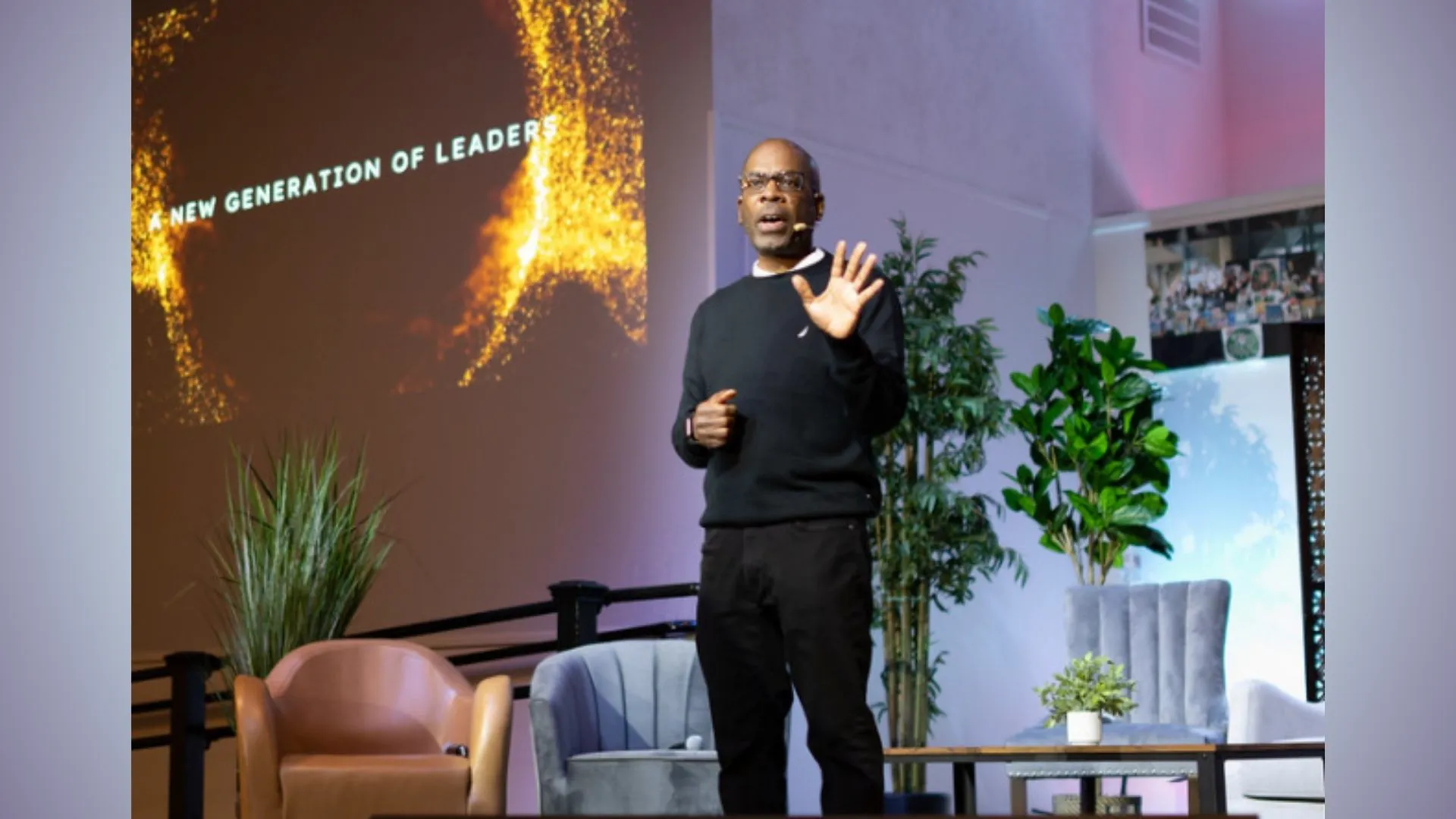
Russ once found himself preparing to make a presentation at a major technology company.
He was nervous.
Then he remembered why he was there.
He wasn't there simply to talk about something he had built.
He was there to advocate for people whose voices are often overlooked.
Suddenly, his own insecurities didn't seem nearly as important.
"The belonging I have is the belonging to God," Russ said.
That realization has stayed with him.
"God's got me on a mission," he said. "What my kids have taught me is even though they can't speak up for themselves, God's got them. And I realized God's got me."
It is a message that extends far beyond disability.
Whatever our strengths.
Whatever our limitations.
Whatever other people think we should be.
Our worth isn't determined by what we achieve or how easily we fit into the world around us.
We belong to God.
A Life With Purpose
Russ knows his sons may never fully understand everything their lives have inspired.
Children and families far beyond California have benefited from ideas, programs and resources that trace their beginnings back to two boys named Jonathan and Jordan.
And if Russ could make certain his sons understood one thing, it would be that God has used their lives for a purpose.
Russ is careful not to claim that God caused their disabilities.
But he has no doubt God has used them.
He believes there may someday come a moment, in the presence of Jesus, when his sons finally understand the reach of what God accomplished through their lives.
Children found friends.
Parents found community.
Churches learned to make room.
People who once saw disability from a distance learned to see the person first.
And one father learned that perhaps the greatest measure of a life isn't talent, accomplishment or recognition.
It's love.
Sometimes a God Story begins not when God removes what makes someone different, but when He opens our eyes to see purpose where the world might only see limitation.
For Russ Ewell, two sons changed his understanding of success, ministry and even himself.
And through Jonathan and Jordan, God is still teaching others a beautifully simple truth:
Everyone deserves a place to belong. And ultimately, our deepest belonging is found in Him.