
Listen to the full interview with Cody Walker, Lead Pastor of Hope City Church, Joplin, Missouri
May 22, 2011, was a dark day in the history of Joplin, Missouri.
Situated along legendary Route 66, the city previously had been known for its rich mining heritage—billed as the Lead and Zinc Mining Capital of the World—and for a 1933 shootout between local police and outlaws Bonnie and Clyde.
However, another formative chapter was written on that May day, when an EF-5 multi-vortex tornado devastated the city. It claimed the lives of 161 people and injured more than 1,000. The damage was staggering. About 8,000 buildings, including 4,000 homes, schools, a major hospital, Joplin High School and numerous businesses were leveled or damaged. The storm still stands as the costliest single tornado in U.S. history, with damages that reached $2.8 billion. On top of that, it remains the nation’s deadliest tornado since they began keeping records in 1950.
It was a community that was shell-shocked and hurting and needed to find hope in the midst of immense pain and loss.
Joplin native Cody Walker was serving as a Next Gen Pastor with Louisville, Kentucky-based Southeast Christian Church, at its Indiana Campus, at the time of the storm. Even before the tornado, he and his wife, Rachael, had been praying about the opportunity to plant a church somewhere in America. After seeing the devastation in Joplin, the couple had no doubts about where God was directing them.
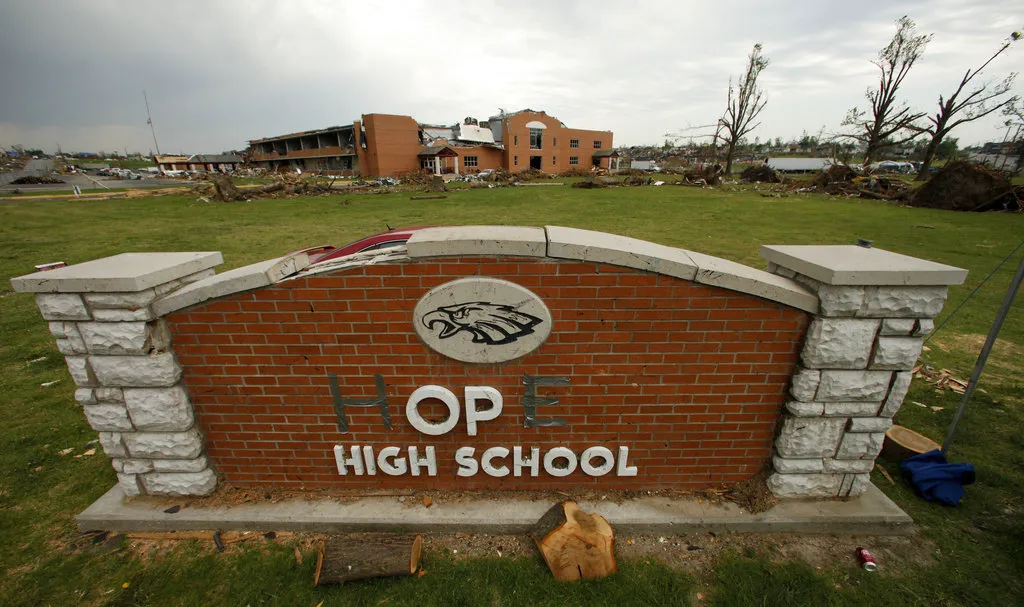
“God pressed on our hearts this is where it needs to be. We need to be a beacon of hope again,” Walker recalled. “And so the name of our church, Hope City Church, comes from the sign from Joplin High School. The high school was taken out. There's an iconic picture where the high school was completely destroyed and the sign is sitting there. And the only thing left on the sign is an O and a P from the word Joplin, and somebody had duct taped an H on the front and an E on the back of it, and it just said ‘HOPE.’ And in the midst of this devastation, there was this sign and this beacon of hope. And we said, ‘Whether you're a Christian or not, that's what people are looking for.’ So we then began to pray and came back and planted Hope City Church right in the middle.”
Hope City has experienced tremendous growth since it launched in April 2014, as people sought to rebuild their lives and develop a relationship with Jesus.
“For as unstable as it was, it had also stirred up so much in folks that their lives had been thrown off kilter. So they were looking, certainly,” Walker said. “Their whole lives had, to a large degree, been exposed. I mean, you have people's furniture out on their front lawns at this point in a post-tornado setting, and so they're not hiding as much as maybe they would have before the storm. And so, their lives are more open. Because of that, they definitely were hungry, I would say, and open to what we were doing.”

He said the tornado brought many Joplin residents a perspective many didn’t have prior to the life-changing event.
There is an understanding from folks that things can change in the moment of the twinkling of an eye, and that is the Gospel,” Walker said. “We have to be prepared for eternity. And so, I think there's an urgency that people have that they're going, ‘Man, we don't want to just live for today.’”
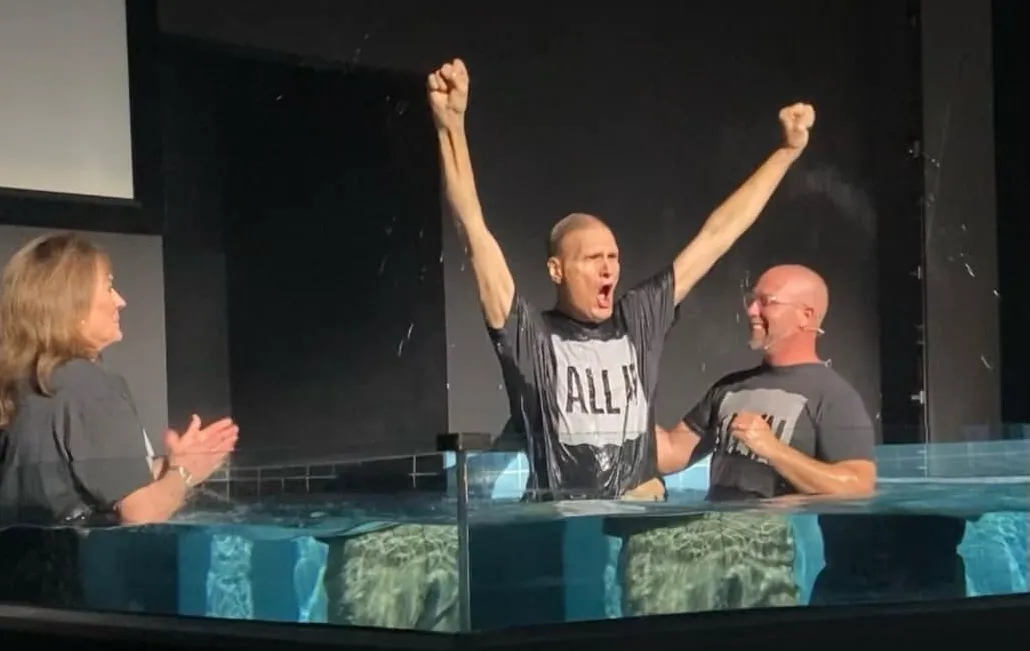
Walker has been forging ahead, pedal to the metal, like a hot rod traversing Joplin on the Mother Road. But, in so doing, he has tried to be mindful of ministry and home life balance.
“I think most pastors know when the family life and ministry balance gets out of whack, it's pretty detrimental all the way around,” Walker said. “It's detrimental to our families, and honestly, it's detrimental to our churches. So, for me personally, I have to be very, very intentional about making sure that my family comes before. My first responsibility of discipleship is to my wife and kids. And then if I'm stewarding that well, God allows me to then serve and allows it to spill into our church in a way that is healthy.”
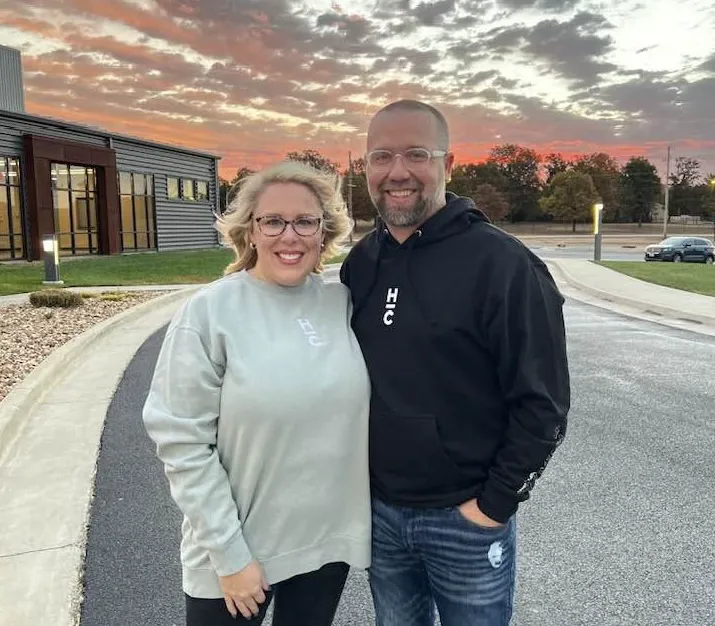
Walker said he has been buoyed by a congregation that loves and supports him and his family.
“Our church is so good to us,” Walker said. “Sometimes when a church gets larger, everybody kind of assumes everything's taken care of. And I think our church, they've not taken that for granted. They're still very much sending texts. Last Sunday I had a gift on my desk: a Twix candy bar. Somebody knew me well enough to know that I love a good Twix Candy bar. And so, it's the small things, honestly, that means so much. Even a text that says, ‘Hey, just thank you for what you do.’"
He said those kind words mean a lot because the staff daily helps the community and church members navigate overwhelming physical and emotional needs.
“There is a lot of need right now and our staff is inundated,” Walker said. “A lot of it is overwhelming.”
And he said he realizes Hope City and its pastoral team is no different from many around the country as they minister to people with myriad needs.
“Preaching the truth right now and really being Biblically sound in a setting in which there's become more and more opposition against the truth, against Biblical worldview, it has created more tension and more hardship for pastors,” Walker said. “But having said that, I'm seeing pastors who are more faithful and staying true to the word of God now than maybe ever. And so, I think God is empowering pastors to stay true to the word of God, but it's become a challenge. It's definitely become a challenge in a culture that's post-Christian and suspicious of Biblical truth.”
When he looks back over how far Hope City has come since he planted his flag for Jesus in a community searching for hope and identity in the midst of crisis, he can’t help but be encouraged.
“We've really tried to mobilize our folks,” Walker said. “One of the things we do every semester is we take all of our local impact money that goes to our local partners and we disperse that back into our groups. So, we give them a budget every year that basically breaks up our local impact budget among 10, 20 people, and they all take on projects within the city.”
That money is put back into Joplin, and it’s making a difference and planting seeds that could have an eternal impact.
“We’ve got a couple week period each semester where our people are in the city painting playgrounds at local schools. They're going into women's shelters, the Boys and Girls Club,” Walker said. “They are engaging the city so that we know the reason we're here is because God has called us to bless the city… If we were gone, we want people to notice.
“The church is here to be a city on a hill. A light. We take that seriously,” Walker added. “We are here to be the hands and feet of Jesus, not just to hide in a building, but to be in our community and be activated by the Gospel.”
Walker is wary of the charge in Galatians 6:19: “Let us not become weary in doing good.” For that reason, he asks all people to be in constant prayer and encourage their pastors.
“Pastors, by their nature, are not going to seek appreciation and affirmation because the whole reason of stepping into a pastor role is to serve,” Walker said. “There are a lot of people in ministry who are contemplating whether or not they’re going to be able to stay in it or over the long haul. Just saying ‘Man, we value you and thank you for what you’re doing’ is like rocket fuel to them.’”