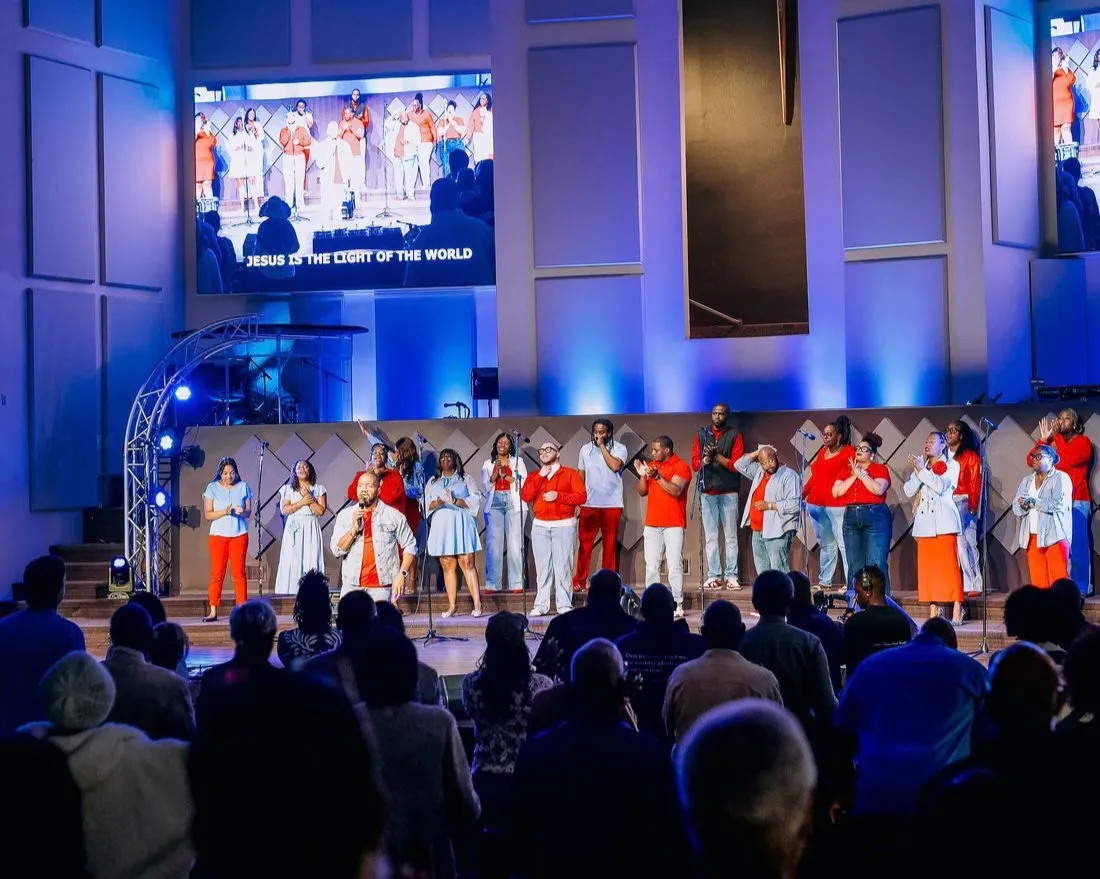
For Pastor Terry Wayne Brooks, ministry is about more than what happens inside a church building.
As the senior pastor of Bayview Church in San Diego, Brooks has spent the past 13 years developing a ministry focused on both the spiritual and practical needs of the people he serves. Through initiatives such as Christian counseling, community outreach and youth development, Brooks says his goal is to create a church where people can experience the love of Christ in tangible ways.
At the center of his approach is a lesson he has learned throughout his years of leadership: leadership is not simply about having the ability to lead. It is about earning the trust of those being led.
“Leadership has less to do with your skill set than it does people's trust in you,” Brooks said. “Leadership is your right when you've earned it.”
(We invite you to listen to the edited conversation between Jalon Caldwell and Pastor Terry Wayne Brooks in the podcast below).
Showing the Love of Christ
Brooks believes the church's responsibility to its community extends far beyond Sunday services.
For him, demonstrating Christ's love requires Christians to put their faith into action. Rather than simply talking about love, Brooks says believers should model the way Jesus lived.
“You can't show love without love being seen,” Brooks said. “You can't say love, you have to show love.”
That philosophy has shaped the way Bayview responds to the needs of its surrounding community. Brooks says ministries such as RE3 Christian Counseling and the Daily Bread Marketplace were created because he saw needs that he believed God was calling him to address.
“When I saw needs or when I see needs, that's an opportunity for me to meet needs,” Brooks said.
Rather than focusing on assigning blame for difficult circumstances, Brooks says he views the needs he encounters as opportunities to serve.
“I believe it's an opportunity when God shows me something vividly,” he said. “It's an opportunity for me to meet that need because I believe he wouldn't have shown it to me if he didn't expect me to do something about it.”
Creating Space for Mental Health
One of the areas where Brooks believes the church can make a significant difference is mental health.
He says Christian counseling became an important part of Bayview's ministry because he wanted to pastor people honestly—not an idealized version of people who never struggle.
“I want to pastor people,” Brooks said. “I want to pastor humans. It's too hard to pastor perfect people.”
Brooks believes many people struggling with mental health challenges have historically felt pressured to hide what they are experiencing. That can make it difficult for pastors and congregations to truly know and support them.
He says he tries to be transparent about his own humanity rather than allowing his pastoral title to create distance between himself and the people he serves.
“I don't hide my humanity behind a title,” Brooks said. “I don't hide my humanity behind a cross.”
That transparency, he believes, can give others permission to acknowledge their own struggles while still pursuing God.
Brooks recalled advice from pastor and author Rick Warren that has influenced his approach to ministry: “When you take yourself off the pedestal as a pastor, you give people permission to come down as well.”
For Brooks, the goal is to remove the stigma surrounding mental health and create an environment where people understand that struggling does not make them disqualified from God's purposes.
“I wanted to take away the stigma of mental health,” he said. “I wanted people not to be ashamed.”

Giving Young People a Voice
Brooks also sees youth development as a critical part of the church's mission.
In a culture where young people are constantly exposed to competing voices, platforms and influences, he believes the church must first protect them while also giving them opportunities to participate.
“Protection, number one,” Brooks said. “And then we need to give them an opportunity to be seen and heard.”
Brooks draws from his own experience as a young preacher. He remembers being treated as though his age meant he had little to contribute.
That experience continues to influence how he approaches younger generations today.
“I don't want young people to feel like that,” he said.
Instead, Brooks wants young people to understand that they already have a place within the church and society.
“This is their church now, this is their world now,” he said. “They don't have to wait until society feels they're ready to be a part of it.”
Bayview seeks to create opportunities where young people can develop responsibility, find belonging and understand that their perspectives have value.
Brooks believes younger generations may not know everything, but they possess knowledge and abilities that can benefit the generations before them.
Holding Onto a Vision
Many of the ministries Brooks leads today were not ideas that appeared overnight.
He says he had envisioned initiatives such as the marketplace, Christian Closet Boutique and counseling center long before they became realities at Bayview.
Brooks recalled riding to Nashville with Pastor Royce Thompson, who was studying architecture at the time. During the trip, Brooks described his vision for what he hoped to accomplish one day as a senior pastor. Thompson then helped put that vision on paper.
Brooks says he could see the future he wanted, but he still had to wait years before experiencing it.
“I've had to live with the pain of unrealized dreams for a long time,” Brooks said. “But I didn't let that pain stop me. It just kept me going.”
His experience taught him that a delayed vision does not necessarily mean an abandoned vision.
“I kept saying what I saw until I saw what I saw,” Brooks said.
Hope for Those Who Feel Broken
Brooks' message ultimately extends beyond Bayview's programs and ministries.
For people who believe they have gone too far from God or are too broken to be used by Him, Brooks offers a simple message of hope.
“Too far gone and too far broken doesn't exist in heaven's vocabulary,” he said.
He points to the Bible's many stories of people who appeared to be disqualified by their failures or circumstances but were still used by God.
For Brooks, those stories demonstrate that brokenness does not have to be the end of someone's story.
Looking Toward the Next Generation
As Brooks looks toward the future, he says he is praying for wisdom to help connect the church with a generation growing up in a rapidly changing world.
He points specifically to technology and artificial intelligence as both challenges and opportunities.
“AI, artificial intelligence is one of the biggest threats and assets that we have,” Brooks said. He described it as a threat when people allow it to replace their own thinking, but an asset when it is used as a tool to improve people's lives.
More broadly, Brooks wants to see younger generations understand that faith does not have to be confined to Sunday mornings.
He hopes to help young adults recognize that following God can be integrated into every part of their lives rather than treated as an interruption to them.
“I want them to understand that this is their time to lead,” Brooks said.
For Brooks, that vision is consistent with the philosophy that has guided his ministry for more than a decade: see the need, serve the person and create space for people to encounter God.
Whether through counseling, youth development, community outreach or simply being transparent about his own humanity, Brooks believes the church has an opportunity to make Christ's love visible.
And for him, that begins with becoming more than a church that talks about love—it means becoming a church that shows it.