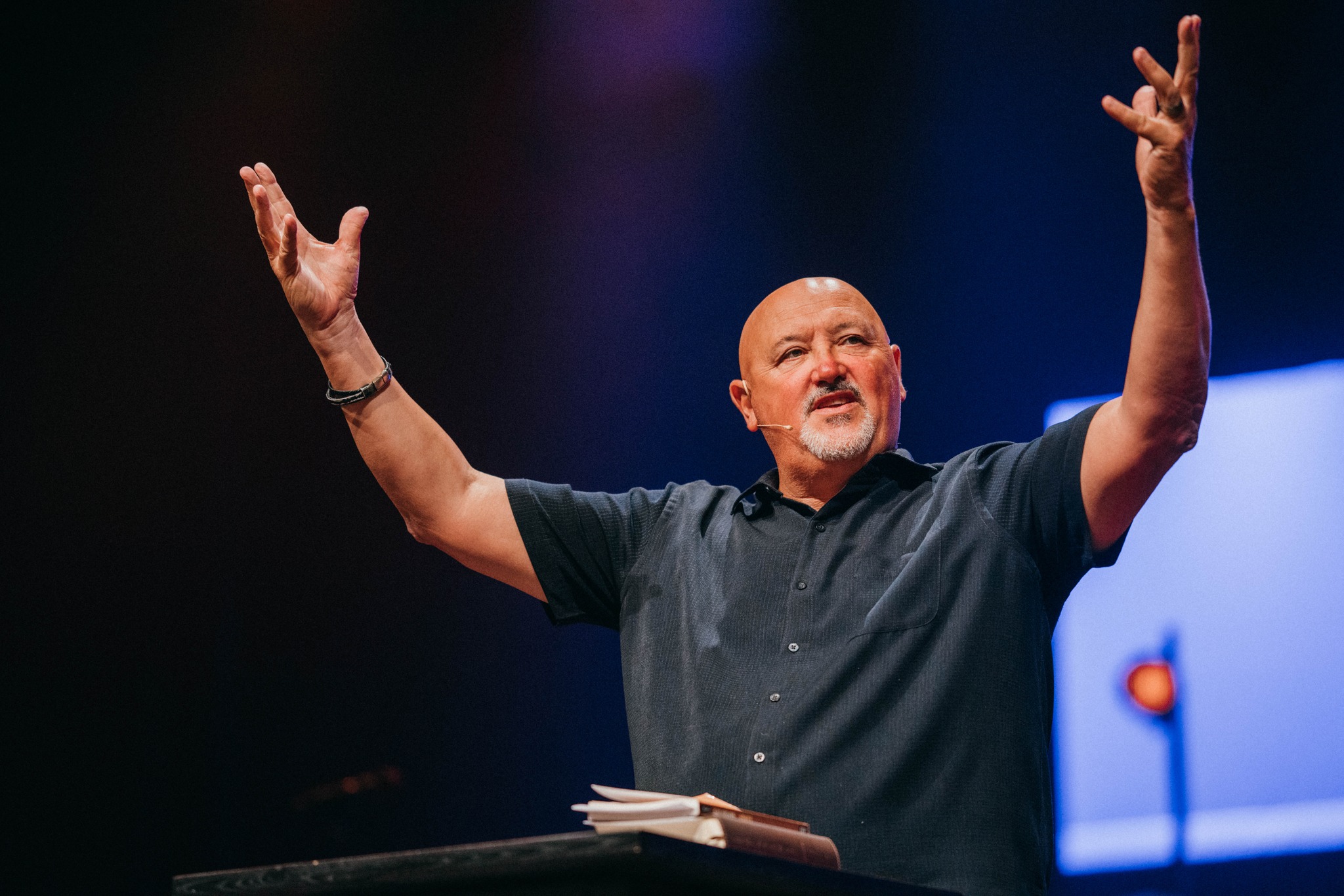
As part of Pastor Appreciation Month, K-LOVE News is spending October zeroing in on the pastoral ministers that are serving and shepherding local congregations across North America.
The objective is to hold a magnifying glass up to the daily call of pastoral ministry, to celebrate, highlight, and help paint a fuller understanding and clearer picture of what it means to lead a church in today's world from the perspective of those with boots on the ground.
Hear the full conversation with Pastor David Cassidy:
It’s my pleasure to be joined by Pastor David Cassidy. David has been the senior pastor at Spanish River Church in Boca Raton, Florida since 2021.
Before that, he served from 2014 to 2021 at Christ Community Church in Franklin, Tennessee in K-LOVE's neighborhood, preceded by serving at Redeemer Presbyterian Church in Austin, Texas from 2005 until he headed to Franklin.
He’s a native of Illinois, raised in Indiana. He spent the early years of his vocational ministry in England, where he met his wife, Toni. His time across the pond included serving as a student missionary, then as a church planter in London from 1981 to 1987.
David also published a book in 2019 titled “Indispensable: The Basics of Christian Belief.”
He and Toni have three children, Sean, Claire, and Anna.
In summary, a busy man who’s been put to work in a whole lot of very unique places. Pastor David Cassidy, welcome and thank you for sharing some time with us today.
Thank you, Ben. Great joy to be here with you. I’d add to that list many years of ministry in western Kentucky as well in a rural area around the little town of Paducah. That was a good stop too, and it’s a great joy to join you here.
God has placed your feet in such an interesting and wide-ranging array of places since you began ministry. What goes through your mind when you hear a summary like that and when you add another because I missed one? What goes through your head?
The Johnny Cash song, “I’ve Been Everywhere” is probably what springs to mind. It feels that way sometimes.
The biggest thing is a sense of privilege because – and every pastor knows this – your congregation is training you to be a better pastor as you go, to care for them more effectively, to be closer to the Lord.
So, in each of those unique places, Oxford, England, western Kentucky, Texas, Middle Tennessee, and here, the congregations have been so kind to us and such good teachers. We’ve learned so many lessons and gained so many different perspectives from around the world because of we were doing ministry, especially in relationship to the time in the UK and many other nations, we feel like we’ve been enriched by so many different cultures and so many kinds of dedicated, wonderful believers with so many unique stories. It’s just been a joy.
This path you’ve taken, is it what you expected it to be or planned it to be?
No, no. I did not plan it. That’s absolutely for sure.
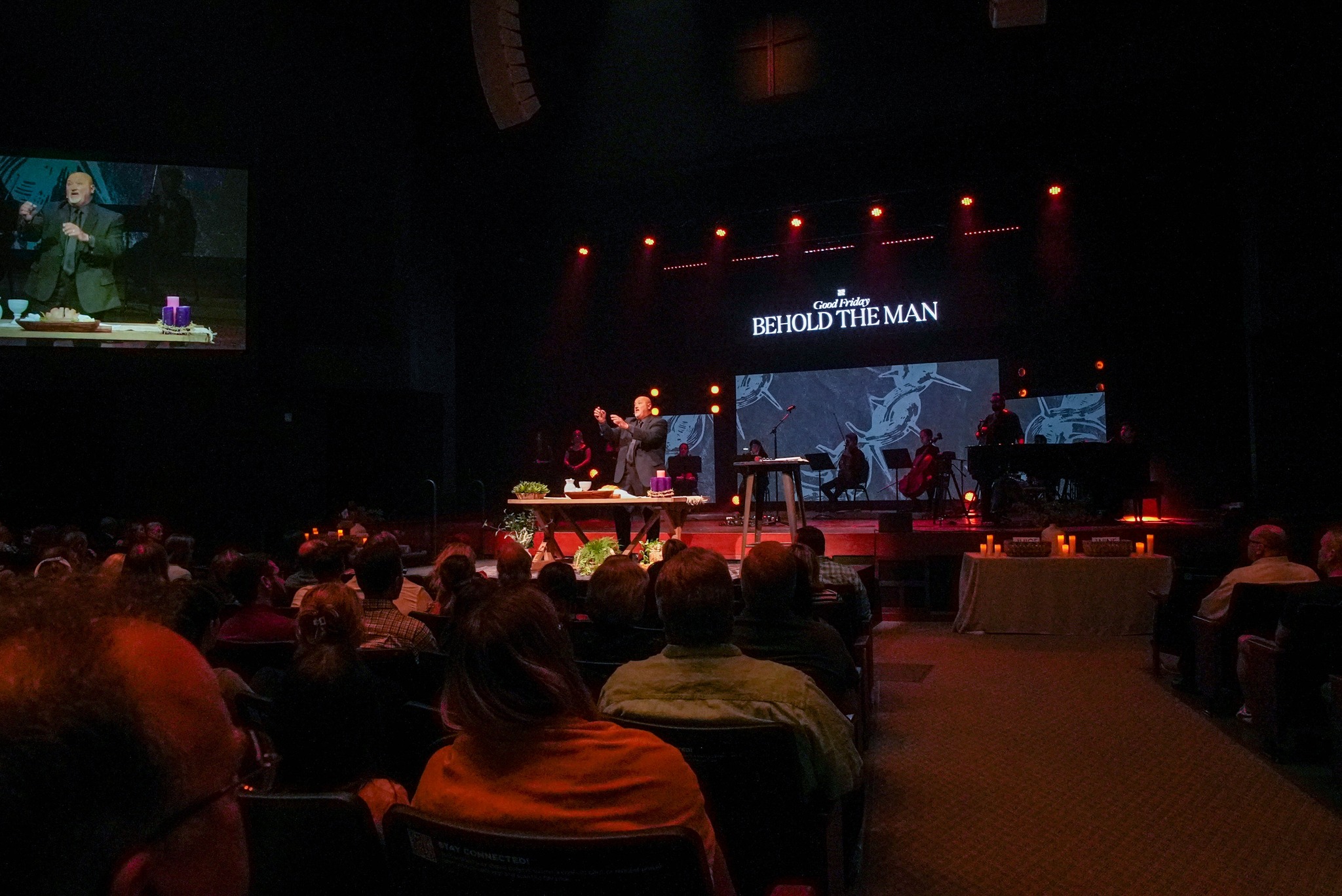
For instance, even being here at Spanish River is not something that I wouldn’t have dared even pray for, much less planned for. I visited Spanish River for a church planters conference and mission conference some years previous, and of course, many people would be familiar with the Spanish River story with its founding pastor David Nicholas and my predecessor Tommy Kiedis, and the way that the church has served church planting around the world.
So, it’s always been something that I’ve admired. To be entrusted with that legacy and see it furthered and deepened and widened is a tremendous responsibility and I’m very, very grateful for it. I would’ve never imagined it or thought that it would be something I’d be doing at this particular point in my life.
So no, I think all of that’s pretty unplanned and it’s unusual.
I mean, some guys are called to stay in one spot. Toni and I have always felt called first to the mission. What’s the mission? What has to be accomplished in various places?
We've been more centered on the mission than the place we’ve lived in. That mindset we did have from the very beginning. We’ve been missionaries at heart.
I think it’s true that most career origin stories are pretty varied. A lot of people never really planned to be in whatever they’re working in. But I’ve found it to be particularly true that when you ask a pastor how they got into pastoral ministry, why did you get into pastoral ministry? It’s almost always a different answer.
So, how do you answer that? Was this something, an internal call that you felt since you were a little child? And either way, how did you get into this life of ministry?
I knew very early on that this is what I was supposed to do. I am maybe unusual in that regard. I don’t know. A lot of guys may feel that.
But I think I would point to a time when I was about eight years, I grew up Lutheran and sitting in a Lutheran congregation sensing that God was calling me to serve the church and willingly responding to that from the time I was very young, just knowing the shape of things. But I didn’t know exactly what that would look like.
Of course, that would take a long time to unfold, but I really started doing a lot of active ministry while I was still in high school and certainly in college years, and I just sort of went into it from there. So, it was something from the time I was very, very small.
Toni, likewise, when she was in her early teens, knew she would be involved in ministry. That’s something she always wanted to do.
We find ourselves astonished at God’s grace giving us the privilege to serve people in that way.
Even knowing since you were young that this was a likely path, or maybe you didn’t have any other choice that this is what you were going to do. When you got to that point as a young adult, or when it came time to really make that decision to go to seminary or to accept a call out of seminary, what is that consideration like?
Because, as you describe it, it is such a weighty thing and responsibility as a young man. How do you think about that and get to the point where you feel like the Lord really is calling you to this and to have the conviction or the strength to make that decision and step into that?
Ben, you used a really important phrase. You talked about a sense of internal call that a person experiences. There is an addition to that – external confirmation.
So, a person can believe that God’s called them to serve him in a particular way, but it really does take other people confirming that saying, well, yeah, when I hear you preach, when I hear you teach, when I’m involved in prayer with you and discipleship and so on, they’re responding to it.
There’s positive fruitfulness that’s evident, so that people can affirm it because nobody can simply launch out into ministry, at least as I understand it. It’s something which the church has to call a person to and which is affirmed by other elders, other ministers in some way and by the congregation that one serve, whatever polity forms may be involved.
You offer yourself to Christ and then he’s going to be at work in us in a variety of ways, including very painful ways.
Paul said death is at work in us that life might be at work in you. So, there are prices to be paid by people in ministry that put them in position to help a broad number of people, different kinds of people, educational experiences, professional experiences, and so on
But there are gifts, then, that are given uniquely to each person and to all Christians, but in vocational ministry in particular, to serve others fruitfully. And when that fruit’s evident, you can say, ‘Well, there’s the external evidence that we’re doing the right thing. We’re on the right path here.’
And you continue to pursue that path and do what’s before you. That’s what we’ve tried to do over the years.
Do you feel like that is always present? Or are there times when it’s not and it’s just an act of faith to continue?
Well, sure. It’s always by faith, isn’t it? Every single day.
I get up every day going, ‘I have no idea how I’m doing to do this. What are we going to do? How are we going to get this done?’
So, you have this growing sense of incompetence, a growing sense of radical dependence on Christ and the provision of his Spirit and grace for whatever you’re called to do. Not this growing sense of, ‘Oh, I know exactly what to do in this situation.’
I’d say the more mature one becomes over the years, the more dependent on Jesus.
But the seasons of barrenness are very real. That’s internal in the sense of feeling abandoned at times by God. Where’s the grace that I was enjoying for a season or even external fruitfulness? And you sometimes have to sing with the prophet, ‘Though there be no fruit on the vine, yet I will rejoice and delight in the Lord.’
There are seasons like that, but what I’m talking about is this overall pattern of seeing that even in suffering or even in lack, when we’re laying down our life, there’s fruitfulness that comes from it, and that becomes evident to all.
People sometimes forget that perhaps Paul’s greatest, most fruitful ministry was not in pioneering a new congregation or in preaching a sermon somewhere, but in writing a letter. Those letters have continued to speak to us now for 2000 years, and he wrote those in isolation. He wrote those in a position of resistance where he’s not free to go out and preach.
He’s not free to do all the things that he probably thought he should be doing, but in those letters, he’s continued to speak to us and shape our lives in ways that incomprehensibly beautiful and magnificent.
So, sometimes when we’re most hindered, we may be able to still have the most beautiful and lasting fruitfulness.
There are a thousand different directions, a thousand different issues that I’m sure you could address and give attention to every day leading a small or large congregation, or a medium-sized congregation. You mentioned Paul’s writing there, and this is not me comparing the book you wrote to the epistles–
That would be a very bad comparison.
You have done some writing yourself. I mentioned the book, and you have an active blog that you kept up for a long time, and obviously there are many other facets of ministry that you could give attention to.
How do you go about balancing the many different aspects of ministry and things that are pulling you in all these different directions? How do you balance that? How do you carry that busy burden of chaos as a pastoral minister?
Well, first of all, I have a really wonderful, amazing wife. Toni has been terrific. We just celebrated our 45th anniversary, so she is the best source of wisdom imaginable, and she’s always able to help me identify where I need to be particularly focused. I’m so grateful for her and how she does that.
Of course, I have a great ministry team here at Spanish River. We have several pastors. We have a great team of elders, and they’re all excellent at helping me discern those things to which I have to give careful attention.
I have duties as a Presbyterian minister. I have duties within the presbytery, which is a regional group. I have a certain degree of responsibility for helping in the wider Presbyterian Church in America as well, mostly informal, but those are things to which one gives attention.
What I find is that there are certain seasons of increased activity in each of the different spheres that I’m working in.
So, in preaching, it’s not just preparing a message for this Sunday, but looking ahead and saying, okay, let’s take a few weeks and let’s plan out what our preaching and teaching plan is over the coming year and not just on Sunday, but for other events as well. What are the kinds of conferences that are needed? What are the speakers that we want to bring in? And so on.
So, you have a particular focus for a season. That is what allows you then to unfold the rest of the time over a month and over a year, day to day.
Yeah, we could take about the day-to-day, but I always start off at the beginning of the year with a personal prayer and planning retreat. A lot of what I’m carrying into that is the good counsel of others helping me understand how I can best deploy the gifts that God’s entrusted to me so that I can give a good account of faithful ministry at the end of the race.
Each of us have been given graces to develop and then deploy for God’s glory, but that doesn’t happen haphazardly. Nothing good happens haphazardly. There has to be deep intentionality to it.
The beginning of your Twitter bio reads, “On a fool’s errand, spreading rumors of a world-changing hope.”
I think that’s really poignant and I want the backstory to that. I’m going to take a shot in the dark. I’m guessing maybe it’s a double allusion a little bit. First of all, to 1 Corinthians 4, where Paul says we are fools for Christ’s sake.
I’ve also read, and again, this may be totally off, I’ve read about when the late Tim Keller was planning to plant Redeemer Church in Manhattan, some church leaders called it a fool’s errand.
So, am I reading too much into that? And then, what do those words mean to you?
Well, there’s a couple of things, and thank you for that Tim Keller note. People did say that. Gosh, he proved them wrong, didn’t he? Spanish River counted it a great joy to be part of the support team supporting churches that saw that work initiated many years ago. Thankful for Tim and Kathy and all they mean to so many of us and all they’ve meant through their faithful ministry.
I’m really referring to Paul’s saying that preaching is an act of foolishness. The foolishness of the Gospel, the foolishness of preaching. God was pleased through the foolishness of preaching to save those who believe.
I am constantly in this demonstration, this act of Gospel proclamation, which is both a beautiful invitation and painful stumbling block. It is many things to many people, but I’m trusting that the Holy Spirit is way ahead of us in that work.
And also, just as a Christian, I know that God has chosen the foolish of this world to confound the wise. Rather than thinking of myself as wise in any way, I have to begin with acknowledging my folly and ask the Lord for his mercy.
If he’s chosen me, then I’m a fool. If I’m preaching faithfully, it’s the foolishness of the Gospel preached which is saving. It’s not the speaker’s cleverness or the speaker’s rhetorical flourishes or boldness. It’s god’s wisdom in the act of preaching, the folly of preaching, communicating the good news of Jesus.
The idea of rumors of hope really comes from the idea – sometimes people will refer to the way the ancient Christians publish the Gospel in their world as gossiping the Gospel. The Gospel was just carried by everyday believers in all walks of life across the ancient Mediterranean world and beyond. A gossip to the Gospel.
So, in gossip, there’s this rumor that we’re passing along that we have an echo from Eden, a ping from Heaven, that there is a hope for the world that’s rooted in the death and resurrection of Jesus. We’re going to gossip that good news to the ends of the Earth until Jesus comes again.
And when people hear that rumor of hope, their heart will hopefully be opened up by the Holy Spirit to believe that message and come to saving faith in Jesus.
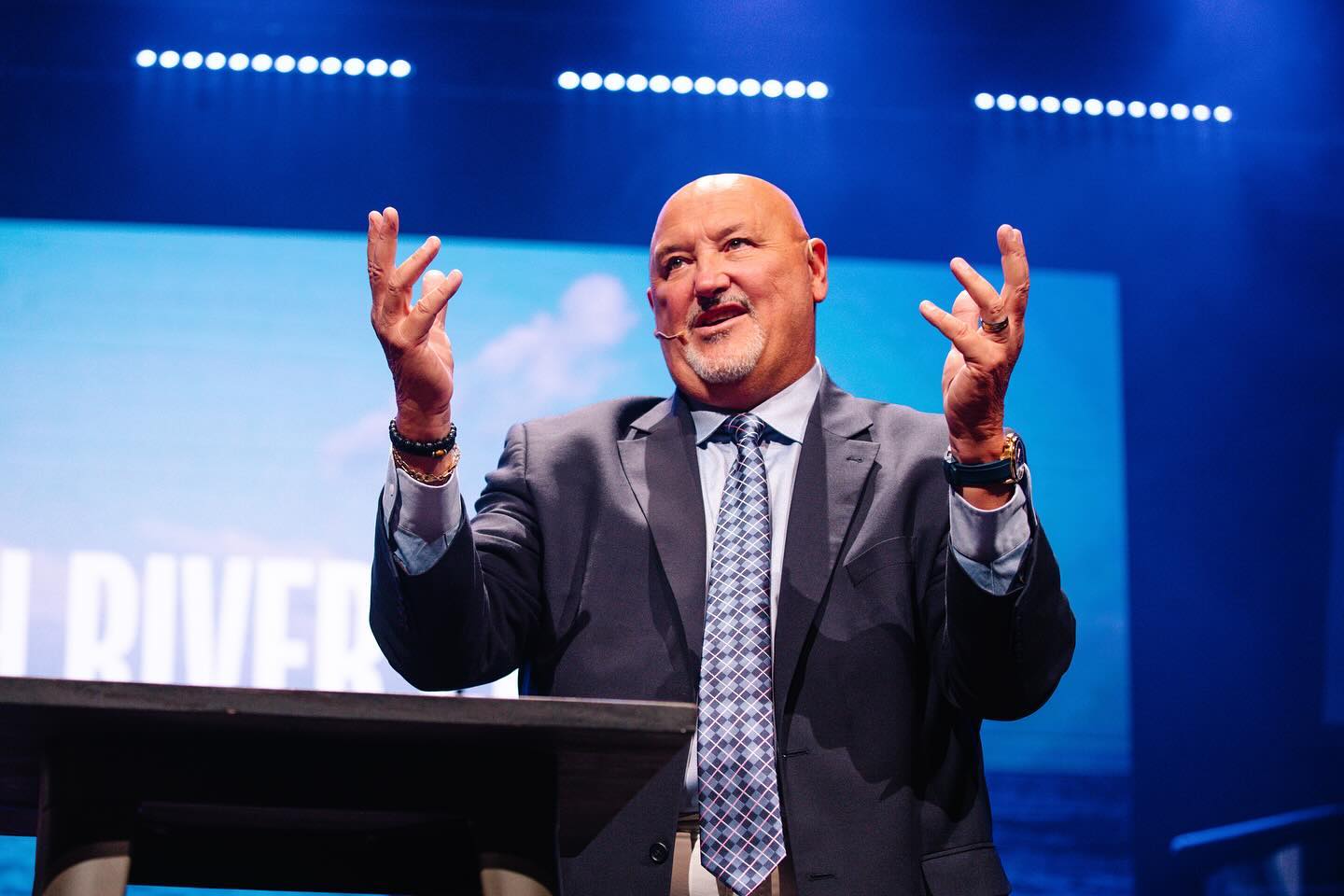
To back up a little bit, in the different calls that you have served in, you’ve served in a lot of places where I think some might call ministry in that place “a fool’s errand.”
Austin, Texas, this booming entertainment center. South Florida, with such a concentration of wealth and, almost by default, this aspect of worldliness. Britain, where census data from I think 2021 says that only around 6% of adults are practicing Christians.
What is it like to practice pastoral ministry in places where, again, many might call it a fool's errand? Where it seems like would be really difficult places to do pastoral ministry?
Well, thank you for highlighting the diversity of those places. I think they’re all beautiful opportunities for the Gospel. That’s the way I approach any place that I’m sent.
It’s an opportunity to see, ‘What’s the Holy Spirit going to do here? What’s he going to do now?’ What’s the expecting the unexpected from God going to look like?
That’s the constant because each of them are very, very different. It might be easy to suspect that the Gospel might more acceptable, say, in the Bible Belt, because it’s been made more plausible. There’s a plausibility structure to the Gospel, which is part of the atmosphere that people have in a place like Middle Tennesee or Kentucky or some other places that we could name.
I understand that, but on the other hand, there can be a hardness of heart, a pharisaism that is present in places like that too, where there’s an assumption about the kind of Christian subculture that people are in.
I remember when I moved from London to Western Kentucky, which is a bit of a cultural whiplash, and I’d only been in this small rural community for just like a week or so. I saw a guy in a Hardee’s. He was the only guy sitting there, and I thought, well, I should witness to him.
I said, ‘Hey, are you a Christian?’ He was about 19, 20 years old, and I won’t tell you exactly what he said. But he said, ‘Yeah, I am. What else would I be? Some kind of Muslim or something?’
His view was, I’m born here. He didn’t know about the new birth. He thought, well, I’m born in the upper South. I’m born in the United States. I must be a Christian. He didn’t know anything about the new birth, about coming to faith in Christ. So, there can be, wherever you’re at, the opportunity to say, ‘Well, let’s think about that.’
So, two years in Oxford, further six years planting a church in central London and so on, again, great opportunities to offer Christ to people. London is the bus stop of the world, deeply cosmopolitan area. Our neighbors are Pakistani, they’re Indian, they’re from Northern Ireland, they’re from the Republic. They’re British. We’re Americans. I mean, it’s all this mix.
Down here in South Florida, again, highly cosmopolitan area. We offer 60 different languages in simultaneous translation on Sunday mornings for people who come to Spanish River. I mean, it’s a remarkable place.
The thing that’s most evident in South Florida is great, deep spiritual hunger. Whether that’s people coming from lots of different places on the planet or people with lots of power and wealth, all of them need Jesus.
All of them are discovering that only in Chris is life to be found, and so it’s just a wonderful opportunity for the Gospel, and I know you see that in Middle Tennessee as well. There are opportunities for the Gospel abounding.
Austin was an incredible place. Gosh, it’s been my privilege to live in two great music cities, right? Nashville and Austin. Austin, live music capital of the world. Fantastic place, great people. I love Austin, Texas, just one of my favorite places on the planet when I had to the opportunity to do ministry there.
Again, it’s with people who are often tech savvy, very entrepreneurial, highly creative. People in Franklin are also very highly creative, but generally speaking in the arts. But that creativity is there. All of that is part of them being image bearers of God.
When you’re calling people back to communion with God and showing them that the way to that is in Jesus Christ and how they become a new creation, all of that is just an opportunity for the foolishness of the Gospel to reach into hearts and lives. I love seeing that happen.
To go a little more granular here, I actually think a lot people might wonder about some practical things that their pastors get up to. ‘If you work on Sundays, when is your weekend? I only see my pastor when I’m at church and wonder, what do they do all day?’
What is the day-to-day of a pastor, or from your personal experience, what’s your day-to-day like?
Well, of course, that’s going to vary across any number of different church traditions and church sizes and so on. We have a pretty extensive ministry here in Boca Raton, so it has its own expectations.
We have a large school everything from that to Knox Seminary hosting classes on campus, a growing church and ministries all across this area, Spanish River Church planting – all of those have certain requirements, not to mention leading a great team, a great staff here at Spanish River.
So, for me, just on a day-to-day basis, Toni and I have always rejoiced in Friday being kind of family day. We don’t call it a day off, that’s just a day where we’ve set aside that time for making sure that we have plenty of communication and we’re spending uninterrupted time together.
That’s generally been our pattern. Occasionally, that turns into a whole weekend, there may not be something on Saturday so we could get a weekend like everyone else, although in a slightly different form. But I’m always so fired up about what happens on Sunday that I come into Monday ready to go.
I don’t think I’m any different than anybody else on this, I get up pretty early. I’ve always been an early riser and I like good coffee in the morning. If there’s coffee and prayer, I think I’m going to get through the day. That’s kind of where I start. There’s coffee and devotional time and reading of various kinds. Then, I get on my bike and I try to get in 14, 15 miles on the bike.
Then, I get over to the church and start tackling everything from meetings with various pastors about different things that are happening in their spheres of responsibility. That could be anything from student ministries to care for the elderly or care for the sick, educational work that we’re doing across the board in the church, discipleship ministries, and so on.
Monday’s kind of a big admin day. We’re preparing as well for meetings with elders that happen every month, deacons meetings and so on. All the agendas for those gathering to make sure that they’re fruitful and productive. Those require some attention.
The week kind of breaks out into administrative responsibilities, people responsibilities, meeting with people to make sure that they have what they need to do the work they’re doing, and then preparation responsibilities.
If I’m going to be preaching Sunday effectively, I’m not simply going to go to the file and say, ‘Well, I’ve been doing this now for 45 years. I’ll just go find a sermon.’ Because the sermon from 20 years ago that was delivered in Austin, Texas, even if it’s the same text, it might have some helpful insights in it from the sermon notes, is not exactly the same kind of message that needs to be delivered here with a very different kind of community of people.
Same thing’s true if I’m preparing messages like I’m going to be delivering over in England in about a month’s time or up in Ann Arbor in a couple of weeks. So, all of those kinds of things are going to require different kinds of preparation.
If you think of preparation responsibilities, people responsibilities, organizational responsibilities, the week divides up in those ways.
But I guarantee by the time I get to Thursday evening, which Thursday night becomes my Friday night for everybody else, I’m ready to go home, do some cooking. I love to cook and just watch a good movie, but that’s how the week breaks out.
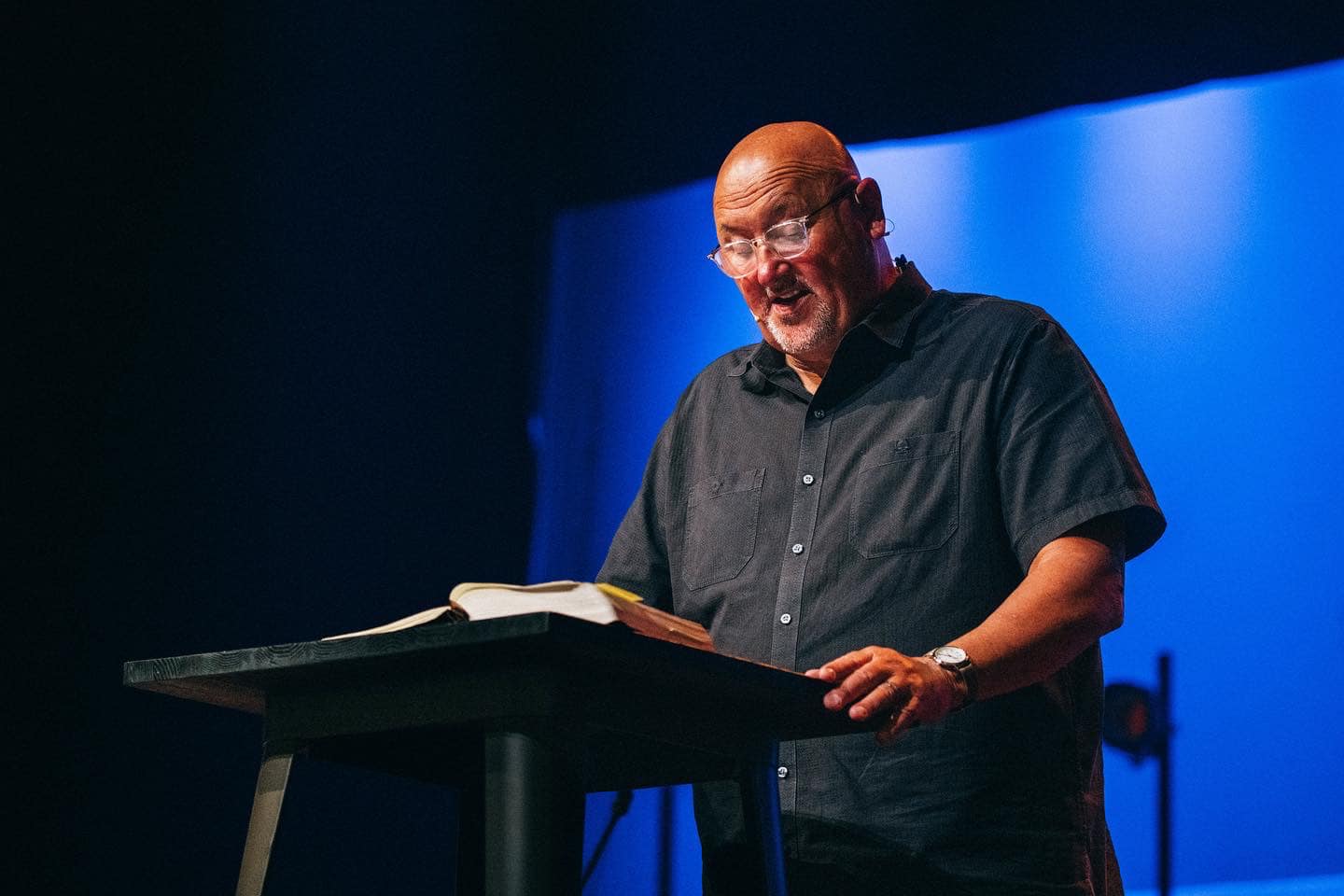
What’s your favorite thing to cook?
Any kind of Italian food, because that gets people around the table and it’s the kind of food that builds community. I was taught a lot of French methods, which is great.
I think if you know those techniques that helps you make many, many different kinds of food. So, that’s always been a good hobby for me. But Italian food is the food that brings everyone together.
Another thing people might wonder about their pastors, or just pastors in general, is where do you get spiritually fed and spiritually led? If you’re the pastor of a church, where are you getting that from?
I don’t think anybody can be really effective in pastoral ministry who’s not a reader.
You have to have abiding friendships with wise counsel, most of that wise counsel is probably already in Heaven with the Lord and they’ve left their books behind. You have to be getting well fed and good counsel from centuries of proven scholars and pastoral counsel – all of them are valuable.
So, I head for the study. Toni will hear me say, ‘Well, I’m going to go see my friends.’ And she knows that really what that means is I’m headed into the study where I hang out with several thousand of my advisors, the authors, and I’ll do a lot of reading. That’s very important.
I think you need to not only read, but listen to the voices that have proven to be effective encouragement to you over the years. For me, someone like John Stott, famous preacher from All Souls Langham Place in London, has always been a voice that helped me become a better pastor, a better person.
I think you have to be in contact with the men and women who have blessed the Church over the centuries. They have a proven worth that keeps your soul fed.
And obviously, look, if you’re not desperate for Jesus in you heart, you have to ask the Lord to give you that kind of hunger and thirst because every day I’ve got to dive into the Scriptures. I’ve got to dive into prayer just like every other believer. In that sense, we’re all the same.
When it comes to ministry, I’m a bit more like the guy in the parable that Jesus told in Luke where he says, ‘Hey, I’ve got some friends who’ve shown up and I have nothing to set before them, so please give me some loaves so that I have something to give them.’
I feel that way every week. Lord, I’ve got a lot of friends coming over on Sunday and I’ve got nothing, but you have the treasure, so please open your word and feed me and help me to prepare something that’s going to feed them.
We’ll start to wrap things up because I know, as you described, you’re a busy guy.
There seems to be a perceived and felt heaviness, maybe weariness, hovering over the Church over the last decade-ish. And you can correct me if you don’t agree with this.
I think much of that is a result of, especially in the West, a changing culture that’s informed by new technology. As you mentioned, you saw a lot of that in Austin. You could say over-connectedness, changes in how humans relate and communicate with one another.
You’ve been doing this a long time in different cultural contexts through these shifts I’m describing. Where are you encouraged and where do you see the Lord moving when you consider the direction or state of Christ’s Church from the vantage point of your ministry, your experience, and just as you look out across the landscape?
That’s a great question, and I can only answer it looking out from my own vantage point.
I’m more encouraged right now than I have been in several years. I think there, of course, very painful and difficult moments that the country is passing through, and we have to very sensitive to those and be able to ask the Lord to help us be peacemakers in this present context.
Violence, whether that’s rhetorical or physical violence as we’ve seen in the political realm, is something we all have to deal with.
I’ve pastored in the middle of a school shooting in Kentucky and walked with people in a community trying to find its way through the aftermath of that. And the nation as a whole, we have tremendous polarization. Everybody knows that it’s very difficult even within families to have some of those conversations. Emotions run high.
So, all of that is present, and I don’t necessarily see that lessening. Some of the algorithms of social media have heightened that.
I would like to see people step back from the participation or immersion in social media to the degree in which they have. I think it’s tough.
We are weary because of the accelerated demand that’s placed on people. A lot of the things which we tend to think of as conveniences simply create higher levels of demand.
What encourages me is this: I think people are beginning to be aware of that. They are beginning to take some good steps back from that away from over exposure to those forms of media which are creating barriers between people and beginning to find each other again across dinner tables and new friendships.
I hope and trust that what we’re seeing right now in the country may actually be standing on the precipice of a great move of revival, of a whole new generation of young people being swept into the Kingdom. That encourages me more than anything else, and I pray that work is widened and deepened and we begin to see an even greater harvest that we’ve imagined possible. So, that encourages me a lot. I remain very hopeful for that.
Is there a myth that you would like to bust about pastor or pastoral ministry as a whole?
Wow. Well, that’s a bit of a long list.
My dad wasn’t a pastor. He took his lunch pail and went to work at the printing factory every single day. But we grew up around the church and I’ve known pastors all my life. I’m so thankful for them in their work.
I would say there’s two myths that I would want to blow, and they live at opposite ends of the spectrum.
The first one is that pastors work on Sunday, they’re not working the rest of the week. That’s pretty good. You work half a day, that kind of thing. Which is completely crazy.
But the other end of it is that pastors’ schedules need to be constantly full.
Eugene Patterson was really good at this. He was very good at calling pastors and congregations and leadership communities into account to say, ‘You need times of silence. You need times of reflection and an overly busy pastor isn’t good for a church. You need to understand what your calling is. You need to focus on it. You need to make sure that your relationships with the people in your family are strong.’ It’s relational work so that you can listen patiently and deeply to people.
Becoming contemplative as a priority more than simply busy, so that you can somehow prove that you’re productive, is a myth that for some people needs to be shattered.
So, I would say both of those. They’re at opposite ends of the spectrum and they’re held by different groups of people. But I would want both of those to be blown up. I hope you can do that, Ben.
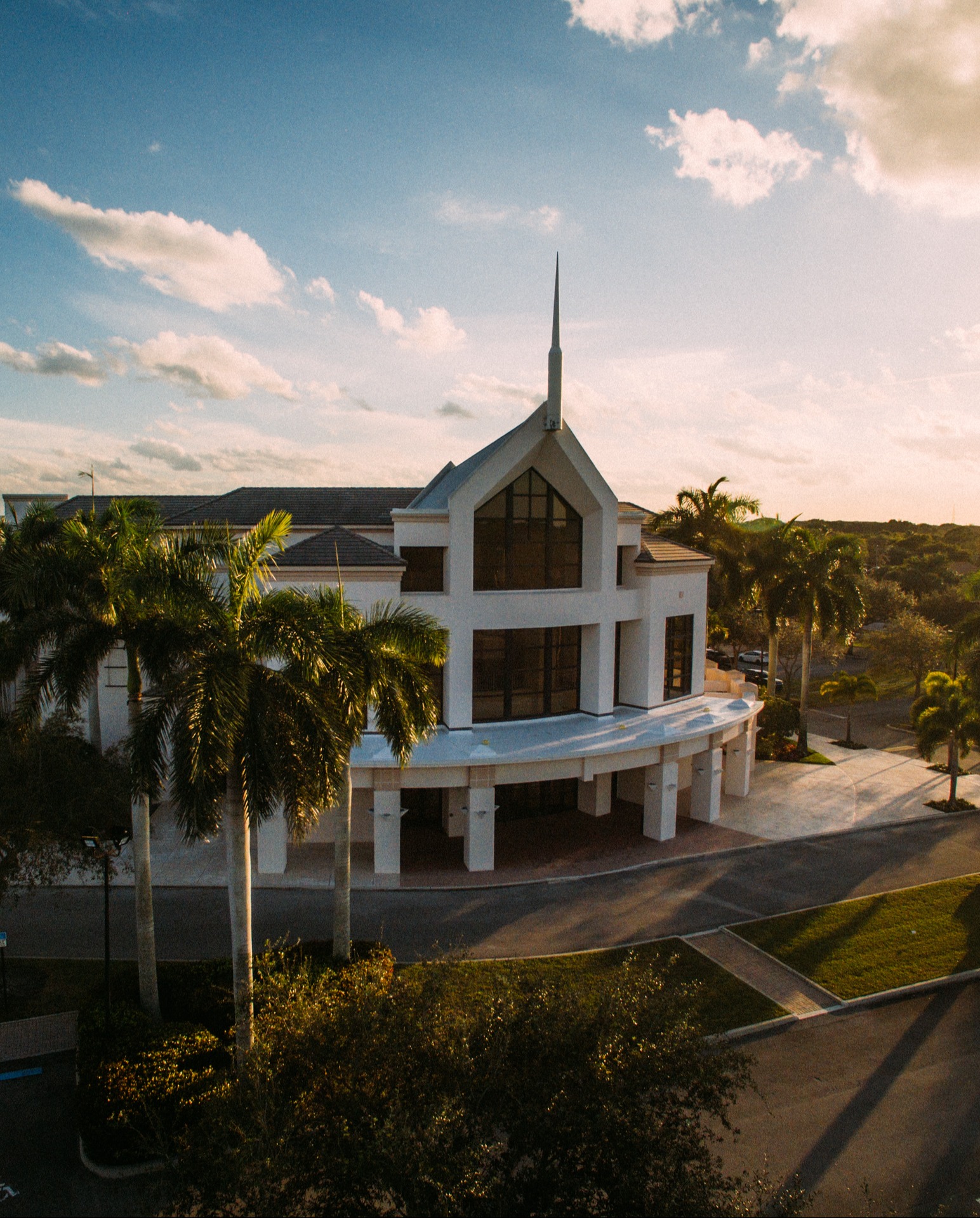
Final couple of questions for you, David. How should we pray for our pastors?
Great question and thank you so much.
Paul, when he asked for prayer – and isn’t that amazing? Paul’s asking for prayer. So, if Paul is asking for prayer, how much more should I be asking for prayer?
He said, when it came to his preaching, he said, pray for boldness that I may make the Gospel know as I should make it known. In Ephesians 6, he also talked about how the prayers of God’s people would work for his deliver when he was in a moment of real despair.
He noted that in 2 Corinthians in his imprisonment. He noted the same thing in his letter to the Philippians. I would pray for the preaching ministry of all pastors that they would be bold. To have boldness, clarity, compassion, and anointing. I pray that for them.
Some sermons are going to be like Thanksgiving, Christmas, just a feat. But you can’t give people, you don’t raise children on feasts every single day. Just a steady diet of peanut butter and jelly sandwiches turns out to turn children into adults on a pretty regular basis.
Sometimes it’s going to be very simple fare, but it’s going to be healthy, it’s going to be good. And sometimes there’s thunder and lightning and wow, but not all the time. Really, that’s not healthy.
So, good steady diet so that the sheep are fed and cared for. Pray that they have that and expect that.
And don’t ever compare them to somebody else on the radio or somebody on TV or whatever. God’s given those guys scope for ministry, which great and beautiful and wonderful, but the care of a local congregation, just feeding that flock across generations. That’s a beautiful call. Just pray that they do that well.
The second thing is pray against despair. Pray them out of despair. Pray that they will not lose heart.
It can be a very discouraging time when you labor in these areas, and yet the very same things continue to happen over the years and you’re thinking, ‘Wow, we’re really not making progress here. We’re not seeing any breakthroughs. We’re not seeing how this works.’
And then pastors have pain in their families just like everybody else does. We’re parents and we struggle wth our children just like every other parent does. We weep over grandchildren, just like every other grandparent does. We weep over our sins.
Pray for pastors to keep drawing near to Jesus. Pray that pastors love Jesus. And in doing that, in loving Jesus, they’ll love their spouses faithfully. They’ll love their children. They’ll love their grandchildren. And when they’re in pain in those places, they’ll turn for aid and help to others and not think that, because I’m a pastor, I can’t seek help from anyone.
But they’ll find the help they need and get through those seasons because we all do. We’re just like everybody else in that regard. Just family people and trying our best to lead there. And every family faces great difficulties from time to time.
What about specifically for you and your ministry at Spanish River Church in Boca Raton, Florida? How can listeners and readers pray for you, your family, your work?
That is so kind. Thank you to anyone who would pray for us. We’re so grateful.
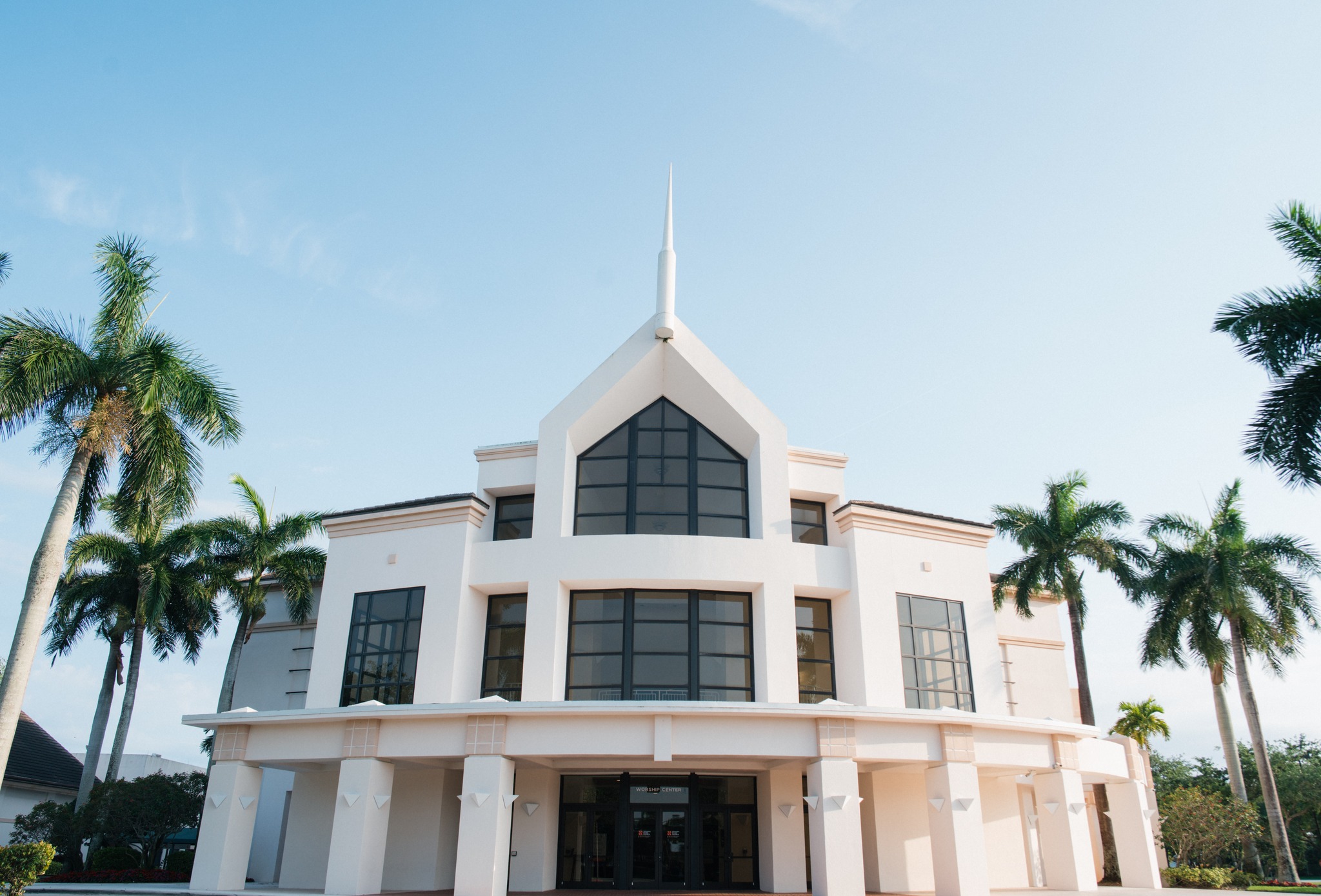
Pray that we’ll be good stewards of the Gospel opportunities that are before us. We have been serving in church planting around the world for many, many years now – an initiative that was started by the founding pastor here, David Nicholas. Pray that God would continue to make us fruitful, that endeavor.
Then secondly, right now as a congregation we’re growing consistently. I wouldn’t say it’s explosive growth or exponential growth, but it’s consistent and it’s significant. In seasons of expansion like that, you want to pray that God will keep bringing us back to him. Keep us dependent.
Keep us desperate for Jesus and give us wisdom for how to care for all these new folks who are coming to know Jesus, especially from lots of different language groups, lots of different people groups, the tremendous diversity in this church so that we can serve them fruitfully and well. Those would be the top two things I’d say to pray for us right now.
Pastor David Cassidy, you have been so gracious with your time and your vulnerability and honesty and patience with me asking some big questions. We appreciate you so much. Thanks for your time.
Ben, thank you. And please give everybody in Franklin a hug from me.
To learn more about Spanish River Church, click here.