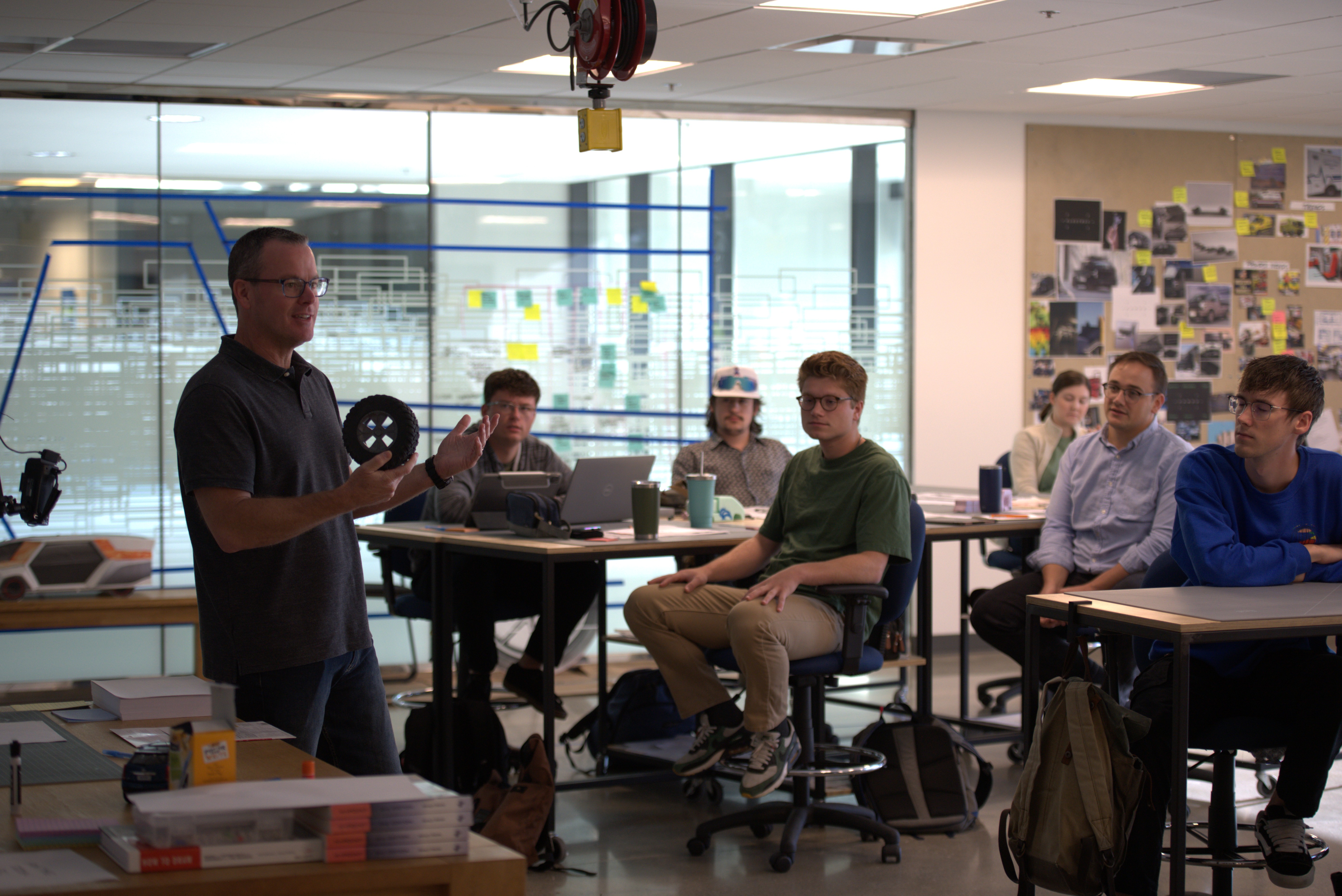
“Ultimately, I want students to see that design is more than styling — it’s empathy in action,” he said. “Whether designing an automobile, a consumer product or a mobility solution, the principles remain the same: understand people, identify needs and deliver excellence.”
The Ford Mustang, Chevy Camaro and Dodge Challenger have long defined American automotive appearance and performance. But behind every sleek exterior and precision detail lies the imagination of designers shaping the industry’s future.
Seniors from Cedarville University’s industrial and innovative design program studying at the International Center for Creativity (ICC) in Dublin, Ohio, recently explored both the rewards and challenges of automotive design in a five-week intensive course.
Working in brand-specific teams for the Mustang, Camaro and Challenger, the class envisioned the “2035 Pony Car,” a forward-looking concept and modeling project that introduced real-world industry practices through hands-on experience.
“Although this course is not a sponsored project, it mirrors a real-world transportation design challenge,” said Tom Balliett, ICC co-founder and instructor. “Students work under authentic timelines, deliver against professional milestones and manage their time and resources effectively. The result is a deeply experiential learning process that builds confidence, professional discipline and a strong portfolio.”
This hands-on approach reflects the broader philosophy of Cedarville’s design program, a leading program among private Christian universities. Operated in partnership with the ICC, the program emphasizes faith-integrated, industry-driven learning. Through relationships with companies such as Chick-fil-A, Honda and Answers in Genesis, students routinely engage with authentic design challenges.
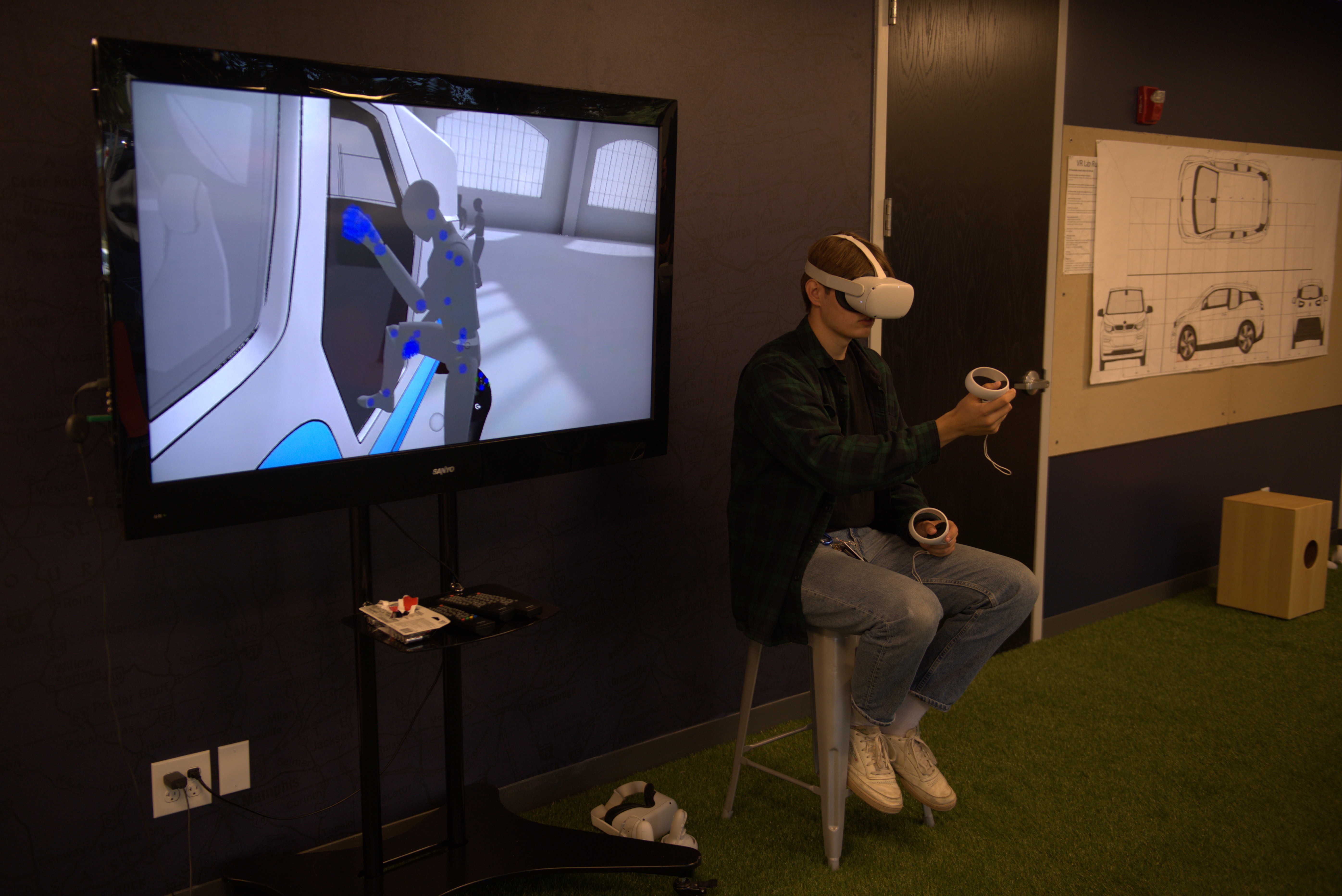
That philosophy emerged in the Pony Car project as each team developed two concepts for its assigned brand — a standard model and a high-performance version — resulting in six unique designs. Students assumed roles including lead designer, clay modeler, virtual reality modeler and component designer.
“While the designs should pay homage to each brand’s historical roots,” Balliett said, “they must be forward-looking and original, avoiding retro styling in favor of fresh interpretations that push brand identity.”
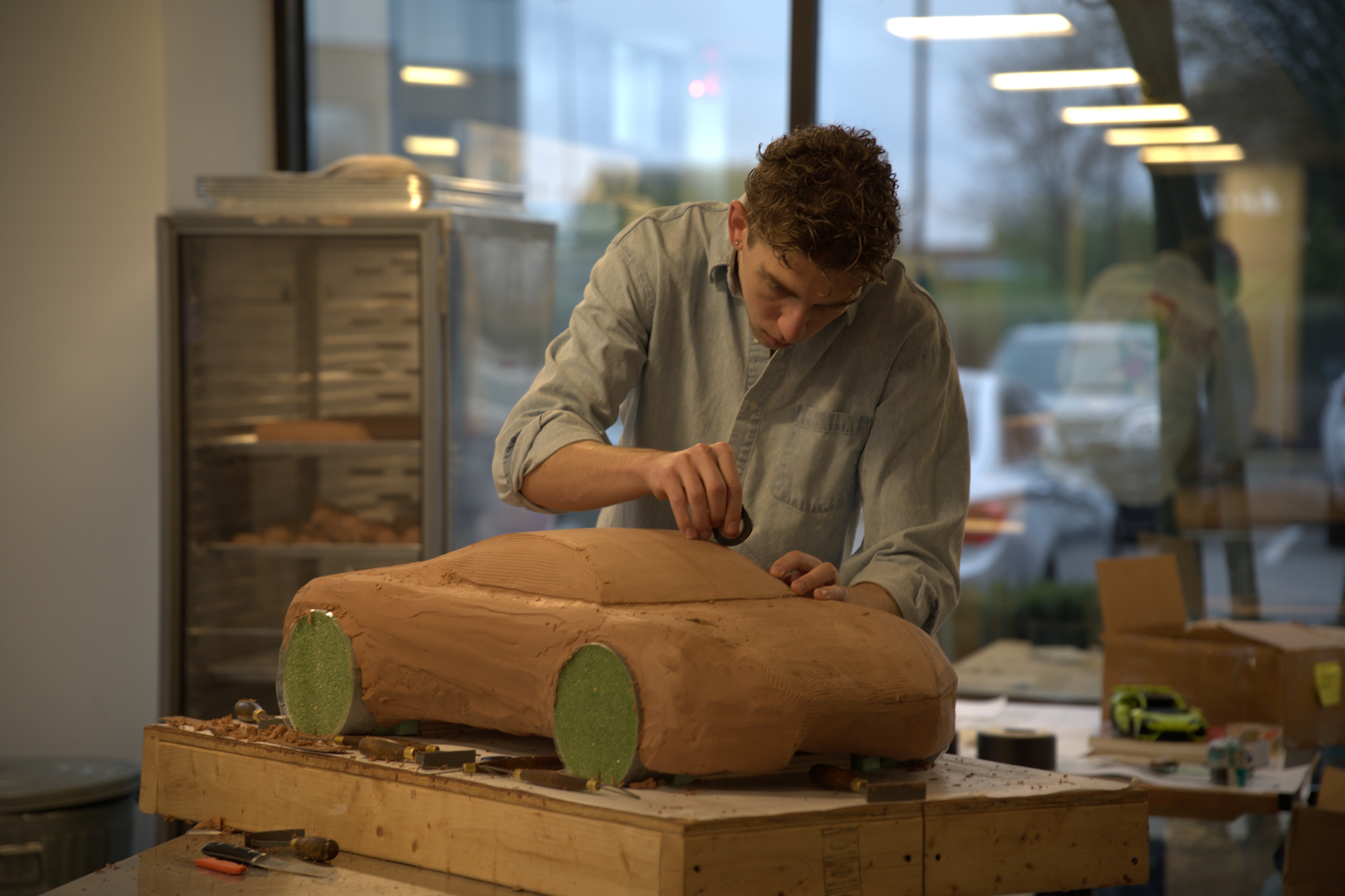
Students produced sketches, clay models with 3D components, CAD files, renderings, animations, VR models, foam models and interior concepts. The course concluded with final presentations featuring 1:7 scale clay models and detailed renderings that captured each vehicle’s design intent.
“I learned a lot from this project both as a designer and a child of God,” said senior David Stralnic of Valparaiso, Indiana. “The biggest takeaway was how to be a good teammate. To succeed, we all had to go above and beyond expectations.”
Students also strengthened communication, collaboration and problem-solving skills through critiques and reviews.
Guest presenters, including Italian automotive designer Boris Fabris, industrial designer and clay sculptor Brian Shane, and ICC co-founder Jim Stevenson, added professional insight.
Balliett said the program equips students with versatile abilities applicable across automotive styling, product development, prototyping and advanced fabrication.
“Ultimately, I want students to see that design is more than styling — it’s empathy in action,” he said. “Whether designing an automobile, a consumer product or a mobility solution, the principles remain the same: understand people, identify needs and deliver excellence.”
Cedarville University, an evangelical Christian institution in southwest Ohio, offers undergraduate and graduate residential and online programs across arts, sciences and professional fields. With 7,265 students, it is among Ohio's largest private universities and is ranked among the nation’s top five evangelical universities in the Wall Street Journal’s 2026 Best Colleges in the U.S. Cedarville is also known for its vibrant Christian community, challenging academics and high graduation and retention rates. Learn more at cedarville.edu.