ELIZABETHTOWN, Ky. (AP) — Vice President JD Vance joined the grieving family of a Kentucky man who was the seventh U.S. service member to die in combat during the Iran war as his remains were brought back to the U.S. Monday evening.
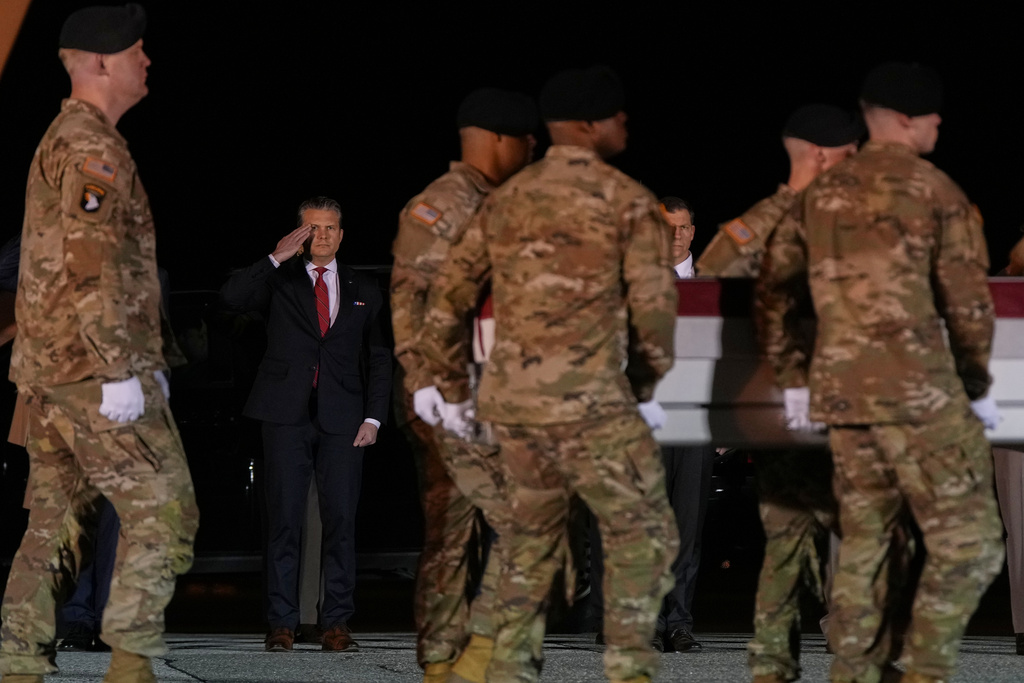
The dignified transfer, a solemn event that honors U.S. service members killed in action, took place at Dover Air Force Base in Delaware for Army Sgt. Benjamin N. Pennington, 26, of Glendale, Kentucky. He died Sunday after being wounded during a March 1 attack on the Prince Sultan Air Base, Saudi Arabia, a Pentagon statement said.
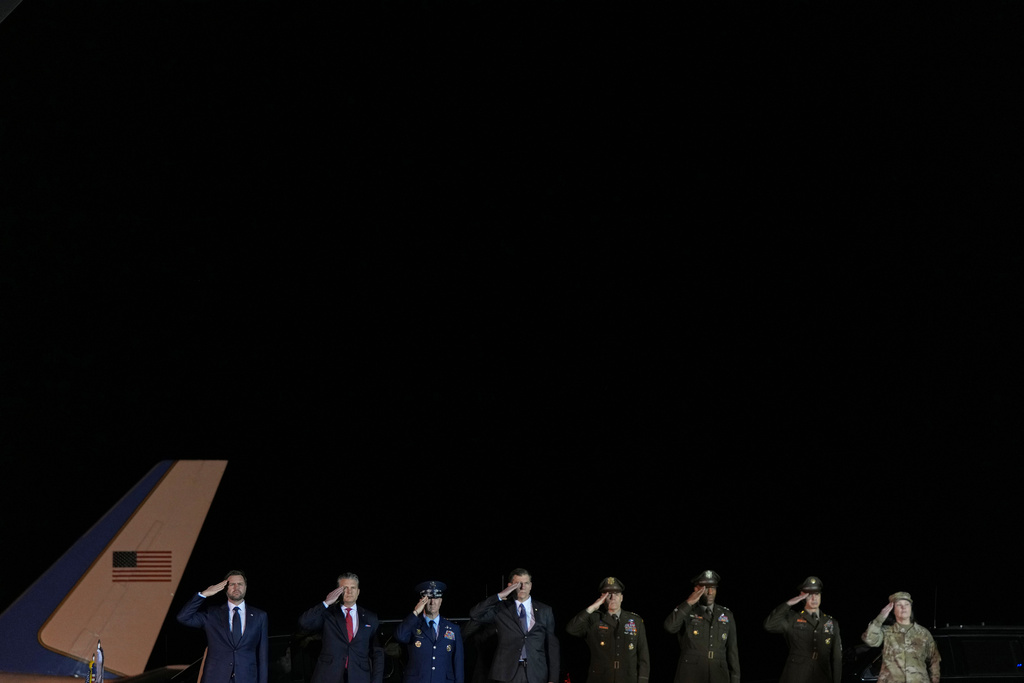
Vance and Defense Secretary Pete Hegseth saluted alongside high ranking military officials as the transfer case draped with the American flag was carried from the military aircraft and into an awaiting vehicle.
Mike Bell, retired pastor of Glendale Christian Church, said he’d known Pennington since he was a toddler and got a call from Pennington's father when the soldier was hurt.
“I talked to Tim Saturday morning, and he was doing a little better, and they were talking about maybe moving him to Germany,” Bell said. Tim Pennington called again that evening, Bell said, to ask for prayers as his son's condition was worsening, and then later told him the soldier had succumbed to his injuries.
“He was just a quiet person,” said Bell, noting that Pennington attended the church’s after-school program. “I mean, he never attracted attention because he was just steady doing what he needed to do to do it.”

(AP) - The Pentagon said that about 140 U.S. service members have been wounded since the start of the war.
“The vast majority of these injuries have been minor, and 108 service members have already returned to duty,” Pentagon spokesman Sean Parnell said in an emailed statement. Eight U.S. service members are currently “severely injured,” Parnell added.
The new figure is the first insight into the broader toll of injuries that have been sustained by U.S. troops in the conflict. Seven soldiers have been killed in Kuwait and Saudi Arabia.
Iran’s attacks on regional oil infrastructure and pledges to choke off maritime traffic left markets on edge Tuesday as the United States promised blistering new strikes. The war entered its 11th day with no end in sight as its effects were felt across the region and beyond.
Both sides sharpened their rhetoric as they dug in, with U.S. Defense Secretary Pete Hegseth again promising the most intense strikes yet, while Iran's leaders ruled out talks and directly threatened U.S. President Donald Trump.
Iran launched new attacks Israel and Gulf Arab countries, and Israel — America’s key ally in the fight — launched more airstrikes on Tehran and in Lebanon, where it is battling the Iran-backed Hezbollah.
At the Pentagon, Hegseth warned that Tuesday “will be yet again our most intense day of strikes inside Iran: The most fighters, the most bombers, the most strikes, intelligence more refined and better than ever.” He said “the last 24 hours have seen Iran fire the lowest amount of missiles they have fired yet.”
Gen. Dan Caine, chairman of the Joint Chiefs of Staff, said U.S. forces hit more than 5,000 targets, and that their objectives included striking “deeper into Iran's military and industrial base.”