ANCHORAGE, Alaska (AP) — Damage to remote Alaska villages hammered by flooding last weekend is so extreme that many of the more than 2,000 people displaced won’t be able to return to their homes for at least 18 months, Gov. Mike Dunleavy said in a request to the White House for a major disaster declaration.
In one of the hardest hit villages, Kipnuk, an initial assessment showed that 121 homes — or 90% of the total — have been destroyed, Dunleavy wrote. In Kwigillingok, where three dozen homes floated away, slightly more than one-third of the residences are uninhabitable.
The remnants of Typhoon Halong struck the area with the ferocity of a Category 2 hurricane, Dunleavy said, sending a surge of high surf into the low-lying region. One person was killed, two remain missing, and rescue crews plucked dozens of people from their homes as they floated away.
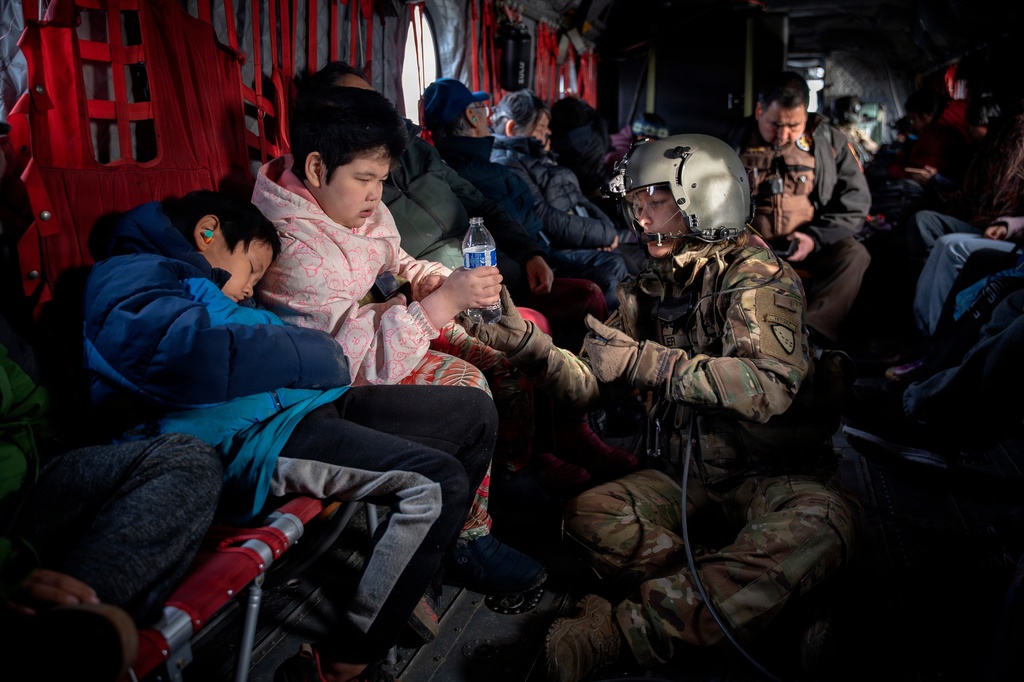
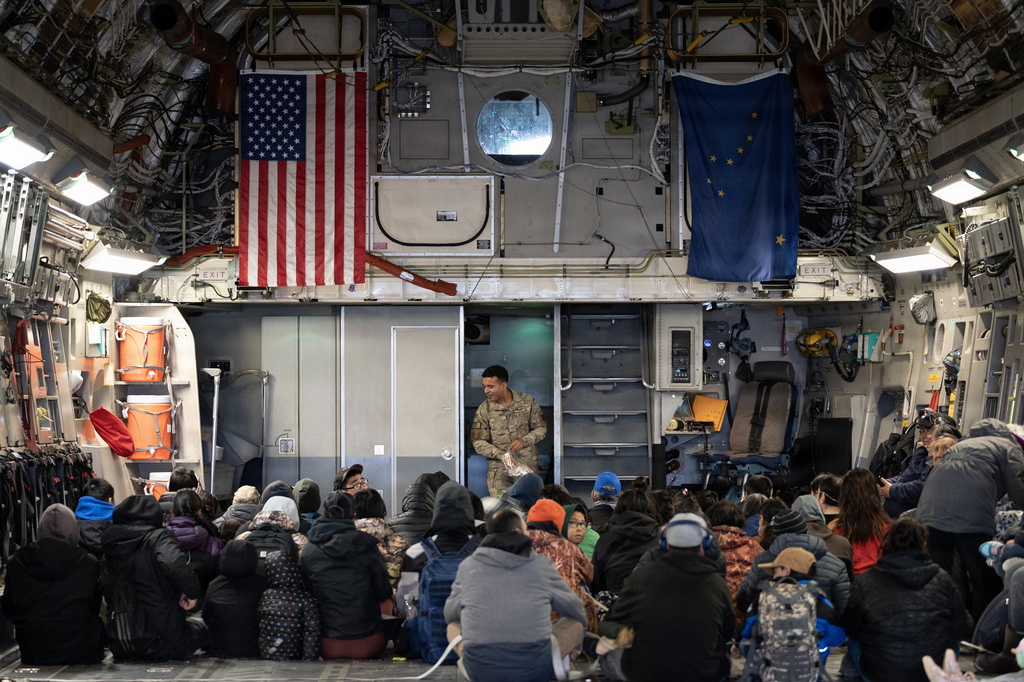
Officials have been scrambling to airlift people from the inundated Alaska Native villages. More than 2,000 people across the region have taken shelter — in schools in their villages, in larger communities in southwest Alaska or have been evacuated by military planes to Anchorage, the state's largest city.
Anchorage leaders said Friday they expect as many as 1,600 evacuees to arrive. So far about 575 have been airlifted to the city by the Alaska National Guard, and have been staying at a sports arena or a convention center. Additional flights were expected Friday and Saturday.
Officials are working on figuring out how to move people out of shelters and into short-term accommodations, such as hotels, and then longer-term housing.
“Due to the time, space, distance, geography, and weather in the affected areas, it is likely that many survivors will be unable to return to their communities this winter,” Dunleavy said. “Agencies are prioritizing rapid repairs ... but it is likely that some damaged communities will not be viable to support winter occupancy, in America’s harshest climate in the U.S. Arctic.”
The federal government already has been assisting with search and rescue, damage assessments, environmental response and evacuation support. A major disaster declaration by President Donald Trump could provide federal assistance programs for individuals and public infrastructure, including money for emergency and permanent work.
The three members of Alaska’s congressional delegation on Friday sent a letter to Trump, urging swift approval.
The storm surge pummeled a sparsely populated region off the state's main road system where communities are reachable only by air or water this time of year. The villages typically have just a few hundred residents, who hunt and fish for much of their food, and relocating to the state's major cities will bring a vastly different lifestyle.
Alexie Stone, of Kipnuk, arrived in Anchorage in a military jet with his brothers, children and mom, after his home was struck by the flooding. They've been staying at the Alaska Airlines Center at the University of Alaska, where the Red Cross provided evacuees with cots, blankets and hygiene supplies.
At least for the foreseeable future, he thinks he might try to find a job at a grocery store; he used to work in one in Bethel.
“It's going to be, try to look for a place and find a job,” Stone said Friday. “We're starting a new life here in Anchorage.”
Anchorage officials and business leaders said Friday they were eager to help the evacuees.
“Our neighbors in western Alaska have experienced tremendous loss, devastation and grief," Mayor Suzanne LaFrance said at a meeting of the Anchorage Assembly. “We will do everything we can here in Anchorage to welcome our neighbors and help them through these difficult times.”
State Rep. Nellie Unangiq Jimmie, of Toksook Bay, on an island northwest of Kipnuk, described for the assembly how she rode out the storm’s 100 mph (161 kmh) winds with her daughter and niece.
“We had no choice but to sit in our home and wait to see if our house is going to come off the foundation or if debris is going to bust open our windows,” she said.
It didn’t, but others weren’t as fortunate. She thanked Anchorage for welcoming the evacuees.
“You are showing my people, my relatives, my constituents, even if they are far from home, this is still Alaska land and they’re amongst families,” Jimmie said.
Dogs Rescued, Too
SEATTLE (AP) — The special delivery arrived in a plastic storage box after a chartered flight in bouncy single-propeller plane. Veterinarian Susan Shaffer Sookram snipped the zip ties securing the lid and greeted the cargo: four dogs, one with a gray collar bearing its name, Happy.
“What a scary ride!" she said. “You made it!”
As officials in Alaska work around the clock on one of the most significant airlift operations in state history — evacuating more than 1,000 people from remote, flood-battered villages on the coast of the Bering Sea — another rescue operation is playing out: getting the dogs left behind to safety, in hopes of later reuniting them with their owners.
The pet shelters closest to the devastated villages are in Bethel, a regional hub around 90 miles (150 kilometers) away by boat or plane.
When Bethel Friends of Canines, a nonprofit that helps rehome animals, learned that 50 to 100 dogs might be abandoned in one of the villages, Kipnuk, it scrambled to charter a plane to evacuate them.
“It costs us $3,000 to do this so and we don’t know how many times we’re gonna have to do it,” organizer Jesslyn Elliott said by phone Wednesday. “We’ve never had a natural disaster to this, like, magnitude. So this is all very, very foreign and new to us. So we’re just kind of winging it.”
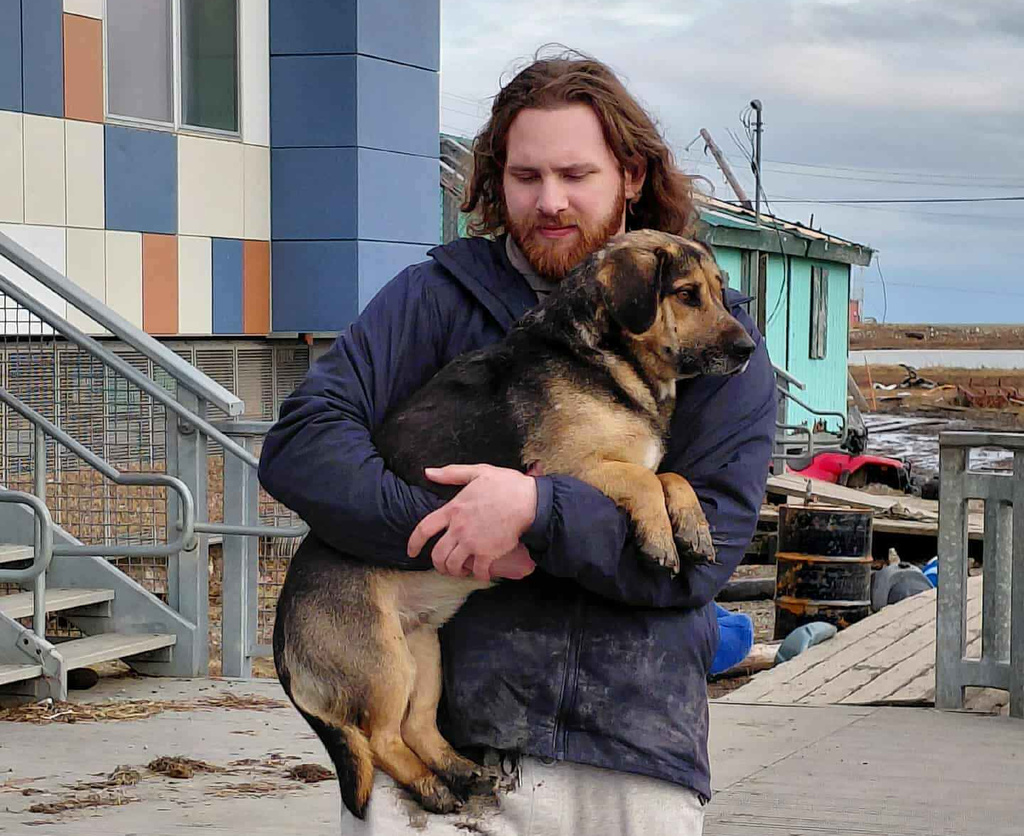
The first flight arrived in Bethel on Wednesday night, and more happened Thursday. Dozens of dogs have passed through her kennel since the floods began. The nonprofit had raised more than $22,000 after pleading on Facebook for donations.
The flooding, caused by remnants of Typhoon Halong, has damaged homes in 11 small rural communities, with no more than a few hundred residents, according to FEMA. Many homes cannot be repaired until next summer as winter temperatures and snow are forecast for this month.
State officials began airlifting people to Anchorage on Wednesday, as local leaders in Kipnuk and Kwigillingok, near the Bering Sea, asked to evacuate residents and as shelters in Bethel neared capacity. At least one resident of Kwigillingok was confirmed dead, and the search for two others was called off after their how was swept away.
Pets were not allowed on the military evacuation flights. State officials have said that the evacuation of people is the priority.
Bethel Friends of Canines received dogs throughout the week as people fleeing their homes arrived by boat and by plane. There are no roads connecting towns in the area.
Many of the pets owners want them back soon, but need time to prepare temporary lodgings in cities like Anchorage and Nome, which are more than 250 miles (400 kilometers) away.
Before the devastating floods, Bethel Friends of Canines typically held 15 to 20 dogs at any one time. Now as many as 15 dogs have arrived on a single flight. Elliott expects most of the additional dogs to stay in Bethel temporarily before being reunited with their owners or extended family that can foster them.
At least eight dogs had been reunited with owners in Anchorage as of Thursday morning, she said.
Homes in affected villages are so damaged that they many not be livable in the winter, emergency management officials said Wednesday, and forecasters said rain and snow could arrive this weekend.
With the human population in Kipnuk shrinking each day, the animal caretakers in Bethel realized they had to act fast, before everyone who knew the dogs was gone.
“There’s going to be nobody left there,” said Sookram, the veterinarian, in a phone interview. “We’re having to kind of accelerate how the animals are going to be leaving places only accessible by, at first, helicopter and now small planes,”
Some of the last people to stay behind and serve the community are teachers. Schools in flooded towns have served as emergency shelters and meeting places through the relief effort.
Back in Kipnuk, the dog with the gray collar, Happy, was found waiting on its owner’s clothes, refusing to move or eat, by teacher Jacqui Lang. She said in a text message that the dog has since been reunited with its family.
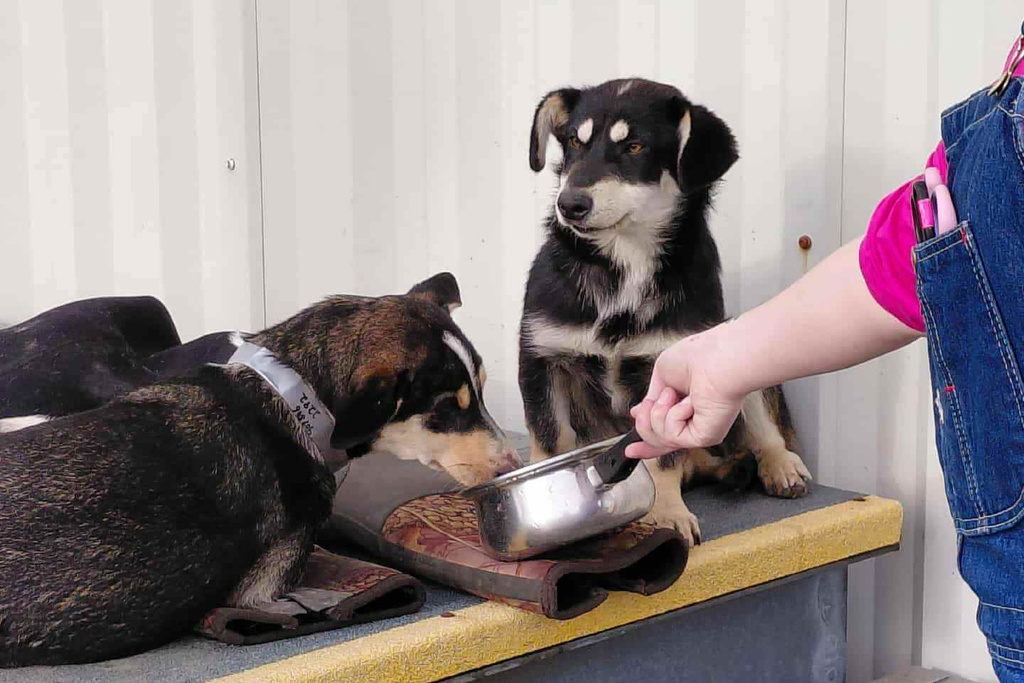
She's one of two or three teachers who helped wrangle the pets to be loaded at the airstrip, according to Lower Kuskokwim School District Superintendent Andrew ‘Hannibal’ Anderson.
When Bethel Friends of Canines worker Matthew Morgan landed in Kipnuk on Wednesday, the teachers had fed the dogs, coaxed them into crates and labeled them with tags listing their owners.
“You’ve got some heroes out in Kipnuk. They’re like the last people left there,” Morgan said. Without them, "it would have been chasing dogs all night in the mud.”
___
Associated Press writer Jesse Bedayn in Denver contributed.