The latest:
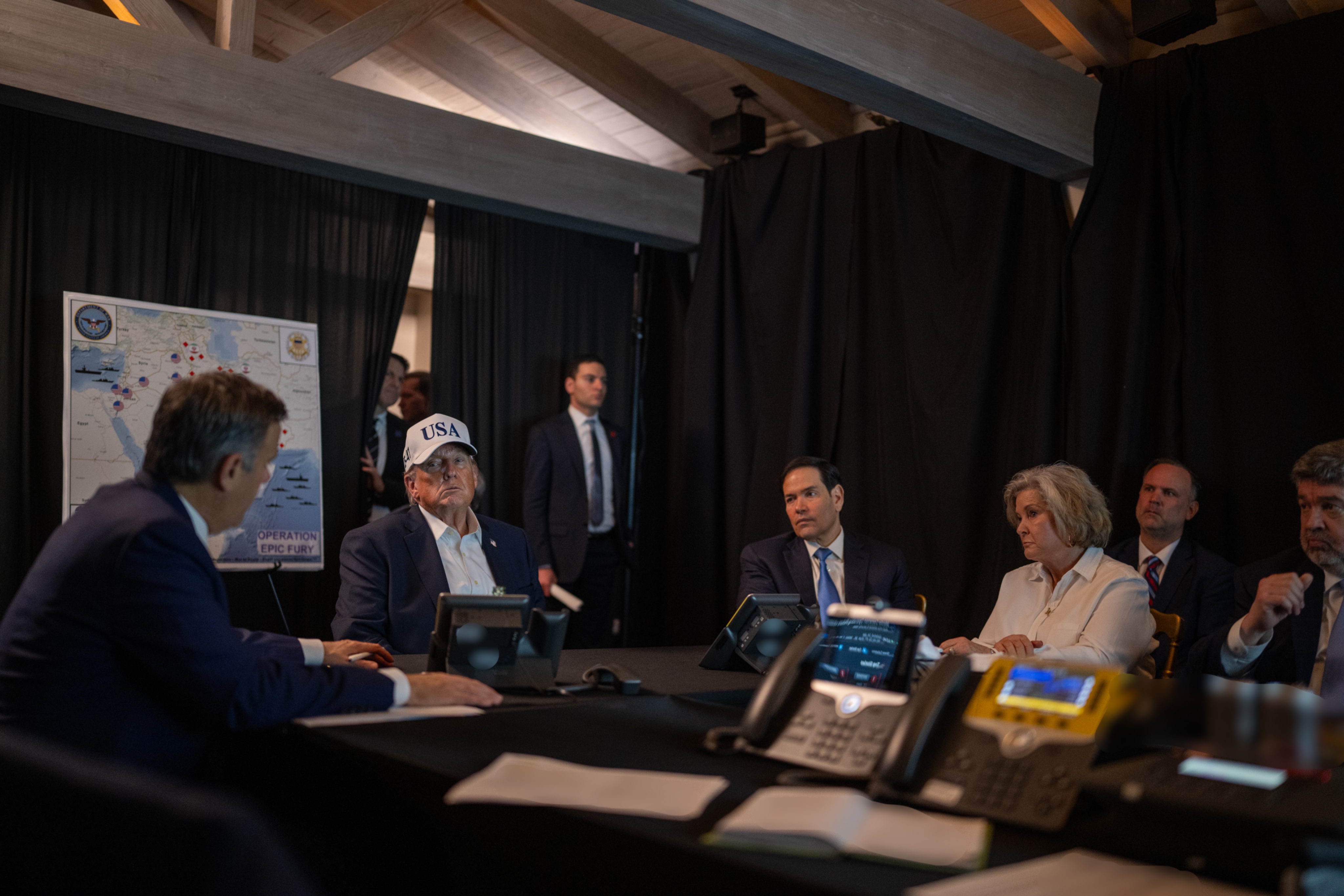
President Trump on Wednesday claimed Iran’s president wanted a ceasefire ahead of his speech to the American people.
Trump made the claim on his Truth Social website.
Trump said “Iran’s New Regime President,” however. Iran still has the same president.
Trump also said a ceasefire would only happen when the Strait of Hormuz is “open, free, clear.”
“Until then, we are blasting Iran into oblivion or, as they say, back to the Stone Ages!!!” he wrote.
Iran Foreign Ministry spokesman calls Trump’s remarks on Tehran allegedly asking for a ceasefire ‘false and baseless’.
(AP) - President Donald Trump said the military could end its Iran offensive in two to three weeks and will shift responsibility for the Strait of Hormuz to countries that rely on it for oil and shipping as the White House announced a prime-time presidential address Wednesday evening on the war.
Trump expressed frustration Tuesday with allies who have been unwilling to do more to support the U.S. war effort, telling them to “go get your own oil.” Trump recently has vacillated between insisting there is progress in diplomatic talks with Iran and threatening to widen the war.
In an interview with pan-Arab broadcaster Al Jazeera, Iranian Foreign Minister Abbas Araghchi acknowledged receiving direct messages from U.S. Mideast envoy Steve Witkoff. He insisted, however, that there were no direct negotiations and said Iran has no faith that talks with the U.S. could yield any results, saying “the trust level is at zero.”
Trump said the U.S. “will not have anything to do with” what happens next in the vital waterway that has been closed by the Islamic Republic. Instead, he told reporters, the responsibility for keeping the strait open will rest with countries that rely on it. Gulf states rely on the waterway for both exports and imports, including food, and 20 percent of the world's oil supply flows through it.
U.S. gas prices jumped past an average of $4 a gallon for the first time since 2022 on Tuesday, as the Iran war continues to push fuel prices higher worldwide. Analysts say those high fuel costs will trickle into groceries as businesses’ transportation and packaging costs pile up.
Israel strikes factory in Iran it alleges supplies fentanyl for chemical weapons
Israel said early Wednesday it struck a plant supplying Iran’s theocracy with fentanyl, a powerful synthetic opioid, to allegedly use in a chemical weapons program. Iran acknowledged the strike on Tofigh Daru factory, but insisted it only supplied “hospital drugs” used in medical operations.
The strike happened Tuesday, both the Israelis and the Iranians said.
Iranian Foreign Minister Abbas Araghchi posted a picture of the factory in Tehran, writing on X: “The war criminals in Israel are now openly and unashamedly bombing pharmaceutical companies.”
Hospitals extensively use fentanyl to treat severe pain. But a small amount of the drug can be fatal.
Both Israel and the United States have warned in recent years Iran was experimenting with fentanyl in munitions. The U.S. previously pointed to Iranian academic research studying how Russia likely used a fentanyl derivative during the 2002 Moscow theater hostage seizure by Chechen militants.
Israel alleged Tofigh Daru supplied fentanyl to an advanced research institute in Tehran, known by its acronym SPND. The U.S alleges SPND has conducted research and testing that could be applicable to the development of nuclear explosive devices and other weapons.
Airstrike hits compound of former US Embassy in Iran
An airstrike in Iran’s capital, Tehran, on Wednesday morning appears to have struck inside of the former U.S. Embassy compound there.
The embassy has been controlled by Iran’s Revolutionary Guard since the 1979 hostage crisis.
Its all-volunteer Basij force operates the compound, running an anti-American museum inside the embassy and having different operations on its grounds in newer buildings.
Witnesses saw blown-out windows surrounding the massive compound on Tehran’s Taleghani Street. However, there was no missile strike visible around the compound, with witnesses saying they believe the strike happened inside the compound.
The 444-day hostage crisis saw American diplomats held until President Ronald Reagan took office from President Jimmy Carter in 1981.