Update:
DUBAI, United Arab Emirates (AP) — The U.S. military said it battled Iranian forces and sank six small boats as it moved to reopen the Strait of Hormuz on Monday. The United Arab Emirates, a key American ally, said it had come under attack from Iran for the first time since a fragile ceasefire took hold in early April.
The attacks appeared to be in response to President Trump’s latest efforts to reopen the strait, a critical waterway for global energy. The U.S. military said two American-flagged merchant ships had successfully transited the strait on Monday as part of a new initiative.
The UAE Defense Ministry said Iran had launched four cruise missiles, with three shot down and one falling into the sea. Authorities in the eastern emirate of Fujairah said an Iranian drone sparked a fire at a key oil facility, wounding three Indian nationals. The British military reported two cargo vessels ablaze off the UAE.
Breaking Iran’s chokehold on the strait would ease global economic concerns and deny Tehran a major source of leverage. But such efforts also risk reigniting the full-scale fighting that erupted when the U.S. and Israel first attacked Iran on Feb. 28, prompting it to close the strait.
Reports of new attacks raised doubts as to whether shipping companies, and their insurers, would take such a risk given that Iran has fired on ships in the waterway and vowed to keep doing so. Iran has said the new U.S. effort is a violation of the fragile ceasefire that has held for more than three weeks.
US military says it sunk 6 Iranian small boats that were targeting civilian vessels
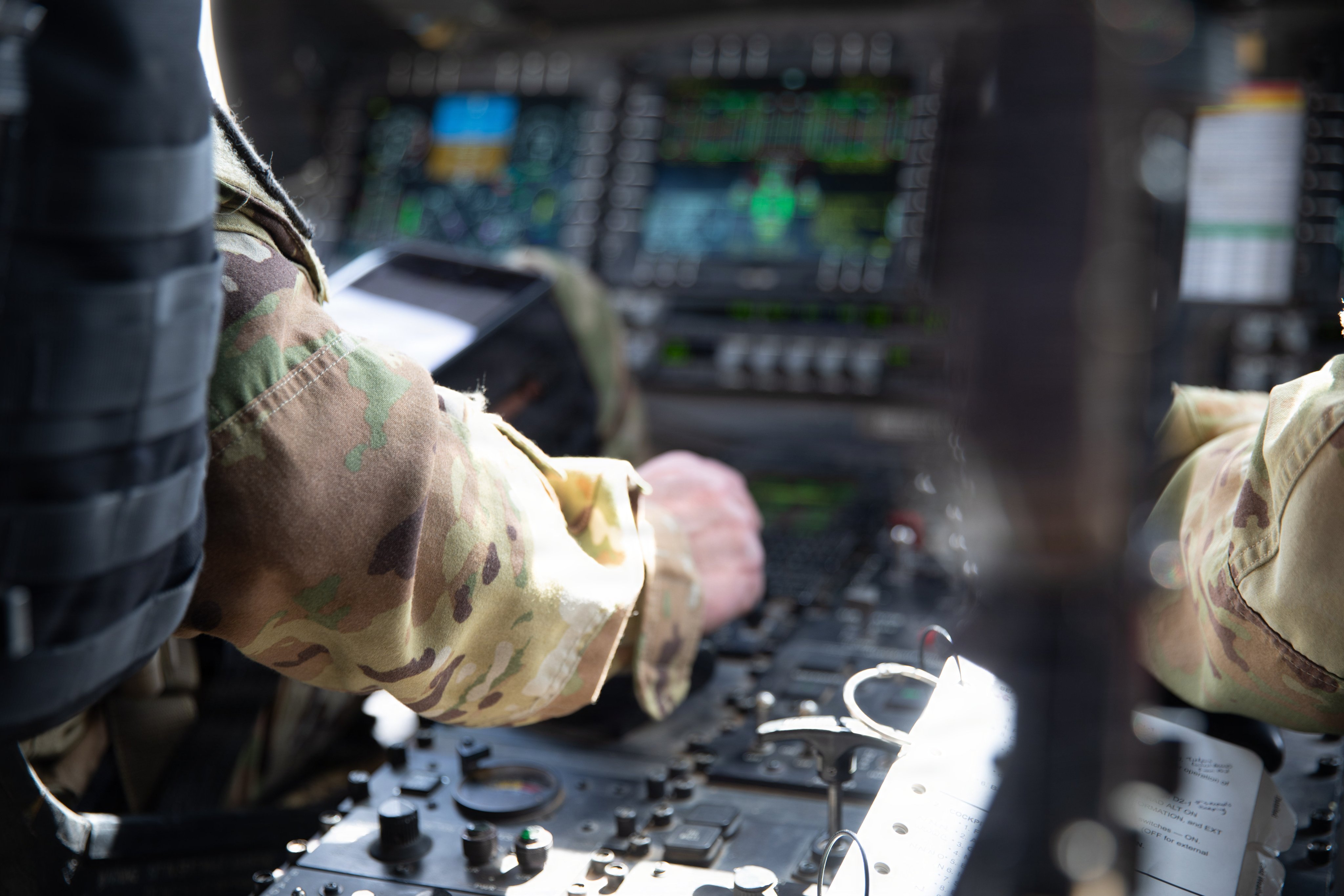
Adm. Brad Cooper, who heads U.S. Central Command, said U.S. military helicopters have sunk six Iranian small boats that were targeting civilian vessels in the Strait of Hormuz.
It is the latest test of the ceasefire between Iran and the U.S.
Cooper told reporters that American forces have successfully opened a passage through the strait that is free of Iranian mines. He said Iran launched multiple cruise missiles, drones and small boats at civilian ships under the U.S. military’s protection.
U.S. military helicopters sank six of the small boats, Cooper said, adding that “each and every” threat had been defeated.
“The U.S. commanders who are on the scene have all the authority necessary to defend their unit and to defend commercial shipping -- as we saw and demonstrated earlier today,” Cooper said.
Cooper does not offer details about whether US was protecting sites that came under Iranian attack
Asked whether the U.S. was protecting sites in the United Arab Emirates that came under Iranian attack, Cooper said he didn’t want to go into details.
The head of U.S. Central Command told reporters Monday that the “UAE has exceptional capability. They’re well-positioned to defend themselves.”
Authorities in the eastern emirate of Fujairah said an Iranian drone sparked a fire at a key oil facility, wounding three Indian nationals. The British military also reported two cargo vessels ablaze off the UAE.
Cooper says the Fujairah attack was “under their national jurisdiction” and not part of the new American effort to get commercial ships moving through the Strait of Hormuz.
UAE airspace nearly empty as warning sirens blare
The airspace over the UAE was nearly empty Monday night as the country faced multiple sirens warning of incoming drones, according to the flight tracking website FlightRadar24.
Just days ago, the airport, which is among the world’s busiest, had announced it had mostly returned to full operations.
UAE condemns Iranian attacks
The United Arab Emirates condemned what it called “renewed treacherous Iranian aggression” targeting civilian sites that left three people injured, and called for an immediate halt to the attacks.
“These attacks represent a dangerous escalation and an unacceptable violation,” the UAE’s foreign ministry said in a statement on X, adding that the UAE reserves the right to respond in a way that protects its sovereignty and security.
Cooper says Iran ‘initiated aggressive behavior’ in Strait of Hormuz
In his call with reporters, Cooper declined to say whether the ceasefire between Iran and the U.S. was over or not, but noted that it was Iran that “initiated aggressive behavior” in the Strait of Hormuz on Monday.
Cooper said the U.S. military is serving as a defensive force “to give a very clear defense to commercial shipping, to allow them to proceed out of the Arabian Gulf.”
“That’s what we’re focused on,” Cooper said. “What we saw this morning was Iran initiating aggressive behaviors. We are simply going to respond to that.”