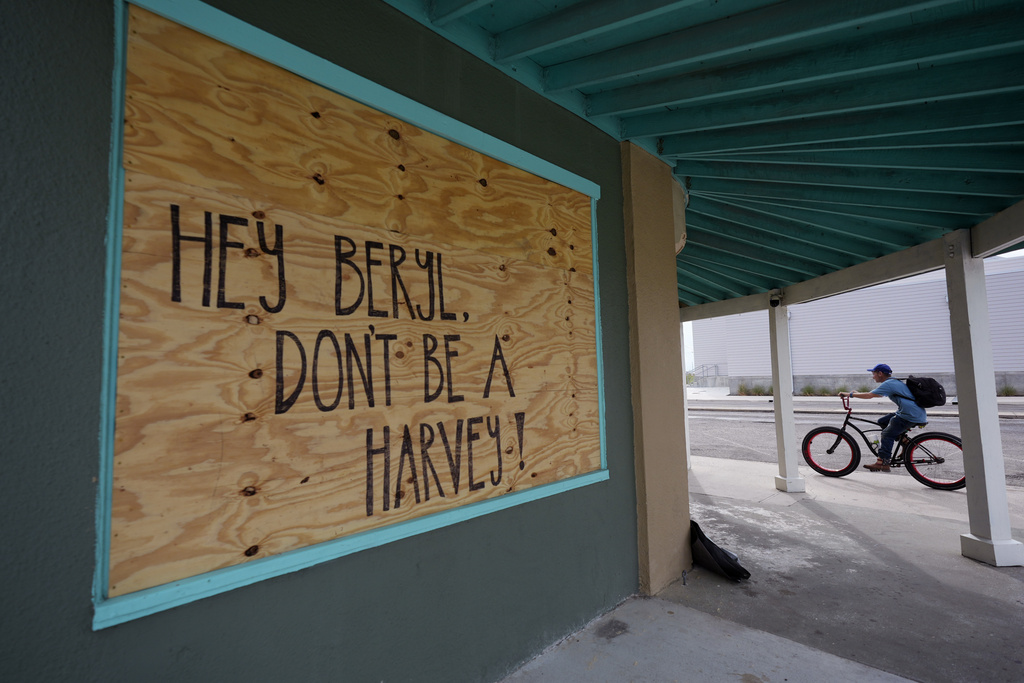
MATAGORDA, Texas (AP) — Beryl began lashing Texas with rain and intensifying winds Sunday as coastal residents boarded up windows, left beach towns under evacuation orders and prepared for the powerful storm that has already cut a deadly path through parts of Mexico and the Caribbean.
Although Beryl remained a tropical storm Sunday as it churned toward Texas, it threatened to potentially regain hurricane strength in the warm waters of the Gulf of Mexico before making landfall early Monday. The storm was projected to come ashore in the middle of the Texas coast around Matagorda Bay, an area about 100 miles (161 kilometers) south of Houston, but officials cautioned the path could still change.
Texas officials warned the storm would cause power outages and flooding but also expressed worry that not enough coastal residents and beach vacationers in Beryl's path were heeding warnings to leave.
“One of the things that kind of trigger our concern a little bit, we’ve looked at all of the roads leaving the coast and the maps are still green,” said Texas Lt. Gov. Dan Patrick, who is serving as the state's acting governor while Gov. Greg Abbott is travelling overseas. “So we don’t see many people leaving.”
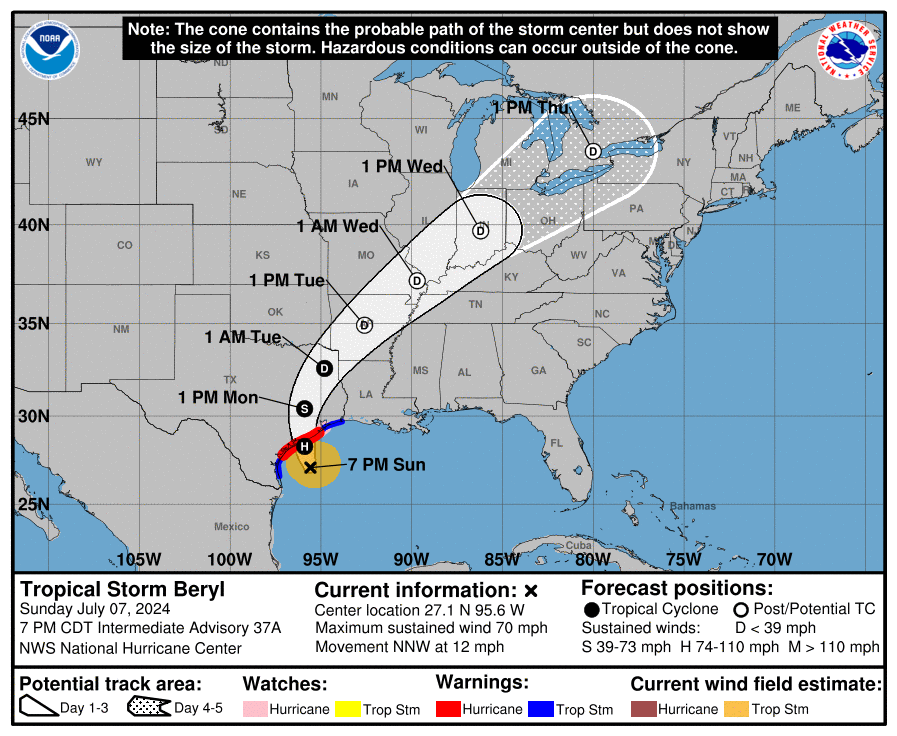
Key Messages:
1. There is a danger of life-threatening storm surge inundation along the coast of Texas from the north entrance to the Padre Island National Seashore to Sabine Pass, including Matagorda Bay and Galveston Bay. Residents in those areas should follow any advice given by local officials and follow evacuation orders.
2. Beryl is forecast to bring damaging hurricane-force winds to portions of the Texas coast tonight and early Monday. A Hurricane Warning is in effect from Baffin Bay to San Luis Pass.
3. Considerable flash and urban flooding is expected tonight through Monday night across portions of the middle and upper Texas Gulf Coast and eastern Texas. Minor to isolated major river flooding is also expected.
4. Rip currents will cause life-threatening beach conditions through Monday across much of the Gulf Coast. Beachgoers should heed warning flags and the advice of lifeguards and local officials before venturing into the water.
Along the Texas coast, many residents and business owners took the typical storm precautions, but also expressed uncertainty about the storm's intensity.
In Port Lavaca, Jimmy May fastened plywood over the windows of his electrical supply company and said he wasn’t concerned about the possible storm surge. He recalled that his business had escaped flooding in a previous hurricane that brought a 20-foot (6-meter) storm surge.
“In town, you know, if you’re in the low-lying areas, obviously, you need to get out of there,” he said.
At the nearby marina, Percy Roberts showed his neighbor Ken Waller how to properly secure his boat as heavy winds rolled in from the bay Sunday evening.
“This is actually going to be the first hurricane I'm going to be experiencing,” Waller said, noting that he's a little nervous but feels safe following Roberts' lead. “Pray for the best but expect the worst, I guess.”
Farther down the coast in Freeport, Mark Richardson, a 64-year-old retiree, said homeowners were busy “trying to tie everything down” and worried that Beryl had people unsure about where along the Texas coast it would make landfall. He spent Sunday morning on the beach and said ocean swells were quickly rising.
“The ocean is getting very angry, very fast,” he said.
The earliest storm to develop into a Category 5 hurricane in the Atlantic, Beryl caused at least 11 deaths as it passed through the Caribbean on its way to Texas. The storm ripped off doors, windows and roofs with devastating winds and storm surge fueled by the Atlantic’s record warmth.
Three times in its one week of life, Beryl has gained 35 mph (56 kph) in wind speed in 24 hours or less, the official weather service definition of rapid intensification.
Beryl’s explosive growth into an unprecedented early whopper of a storm shows the literal hot water of the Atlantic and Caribbean, and what the Atlantic hurricane belt can expect for the rest of the storm season, experts said.