The National Day of Prayer in Washington, D.C. has historically featured American worship leaders and artists. The invitation to Siemens and Bennett brings a Canadian voice, a family-centered ministry, and a hymn-driven movement into one of the most significant national gatherings in the United States. Their performance is aligned with this year’s theme: “Glorify God Among the Nations, Seeking Him in All Generations” (1 Chronicles 16:24).
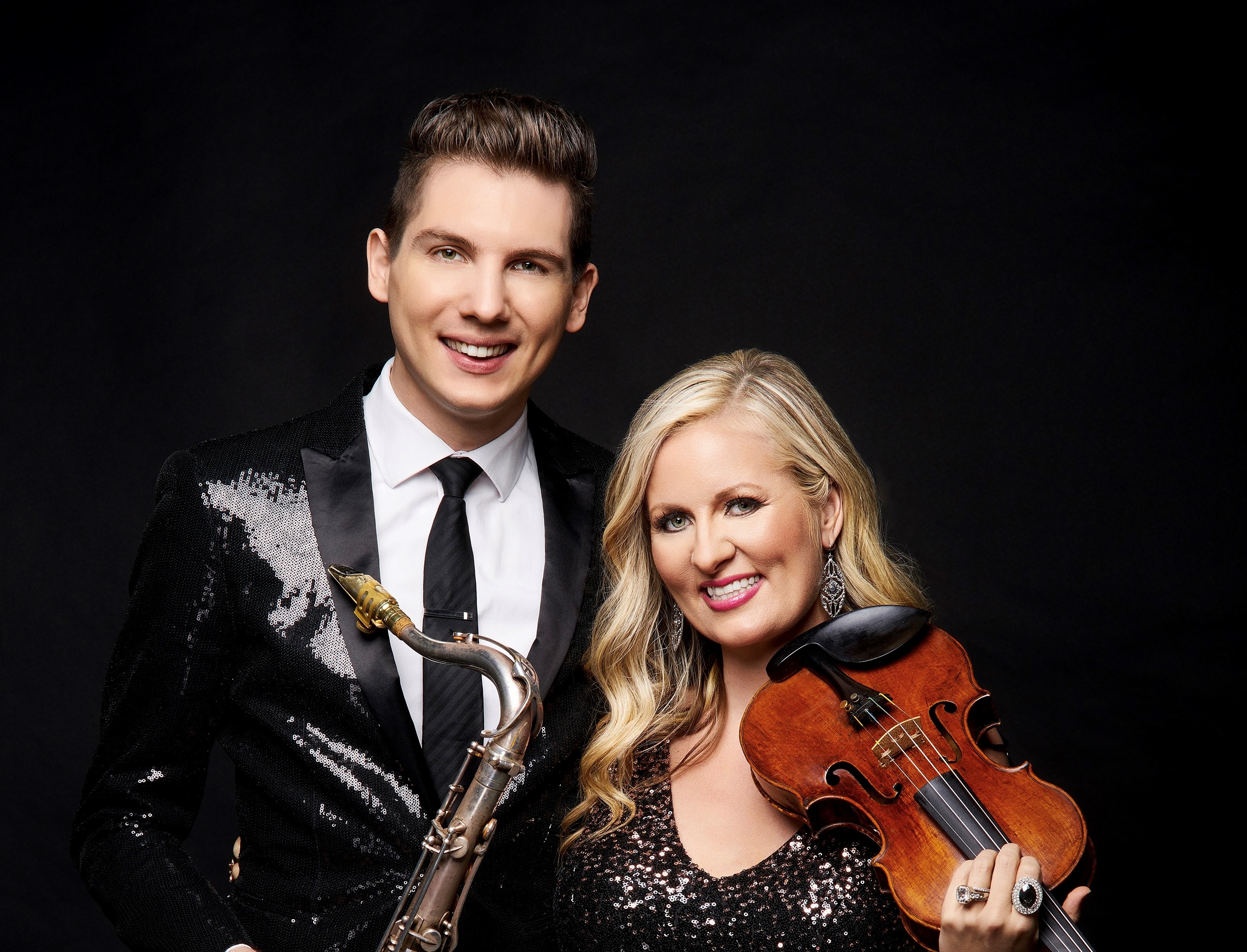
Internationally acclaimed violinist and vocalist Rosemary Siemens, alongside her husband, award-winning saxophonist and producer Eli Bennett, will perform in Statuary Hall at the United States Capitol Building on May 7, 2026, as part of the 75th Annual National Day of Prayer. In a non-partisan gathering focused on faith and unity, the married couple will present the world premiere of Siemens’s original song “Path of Prayer” before members of Congress, the Senate, and a global broadcast audience.
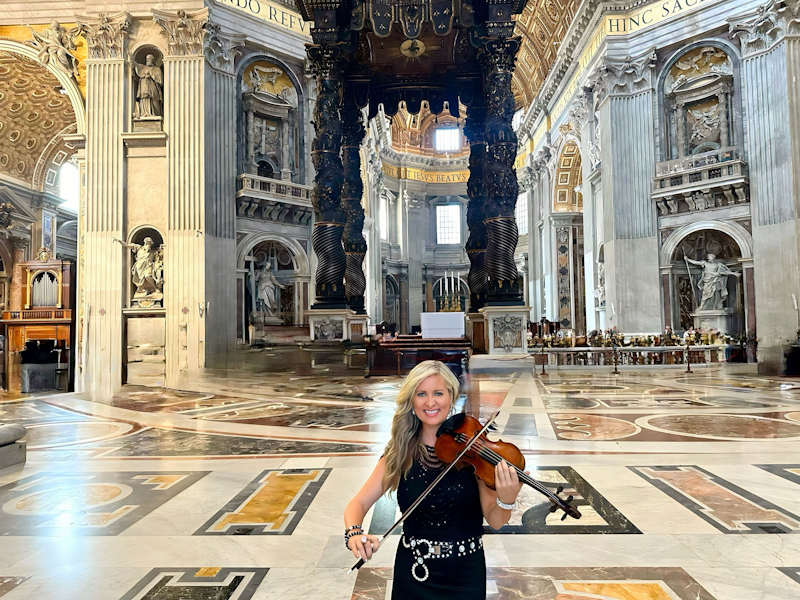
Rosemary Siemens is the first violinist in history to have performed at the Sistine Chapel. On May 7, she brings that artistry to the most symbolically charged chamber in American government, performing alongside Bennett for the country’s highest-profile annual gathering of national prayer.
Together, the married couple built Sunday Hymn Serenade: Bring Back the Hymns, the world’s leading hymn-based YouTube channel: 715,000 subscribers, 200 million views, 41 million watch hours, and an audience in every country. Forty-five percent of viewers are under 45.
A Song Years in the Making
At the heart of their performance is “Path of Prayer,” an original song written by Siemens in 2018 that has never before been officially released. Over the years it became the most requested song at every live performance they gave, with audiences night after night asking for the recording.
Siemens held it back deliberately. Year after year she told her husband that she felt, one day, they would play at a prayer event in Washington, D.C. She could not say exactly when or how. She only knew the song was meant for that specific moment, and she was not willing to release it before it arrived.
“I told Eli over the years that I always felt we would one day play at a prayer event in Washington, D.C.,” Siemens says. “I waited to release this song because I believed it was meant for that moment. Now that moment is here.”
The Capitol performance on May 7 marks the world premiere release of “Path of Prayer,” eight years after it was written. For the fans who have requested it at every show since 2018, the wait is finally over.
A Global Hymn Revival
What began in 2019 as a commitment to share hymns online has grown into a global movement. With 715,000 subscribers and 200 million views, the channel reaches listeners in every country. In a finding that challenges the conventional assumption that hymns are music for older generations, 45% of viewers are under 45. Their 11-hour sleep compilation has surpassed 11.6 million views alone.
“Most churches have moved away from hymns toward modern praise and worship,” Siemens says. “And we are losing something very sacred in that shift. What I see on my channel is two things happening at once: people who grew up singing these hymns and lost them from their church coming back to find them, and young people who never had them discovering something timeless and deep and entirely new to them. Both groups found their way to the same songs. That tells you something about what hymns actually are.”
“These hymns were not written to be the next radio hit,” Siemens says. “They were written from real life, from real pain, real faith, real encounters with God. The theology in these songs is deep and tested. That is why they have outlasted everything written to be trendy. That is why a six-year-old and a ninety-year-old can sing them together and both feel something true.”
“My parents led congregational singing at our small country church in Manitoba for over fifty years,” Siemens says. “They were not just singing hymns. They were carrying this music for an entire community, week after week, for generations. That is the tradition I grew up inside of. That is what I am trying to honor.”
“There are very few kinds of music that a six-year-old and a ninety-year-old can sing together,” Siemens says. “Hymns are one of them. That is their power. That is why they have endured for centuries, and that is why they are coming back now.”
“My mom says my first hymn was when I was one year old,” Siemens shares. “Growing up in Manitoba, most Sundays when we visited my grandmother, relatives would just show up. My mom at the piano, my dad singing, me on the violin, and suddenly there would be sixty people singing in four-part harmony. Nobody planned it. It just happened. That is where Bring Back the Hymns actually began. The YouTube channel is my grandmother’s living room, opened up to the whole world.”
The viewer testimonials span every circumstance. A man in Miami credits the music that began playing on his phone at the moment of a drug overdose crisis with saving his life. A 14-year-old managing depression writes that when she hears the music, all the bad stress flies away. A family played the channel for 14 hours in a hospice room as their mother died. An 89-year-old with dementia who no longer recognizes her own name sings along to every video. Children in a Ugandan orphanage learn hymns from a phone on a dirt floor. Siemens’s own children ask for the hymns every night at bedtime.
A Rare International Invitation
The National Day of Prayer in Washington, D.C. has historically featured American worship leaders and artists. The invitation to Siemens and Bennett brings a Canadian voice, a family-centered ministry, and a hymn-driven movement into one of the most significant national gatherings in the United States. Their performance is aligned with this year’s theme: “Glorify God Among the Nations, Seeking Him in All Generations” (1 Chronicles 16:24).
What Comes Next: Carnegie Hall, May 31, 2027
The Capitol performance is the beginning, not the end. On May 31, 2027, Siemens will bring the Bring Back the Hymns movement to Carnegie Hall for a historic live concert: Bring Back the Hymns Live at Carnegie Hall, featuring Rosemary Siemens with special guest Eli Bennett.
What makes the Carnegie Hall concert unlike anything previously staged at the venue: an open call for choirs and individual choir members from around the world to audition and join a mass choir on the Carnegie Hall stage. It is the first time hymns have ever been presented in this format at Carnegie Hall. The millions of people who have been part of the YouTube movement as viewers can now become part of it as performers.
“Bring Back the Hymns began in our living room,” Siemens says. “Carnegie Hall is proof that these songs belong everywhere.”
International Recognition
Both hold the Queen Elizabeth II Diamond Jubilee Medal, the Platinum Jubilee Medal, and the King Charles III Coronation Medal, and received a personal letter of thanks from Queen Elizabeth II.
About Rosemary Siemens
Rosemary Siemens is an award-winning violinist and vocalist. Rosemary Siemens is the first violinist in history to have performed at the Sistine Chapel. She has performed at Carnegie Hall, St. Peter’s Basilica at the Vatican, the Grand Ole Opry, and for two US Presidents and multiple Canadian Prime Ministers. She is the founder of the Bring Back the Hymns movement and a five-time Gospel Music Award winner.
About Eli Bennett
Eli Bennett is a Leo Award-winning film composer, Juno-nominated saxophonist, and the producer behind every Sunday Hymn Serenade episode. He has performed twice at the GRAMMY Awards, opened the Juno Awards alongside Michael Buble, and collaborated with Oscar Peterson. He is currently scoring the PBS documentary on the 100th anniversary of Route 66.
About the National Day of Prayer
The National Day of Prayer is an annual observance held on the first Thursday of May, bringing together Americans from a wide range of backgrounds in a moment of national reflection. Now in its 75th year, the modern observance was shaped in part by the leadership of Billy Graham and has become a longstanding tradition recognized across the country. The official event in Washington, D.C. takes place at the United States Capitol and is broadcast globally, reaching audiences in every country. Each year, it brings together national leaders, cultural voices, and artists around a unifying theme, making it one of the most widely recognized annual gatherings of its kind in the United States.