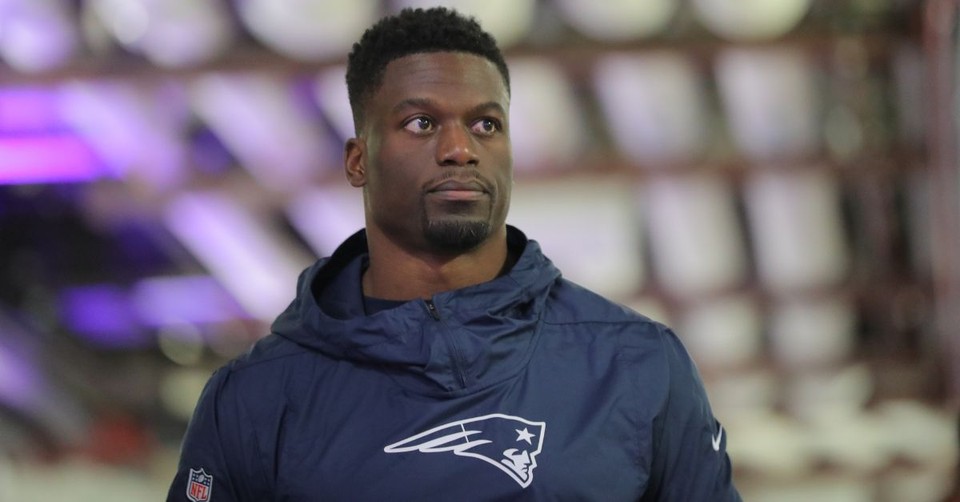
Benjamin Watson built a career defined by perseverance, discipline, and purpose. From his days as an All-American at the University of Georgia to a 16-year career in the NFL that included a Super Bowl victory with the New England Patriots, Watson’s path through professional football was marked by both success and adversity. Today, the former tight end has shifted his focus from the field to a broader mission—one that includes broadcasting, advocacy, and strengthening families and communities through his foundation.
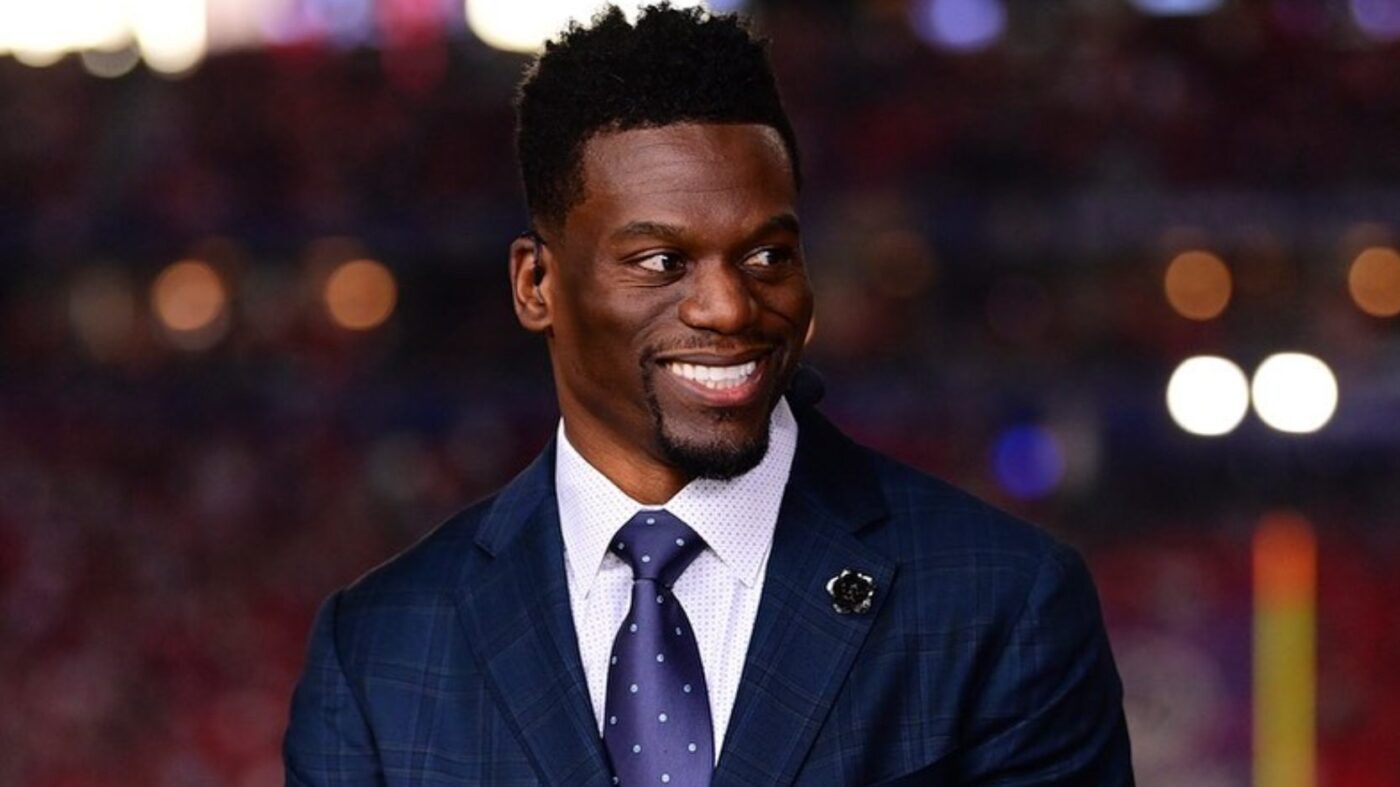
Watson now serves as an analyst for the SEC Network, covering college football while also dedicating his time to writing, podcasting, and charitable work. Alongside his wife, Kirsten, he co-founded the Watson Seven Foundation, an organization focused on supporting marriages and families. But despite his accomplishments on and off the field, Watson says his journey to feeling comfortable in the NFL took time.
(We invite you to listen to the conversation between Jalon Caldwell and Benjamin Watson in the podcast below).

Learning to Belong in the NFL
Watson entered the league in 2004 after being selected in the first round of the NFL Draft by the New England Patriots. While the moment represented the culmination of years of hard work, the transition to professional football proved more difficult than he initially expected.
“I got drafted in 2004. I was happy to be drafted,” Watson said. “I didn’t know where New England was. And so once I figured that out, I ended up getting an injury and tore my ACL my rookie year, which was really tough.”
The injury forced Watson to miss much of his first season, delaying his opportunity to find a rhythm in the league. Even after returning to the field, he said the adjustment to the NFL was not immediate.
“I don’t know if there was a moment when I felt like I belonged,” he said. “But probably around year three is when I started to feel like, okay, I can make a career out of this.”
Watson explained that the greatest challenge for many young players isn’t physical ability but the mental demands of the professional game.
“The most difficult learning curve is not even the physical part of the NFL,” he said. “It’s the mental part of it. It’s how do you handle stress, how do you handle pressure, how do you process information really quickly because it’s a lot different from college.”
Over time, Watson carved out a lengthy and productive career that included stops with the Patriots, Cleveland Browns, Baltimore Ravens, and New Orleans Saints.
Discipline, Faith, and Perseverance
Playing 16 seasons in the NFL requires more than talent. Watson credits much of his longevity to discipline and the values instilled in him by his parents.
“I think number one, I’m very stubborn,” Watson said with a laugh. “I probably should have retired way before I did.”
Behind that persistence, however, was a foundation built on faith, family, and hard work.
“I learned about discipline from my parents,” Watson said. “They were dedicated to each other, dedicated to their faith, dedicated to the Lord, and dedicated to showing us what it meant to live with integrity and to live life purposefully.”
That mindset translated directly into his professional life. Watson said his father frequently reminded him and his siblings to approach every task with the same level of commitment.
“My father used to always say, ‘Work at everything wholeheartedly as unto the Lord,’” Watson said. “He expected us to give 100 percent in anything that we did.”
Watson’s career also included numerous injuries and surgeries, challenges that required both mental toughness and support from those around him. He says his wife, Kirsten, played a critical role during the difficult moments.
“Having a wife who was always in my corner and lifted me up when I was feeling really down about myself made a huge difference,” he said.
Navigating Life After Football
Like many professional athletes, Watson faced a difficult transition after stepping away from the game. He retired at 39 years old after nearly two decades of dedicating his life to football.
“It’s a process,” Watson said of retirement. “For the first time as an adult, I didn’t have the job that I had worked my life for and committed my life to.”
The adjustment was gradual. During the first year after retirement, the COVID-19 pandemic created a strange sense of continuity with the league, making it feel like an extended offseason. But in the years that followed, Watson said he had to confront the emotional realities of leaving the sport behind.
“There were times where I had to see a counselor just to work through some things,” he said. “There were also times where I felt really excited about what God had for me outside of the game.”
What ultimately grounded him during the transition, Watson said, was his faith and understanding that football was never meant to define his identity.
“Football is what daddy did, it’s not who he is,” Watson said, recalling conversations he and his wife had with their children. “It’s not until you get out of that ecosystem that you really have to live that.”
Watson says his identity as a husband, father, and follower of Christ provided the foundation he needed to move forward.
Strengthening Families Through the Watson Seven Foundation
Watson and his wife launched the Watson Seven Foundation with a mission to strengthen families, particularly within the professional sports community. The couple has been married for more than 20 years and are raising seven children together.
Their experiences in marriage and parenting helped shape the foundation’s mission.
“Marriage is still really tough,” Watson said. “It has really tough times, and it has some really amazing times.”
Watson believes strong families form the backbone of healthy communities.
“Families are the building block of any healthy society,” he said. “Anything that we can do at the individual level, the church level, or the government level to support families benefits all of us.”
Through the foundation, the Watsons provide resources, mentorship, and honest conversations about the challenges couples face, particularly within the unique pressures of professional sports.
Confronting Injustice and Advocating for Change
Beyond family advocacy, Watson has also become deeply involved in social justice efforts through organizations such as International Justice Mission (IJM). His work with the group, which combats human trafficking and exploitation worldwide, has had a profound impact on his understanding of justice.
During a trip to the Dominican Republic with other NFL players, Watson met young survivors of abuse and trafficking. One encounter with a young girl left a lasting impression.
“I remember a little girl named Mia who came up and hugged my leg,” Watson recalled. “And I started crying because I was thinking about how this image bearer of God was taken advantage of by someone who was supposed to protect her.”
Experiences like that, Watson says, changed how he views justice—not as a single moment of accountability but as a broader system that must protect the vulnerable.
“Justice is about strengthening systems so these crimes don’t happen in the first place,” he said.
Speaking with Conviction and Compassion
In recent years, Watson has also become a prominent voice in discussions around faith, culture, and ethics. Through his book The New Fight for Life, the documentary Divided Hearts of America, and his podcast The Just Life, Watson explores complex issues such as abortion and social division.
He believes meaningful dialogue begins with understanding the motivations and struggles of others.
“The loudest voices on either side are not usually representative of the majority of people,” Watson said. “There are a lot of people in between who want to protect life and human flourishing for both child and mother.”
Watson often references a quote attributed to South African Archbishop Desmond Tutu when discussing difficult issues.
“There comes a point where we have to stop pulling people out of the river and go upstream to find out why they’re falling in,” Watson said.
For Watson, that philosophy guides his approach to public conversations—seeking truth while maintaining humility and compassion.
“It’s important to address issues with truth and love,” he said. “Jesus came full of grace and truth, and that’s the balance we should strive for.”
A New Chapter of Influence
Today, Watson continues to use his platform to influence conversations about faith, justice, and family. His podcast, The Just Life, features discussions with individuals working to address injustice and improve communities.
Through broadcasting, advocacy, and ministry, Watson says his mission remains centered on living out his faith in everyday life.
“Really the whole point is to push all of us to live justly in everyday life,” he said.
For Watson, the end of his football career did not mark the end of his purpose. Instead, it opened the door to a broader calling—one defined not by statistics or championships, but by impact.

You can reach Benjamin Watson's website here
You can reach Benjamin Watson on Instagram here
You can reach Benjamin Watson on X here
You can reach The Watson Seven Foundation here
You can reach The Just Life Podcast on all podcast platforms