
Shane Pruitt is the National NextGen Director for the North American Mission Board and co-author of Reaching Generation Alpha. His heart is focused on young people in Generation Z (born 1997-2009), Gen Alpha (born 2010-2024), and Generation Beta (born 2025+). He shares a concern that many in Christian leadership also have – if a person does not come to Christ in their younger years the odds stack against them ever doing it. And eternal life in heaven is lost.
“It's an exciting time. I tell you what, I think I'm more of an evangelist at heart. I just love to see people step from death into life. I love to see people surrender to Jesus as Lord and Savior of their life. And that typically happens at a younger age ... And I mean, even a lot of different studies show us that roughly anywhere between 75 to 80% of Christians surrender to Jesus as Lord and Savior of their life before the age of 18. If you add those college and young adult years, it gets anywhere between sometimes 80 to 85 up to 90% surrender to Jesus as Lord and Savior before the age of 25 to 26.”
(Richard asks) We're constantly seeing reports of young people coming to Jesus, huge baptisms, people on the beaches, people in churches, being baptized in horse troughs, you name it. What is God doing here? What's going on? (Rather listen to our story?)
(Shane replies) “Yeah, there's definitely a searching that's taking place with young people. And I tend to trace it back to the pandemic. If you go back to 2020, obviously the pandemic shelter in place. I think what that did for young people, Gen Z, Gen Alpha coming up after them, is they learned at a very early age, probably earlier than previous generations did, they learned that the world is broken and they're broken. Now, those are lessons that we all learned as previous generations, but often we would learn that after we had kind of moved out of the house and were building our own family or building our career. But they learned it some of them while in elementary school, middle school, high school. They learned that the world is broken, they're broken. They learned the world literally can change in a day, in a week. And so what that caused them to do is now because of that, they started looking for hope.
They started looking for answers. They started looking for truth. And when they didn't find that in the world because they're not going to, then guess what happened? Anxiety rates go up, depression rates go up, hopelessness goes up, suicide attempts go up. And that's where we had a very strategic opportunity as the church to really slide into those conversations and to go, 'Hey, you're looking for hope, you're looking for answers, you're looking for truth. You're actually looking for someone because hope has a name. The answer has a name. Truth has a name. It's the name above every name, Jesus Christ.' And I tell you, Richard, I've seen more young people make professions of faith in Jesus Christ as Lord and Savior of their life. Teenagers, college students, young adults. I've seen that take place in the last five years more often than probably the previous 20 years of ministry combined!
And so, if there was anything positive about the pandemic, I think it exposed young people at a much earlier age of their need for a savior. And ever since then there's just been this searching taking place for a generation and we've got to point them to ultimately the one they're searching for because I say this all the time when preaching, you'll always feel like something's missing in your life as long as someone is missing... and it's Jesus Christ."
Screenagers?
"One of the things that we address in the new book that I wrote with my friend, Dr. Shelly Melia, called Reaching Generation Alpha, is we do a whole chapter on artificial intelligence. And one of the things we say in there, and I believe it's true, is just like social media didn't make young people more social, artificial intelligence isn't going to make them more intelligent. And so what we have now is a term called screenagers, meaning it's just teenagers that are confident on a screen, they're articulate on a screen, they know how to navigate life on a screen, but the moment you get them in person, for lack of a better term, they almost become awkward. They can't look you in the eye. They don't know how to shake a hand. They don't know how to have a conversation or articulate themselves and they become pretty awkward.
I'll just joke sometimes I see it in my own kids who are very outgoing kids. They grew up traveling in ministry with me, so they're used to being around people their whole life, but I'll see them real confident on a screen even with some of their best friends on FaceTime doing homework together, playing video games together. But then if they run into their friend in the wild at a department store unplanned, then it gets real awkward real quick. So I think one of the things we can do as the church, one of our discipleship paths to really stand out and to cut through the noise is to really disciple people how to do life with real people in the real world in person."
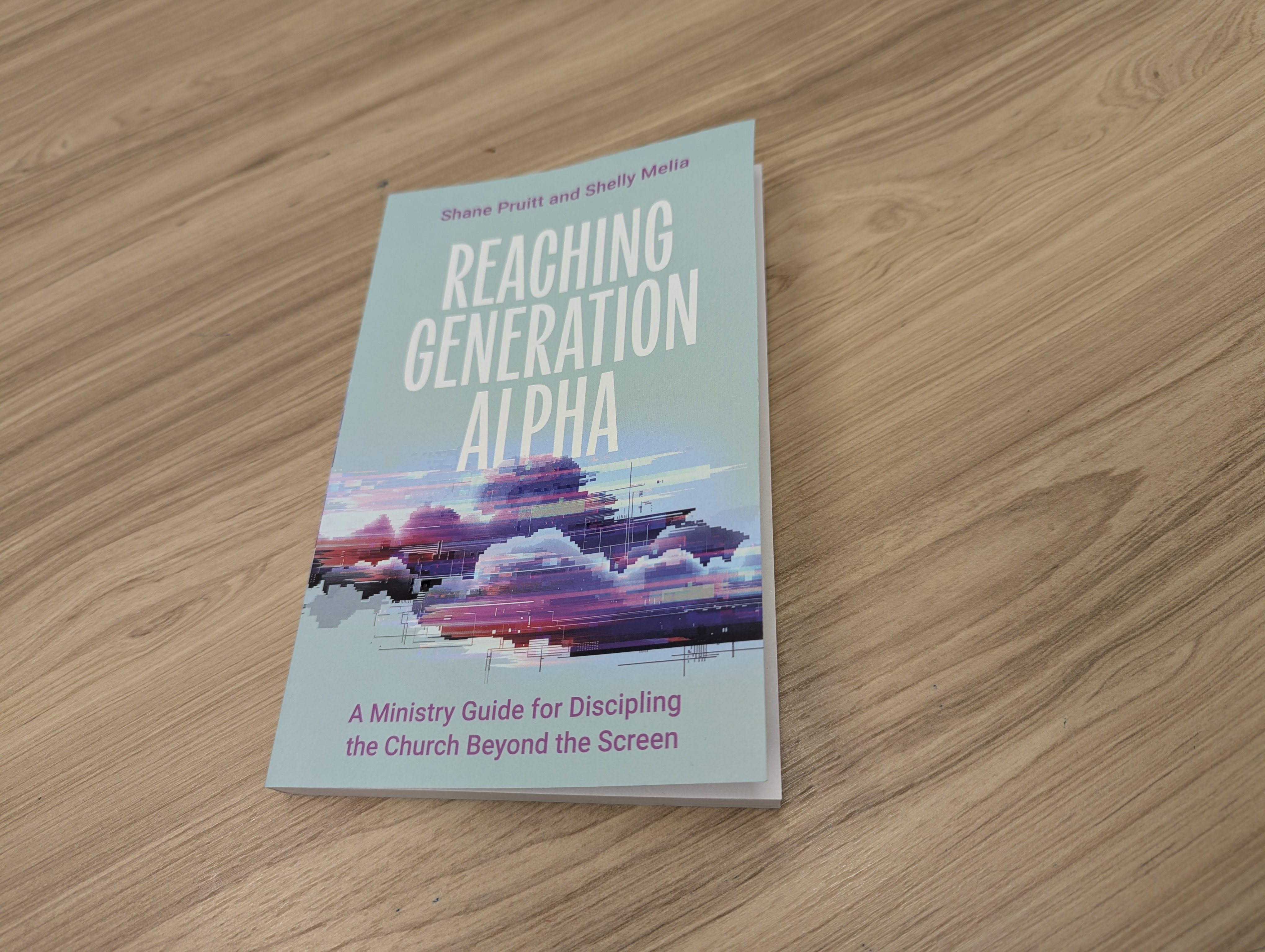
"We intentionally wrote this book generic enough to go, we want this to be a help with anybody who is going to impact the next generation on any level. So, it's a great book obviously for ministry leaders, but it's also a great book for parents, grandparents, foster parents, adoptive parents, teachers, coaches, and really anyone wanting to impact the next generation. There's something in there for everyone. And then we hit all the topics. We don't shy away from any topic."
In our complete podcast interview just below, Shane Pruitt shares his heart for leading young people to Jesus - and a smile story about his teenage daughter being fascinated by a vintage portable cassette player, and how kids are looking at tech and life and faith.
Gen Beta launched
"So Gen Beta would, most would say, those that are born last year in 2025 and moving forward for who knows how long where they'll put the cap on that. So that would be those who were born in 2025 and on. So those brand new babies, those brand new, beautiful little humans that are made in the image of God that are now entering the world.
It's going to be interesting. Obviously people go, how do we even know about Generation Beta yet? How would we even know...they're so young? In fact, the last chapter on our book, Reaching Generation Alpha, is on Here Comes the Betas. What's next? And the point we make in there is there's some things that we know will be taking place in the world that will affect that generation.
There'll be a generation that fully grows up in an AI world. And so it begs some questions: Will they have friends that are robots one day? Will they even have to learn how to drive? There may be fully integrated self-driving cars by that time. What will work life and education life look like? But one thing that we do stick to in the book is we believe this, that if you read through the Bible from Genesis through the maps at the back...what you're not going to find is terms like baby boomers or Gen Xers or millennials or Gen Z or Gen Alpha or the Beta generation.
You're not going to see those terms in a sense, those are manmade terms, but what you are going to see is people made in the image of God that God loves so much he sent his son Jesus for they desperately need the gospel. They desperately need to be discipled. They desperately need Christian community. And so, I would say even if you're a parent that's listening to this and you have a newborn or a toddler, the best thing you can do is just start praying over them at night, even begin reading Bible stories to them. Just read that truth over them and you go, 'Did they really hear this?' I believe even then as babies, just truth and seeds of truth can be planted in our children. And so, that's what we did with all of our kids. We have a 20-year-old that loves Jesus, but from day one we prayed over her, read scripture over her and really wanted to dedicate our home to be a home that chooses the Lord."