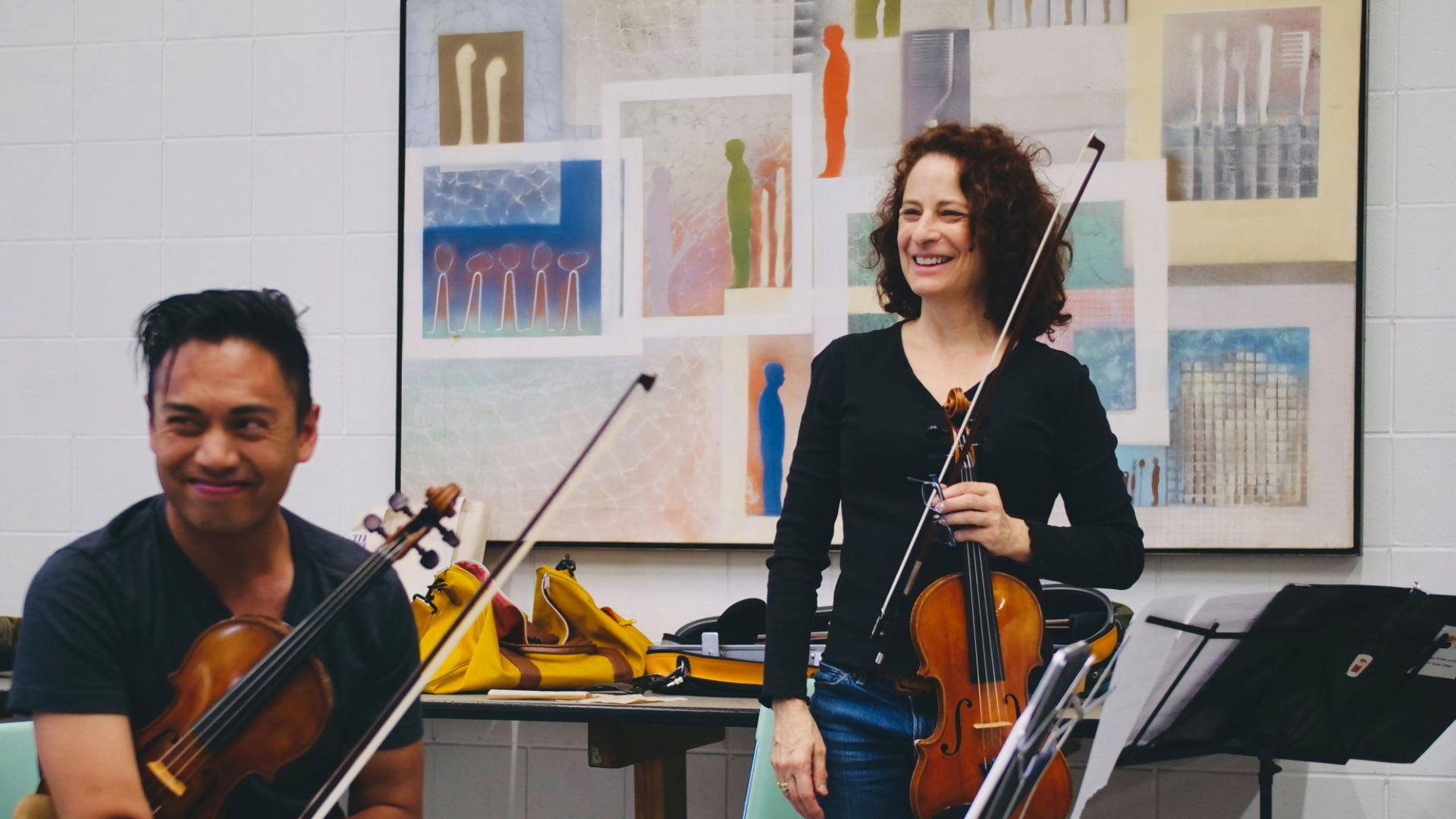
Guests at the Shattuck Homeless Shelter in the Jamaica Plain neighborhood of Boston stirred as the common room TV was shut off.
Shattuck is a year-round emergency homeless shelter, offering a bed and a roof to those who sorely need it. The lights stay on 24/7, guests sleep in a large open room lined with bunk beds, and on this warm day, a symphony of fans buzzed in an effort to ward off the heat.
In maybe the last place one would expect to hear Mozart, the TV-less silence was soon broken by a violin-viola duet.
Julie Leven, along with fellow Boston musician Rebecca Strauss, began a trial run for an idea initially greeted with skepticism – to serve the disenfranchised, the unhoused, and others in great need by playing free, world-class-quality classical concerts where these people gathered.
As Leven, the founder of Shelter Music Boston, recalls, it took only a few moments for the atmosphere in the room to shift entirely.
“Within a few minutes of the first notes, the energy in the room changed, and everyone felt it,” Leven said.
Hear how Shelter Music Boston is bringing rest and relief to communities of need in Boston in our full conversation:
Elizabeth, the shelter staff member managing the first concert, was one of those who thought the concept was a little peculiar. After the event, she was sold.
“Elizabeth told us she saw people sitting together, smiling at each other, people who she knew had had conflicts with one another in previous days,” Leven said. “People were smiling. She said she saw shoulders go down. She said she could feel the energy.”
In 2009, Leven was inspired to begin the work when she read of fellow violinist Kelly Hall-Tompkins' similar effort through her nonprofit, The Music Kitchen in New York City.
It was an “aha” moment for Leven, who had previously used music as a way to serve those less fortunate than her, such as playing in occasional prison concerts. The decorated musician felt a desire to expand access to her art form, and to provide healing in the best way she knew how.
“I couldn’t deliver a dignified interaction as a social worker, because that’s not my training,” Leven said. “I felt [Boston needed Shelter Music], I still believe, because classical music is nothing more than storytelling, and typically it’s storytelling about human emotions.
“That music catches the emotions of homelessness... So much of it is about looking someone in the eye, respecting where they are in the moment, showing them that, ‘I’m listening to you. We can be equals in this moment, in this environment around this music.”
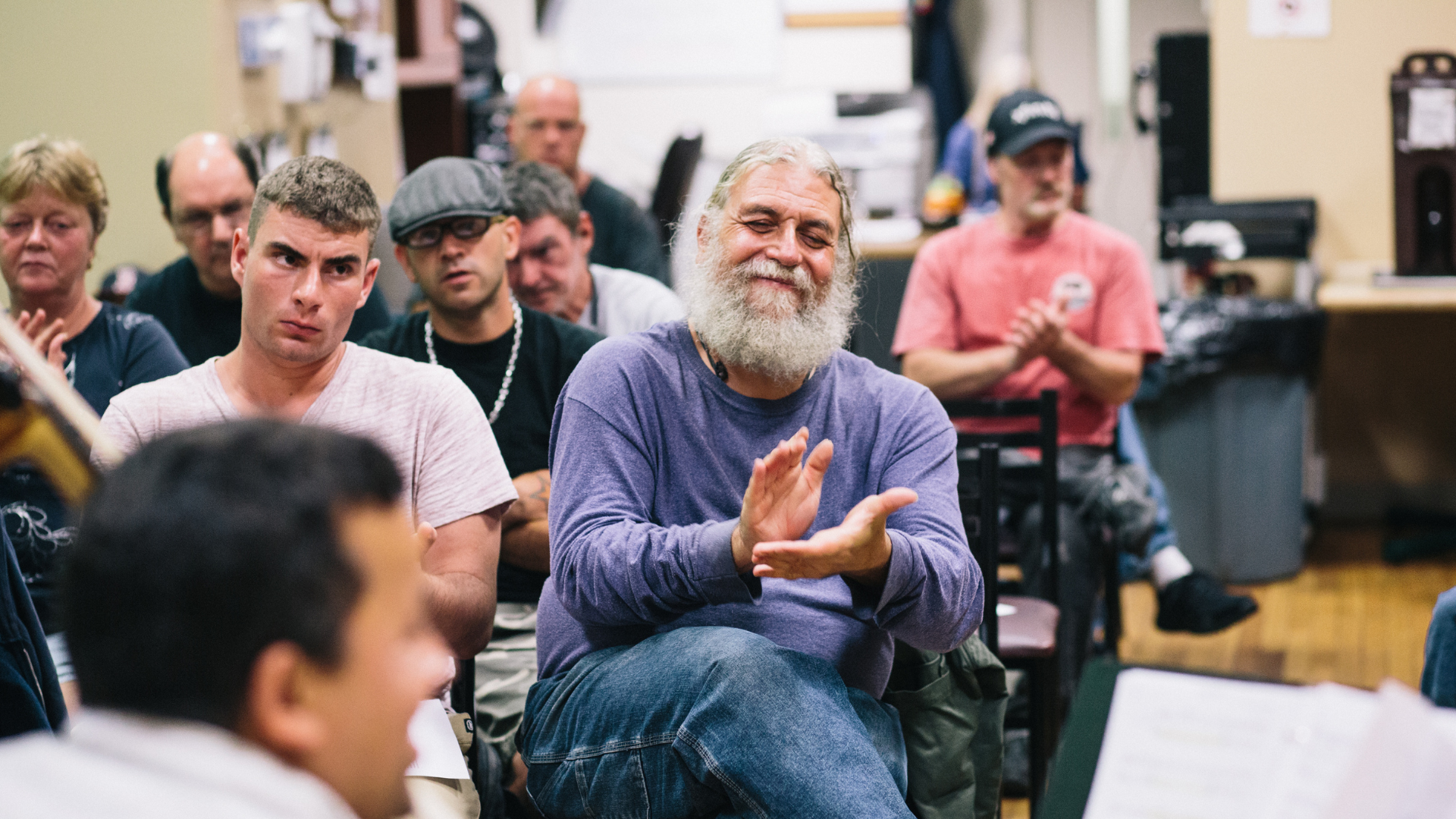
She and those who joined her in the early days worked hard to shed the perceptions of high society and elitism often associated with classical music. Shelter Music Boston (SMB) musicians do so first by trading formal wear for jeans and t-shirts during their performances.
But that is only the beginning of the effort to lower barriers, as the group does everything they can to make moments of peace, rest, and emotional healing as accessible as possible for all within earshot.
“The concerts are not simply playing and leaving,” Leven said. “The point of the concert is to engage and interact with the individuals and show respect and look someone in the eye who is typically not even seen.”
Shelter Music’s interactive concert model aims to catalyze conversation, relationship, and, eventually, change. Q&A sessions are an integral part of the events, with lengthy and emotional dialogue often emerging as a result of the music.
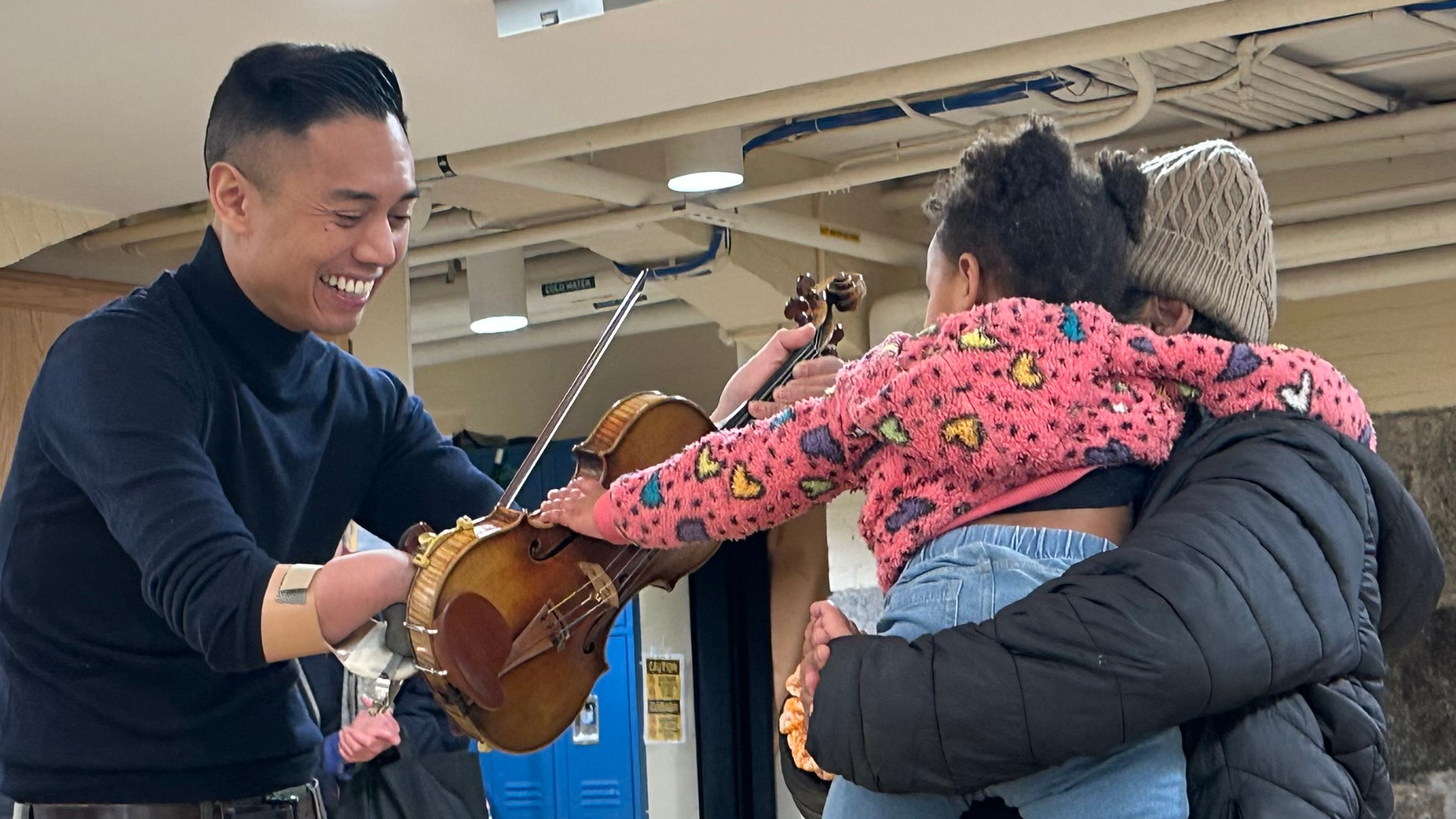
The structure of the concerts has undergone many iterations over 15 years of service, such as the additions of written programs, free recordings so guests can listen to the performances again, and tweaking what arrangements are played based on audience feedback.
Really, every concert is a new iteration, Leven says. Each location is unique, each audience has its own personality, and every face in the crowd has a different story.
Every note is played in the service of those individuals, that they might have a moment of peace or the strength to survive another day.
Since that first concert at Shattuck Shelter, SMB has put on many hundreds of concerts, now serving 13 program sites in Boston and holding over 80 musicians on their roster, who are all paid industry-standard wages for their work.
Leven initiated a post-concert survey that has painted the impact clearly. Attendees consistently report improved mood, increased gratitude, relaxation, and more. Drops in blood pressure have also been measured for those who listen to a concert.
Thousands of survey data points continue to reinforce the organization’s mission and its success.
Read Shelter Music Boston’s survey report
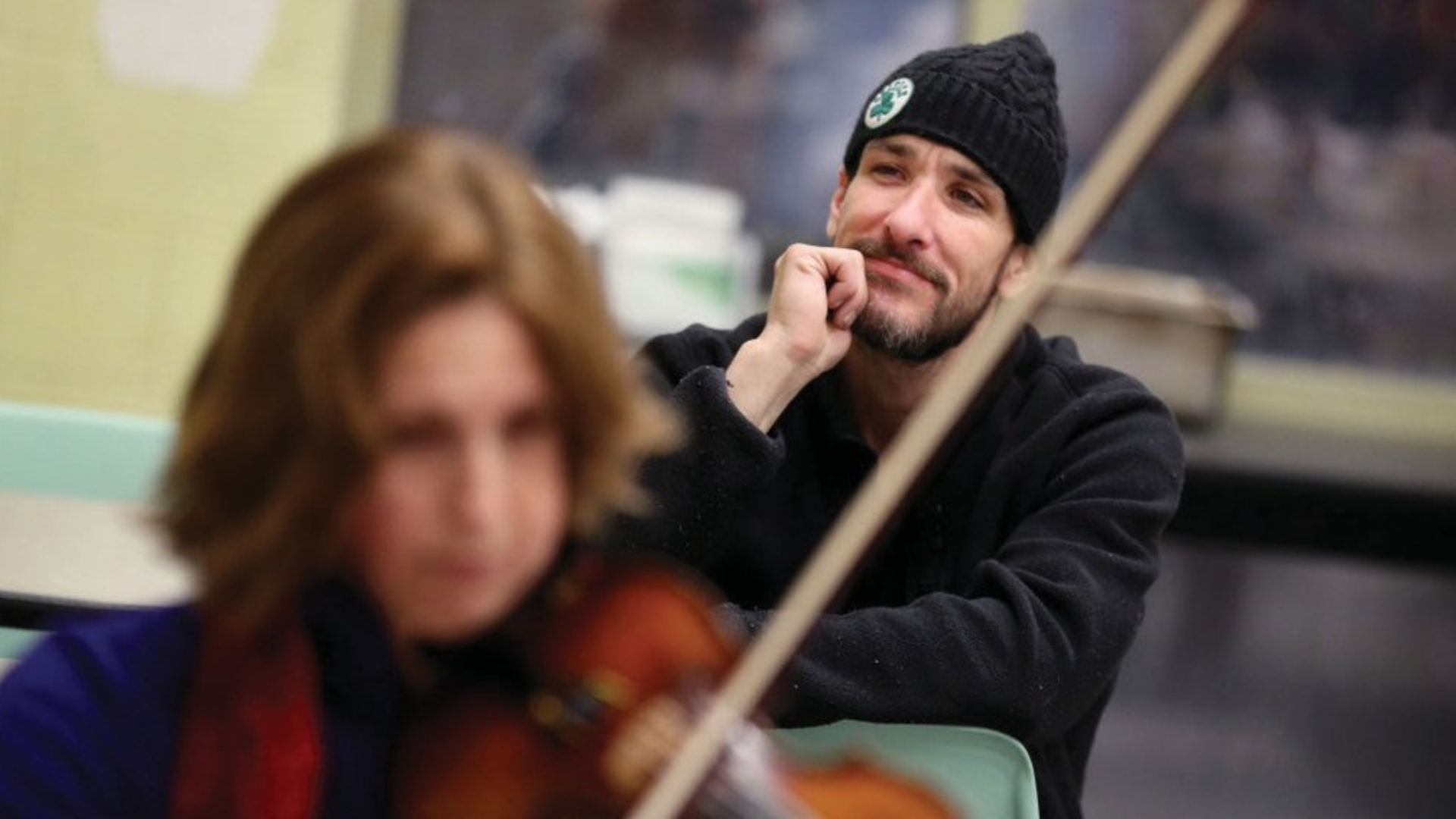
And a growing pile of individual stories is also strong proof of the music’s therapeutic power.
“There was a woman who said [after a program], ‘I only thought I could feel happy like this doing drugs, but next time I’m stressed out, I’m going to listen to Mozart,” Leven recounted.
“Now, we couldn’t follow her to see if she listened to Mozart every time she was stressed out, but the point is that she learned something she didn’t know about herself. Hopefully, she gave it a try, and perhaps she explored music.”
Another woman once reported that she had spent the entire day feeling suicidal, but that the concert comforted her.
But the true impact is best understood not in the grand, momentous stories of transformation, but in the thousands of small, ordinary interactions. Community is created here, and change begins.
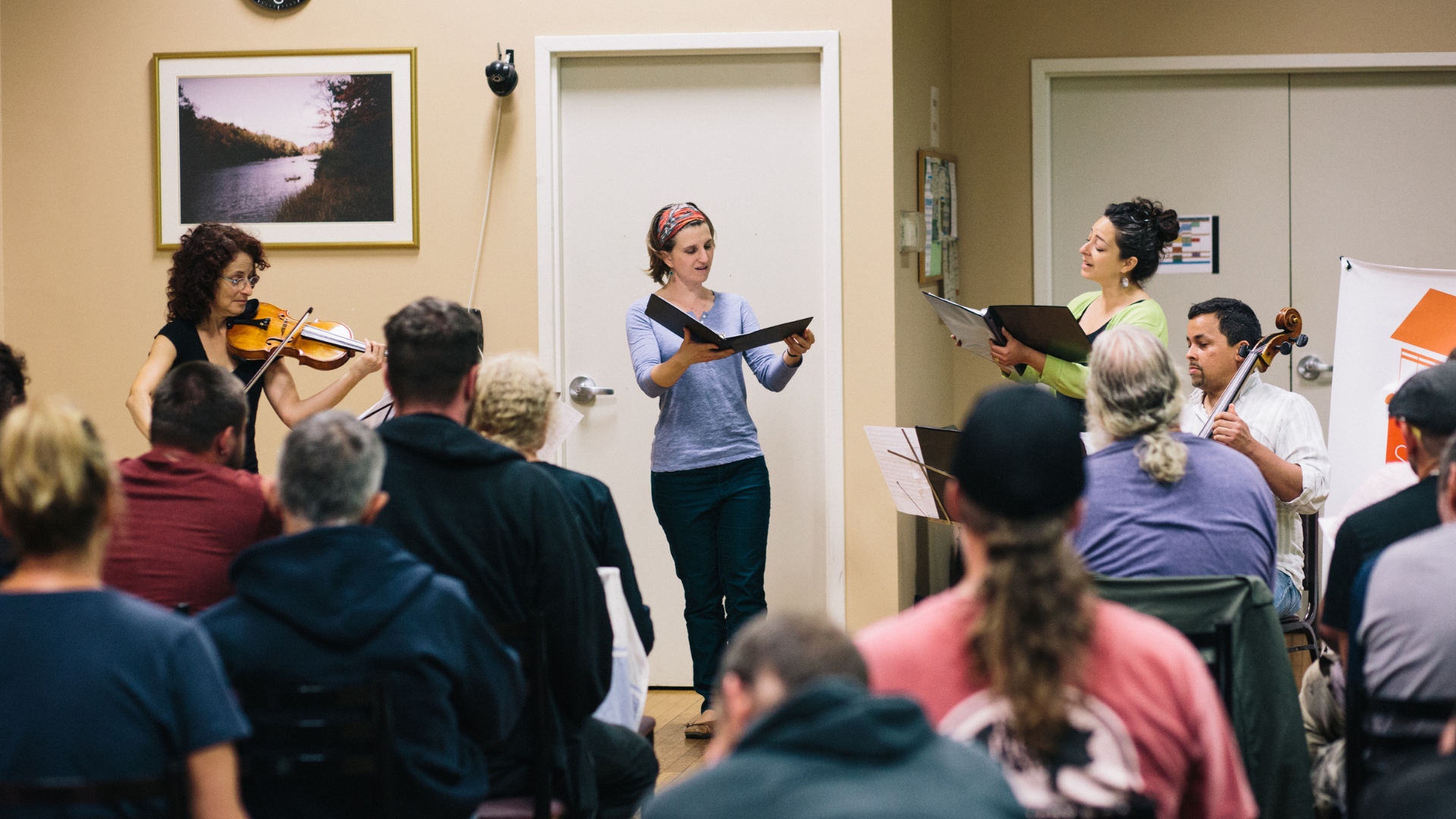
“Concerts are literally saving lives,” Leven said. “And for the time that we are together with the individuals we are performing for, we are offering to look these individuals in the eye to show respect with our extremely well-crafted professional presentation and to engage in conversation about the stories that we as musicians are telling.”
The relief provided by the chamber music concerts, while momentary, can be profound.
Sometimes, an hour and a half of peaceful music is all it takes to change the trajectory of someone’s day, or month, or more. To that end, Shelter Music Boston will keep playing.
“This is not going to solve homelessness, but this is meeting individuals where they are when they need something,” Leven concluded.
“We know that whoever’s there is going to have 90 minutes of respite from the trauma that they are experiencing for the other 22 and a half hours of the day. And that has value. I can provide something that supports their experience of being treated with respect and encountering something that they can learn actually helps them in their life.”
To learn more about Shelter Music Boston’s work, click here.