
PORTLAND, Ore. (AP) — A dangerous Arctic blast will continue sweeping across the U.S. on Monday and linger through at least midweek, prolonging a bitter cold that set record-low temperatures in parts of the country and threatens to further disrupt daily life, including an NFL playoff game and the first-in-the-nation presidential nominating contest in Iowa.
The National Weather Service said wind chills are expected to push temperatures 30 degrees below zero from the Northern Rockies to northern Kansas and into Iowa, testing the hardiness of caucus-goers willing to brave the deep chill on Monday.
“You can’t sit home,” former President Donald Trump told supporters Sunday. “If you’re sick as a dog, you say, ‘Darling, I gotta make it.’ Even if you vote and then pass away, it’s worth it.”
Arctic storms left at least four dead and knocked out electricity to tens of thousands in the Northwest, brought snow to the South and walloped the Northeast with blizzard conditions forcing the postponement of the Pittsburgh Steelers vs. Buffalo Bills NFL playoff game hosted in bone-chilling Buffalo, New York.
The game was scheduled to be held Monday after being canceled Sunday.
New York Gov. Kathy Hochul, a Buffalo native, posted a video on X, formerly known as Twitter, showing near-whiteout conditions.
“Conditions right now in Orchard Park, where the game would have started moments ago,” she wrote early Sunday afternoon. “No visibility and dangerously high winds.”
The Bills invited diehard fans to help dig out snow-filled Highmark Stadium, offering $20 an hour for their labor.
“We made progress shoveling, but not much at all," said Logan Eschrich, a storm chaser who made his way to Buffalo and pitched in.
It remains to be seen if the show will go on Monday afternoon. The weather service expects heavy lake-effect snow to push into upstate New York from Lake Erie, adding to the 1 to 2 feet (30.4 to 60.9 centimeters) of snow already blanketing the region. Snow fell at a rate of 2 inches (5 centimeters) per hour.
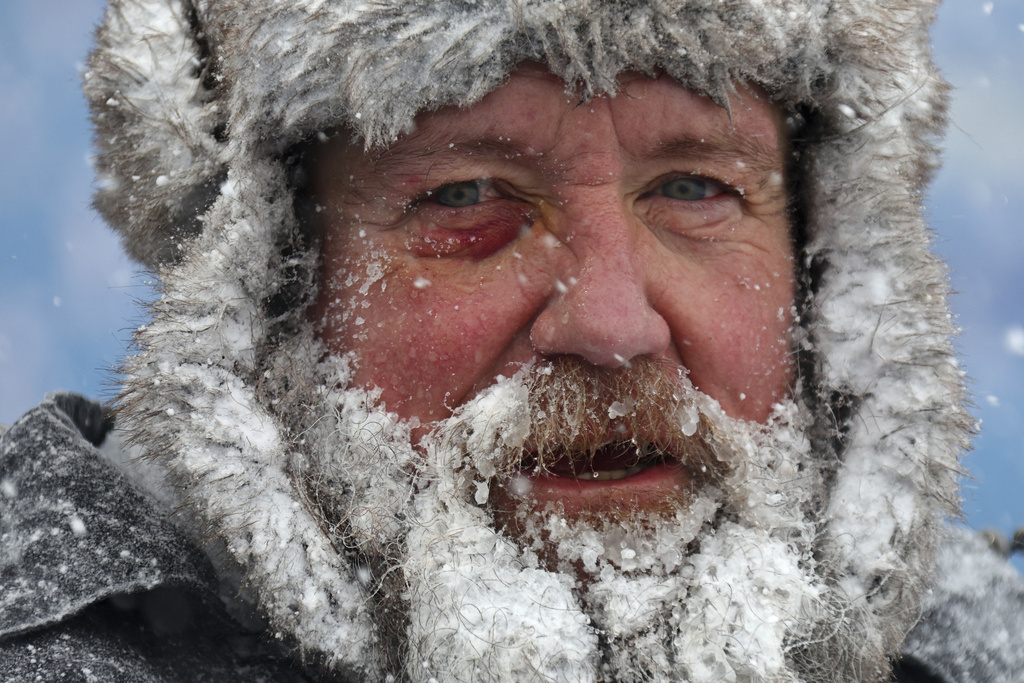
Sub-zero wind chills will grip much of the country, plunging to minus 50 degrees Fahrenheit (minus 46 degrees Celsius) in Montana and the Dakotas.
"It takes a matter of minutes for frostbite to set in,” the South Dakota Department of Public Safety said in a statement Sunday urging people to stay indoors.
Other parts of the country could see temperatures drop 25 to 40 degrees below normal, from the Rockies to the Ohio Valley.
The City of Portland Bureau of Environmental Services said its crews were working non-stop at multiple locations to make emergency repairs and prevent sewage releases into homes and businesses. Portland's largest sewage pump station, which serves downtown and the surrounding inner city, was under partial service due to a frozen pipe.
Widespread power outages affecting tens of thousands were also reported Sunday in Michigan, New York, Pennsylvania and Wisconsin. In Nebraska, the Omaha Public Power District asked customers to conserve electricity to prevent outages.
“The weather came on faster and has been more prolonged than anticipated,” the district said in a statement Sunday.
Airports across the country were impacted. More than half of flights into and out of Buffalo Niagara International Airport were canceled. Scores of flights also were canceled or delayed at Chicago, Denver and Seattle-Tacoma airports.
Forecasters also warned that rapid bursts of heavy snow and wind could cause drastic and sudden drops in visibility in eastern Pennsylvania and parts of northern New Jersey and Delaware with some “near whiteout conditions" possible.
Another Arctic storm that's dumped heavy snowfall in the Rockies was forecast to push further south, potentially bringing 4 inches to 6 inches (10 to 15 centimeters) of snow to parts of Arkansas, northern Mississippi and west Tennessee.
Juan Villegas wore layers of clothing beneath his heavy coat Sunday as he and roughly a dozen subcontractors in downtown Des Moines, Iowa, shoveled away a blanket of snow, which also covered park benches and partially buried fire hydrants the day before the state’s presidential caucuses.
Working in temperatures of minus 15 degrees (minus 26 degrees Celsius), Villegas said the best way to feel warm was to “just keep moving.”
“If you stay doing nothing, it’s when you really feel the cold,” Villegas said.
Much of Wisconsin were under advisories through Monday afternoon, with predicted wind chills as low as 30 degrees below zero (minus 34 Celsius).
Even parts of northern Louisiana, Alabama and Georgia could see snow. In Shreveport, Louisiana, Mary Trammel was among residents who stocked up on bottled water, food and fuel for generators ahead of subfreezing weather expected to coat some roads in ice and up to an inch (2.5 centimeters) of snow.
“It’s cold out here,” said Tramel, who told KSLA-TV she bought bread and ingredients for enough soup to last days.
Arkansas Gov. Sarah Huckabee Sanders declared a state of emergency in advance to give utility trucks and trucks hauling essential supplies greater flexibility to respond.
Officials in Mississippi’s capital city of Jackson were preparing for days of freezing weather after cold snaps in 2021 and 2022 caused pipes to burst and water pressure to drop across the city of 150,000.
“We feel as confident as we can that we’re prepared for whatever comes our way,” Ted Henifin, Jackson’s interim manager of Jackson’s long-troubled water system, told WAPT-TV. He said crews were on standby to respond to any broken pipes.
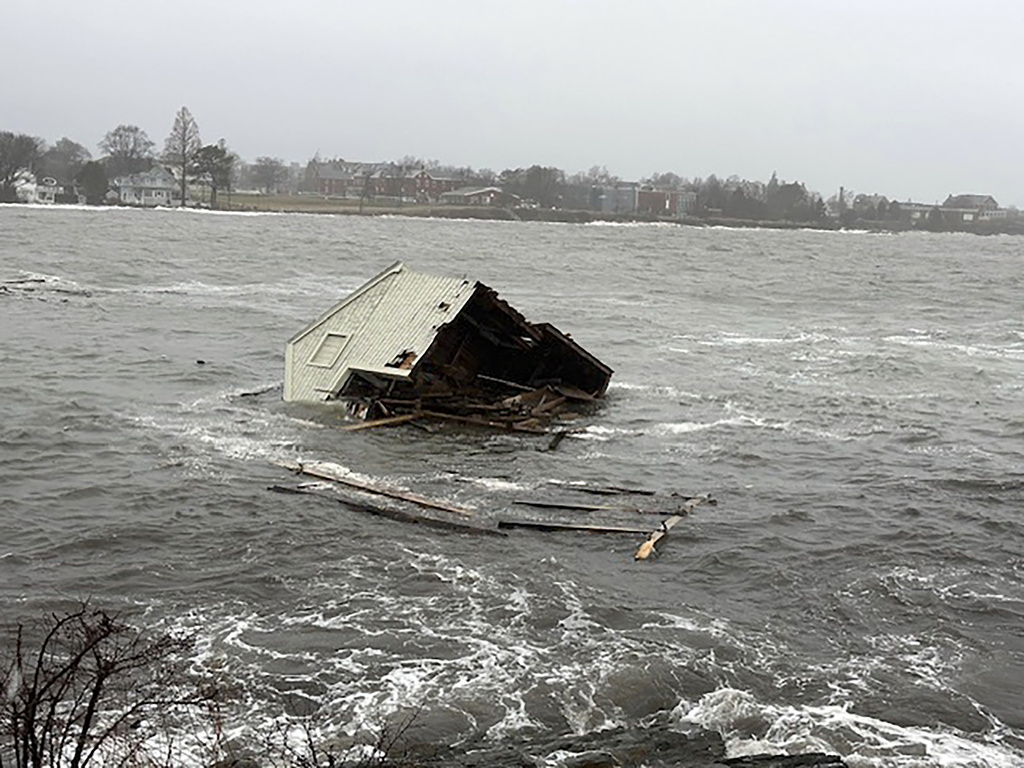
The wild weather didn't just bring snow and ice. Record high tides that flooded some homes in Maine and New Hampshire on Saturday also swept three historic fishing shacks into the sea from where they had stood for more than 130 years in South Portland, Maine.
“History is just being washed away,” Michelle Erskine said Sunday, a day after capturing video footage of the last two wooden shacks sliding into the ocean.
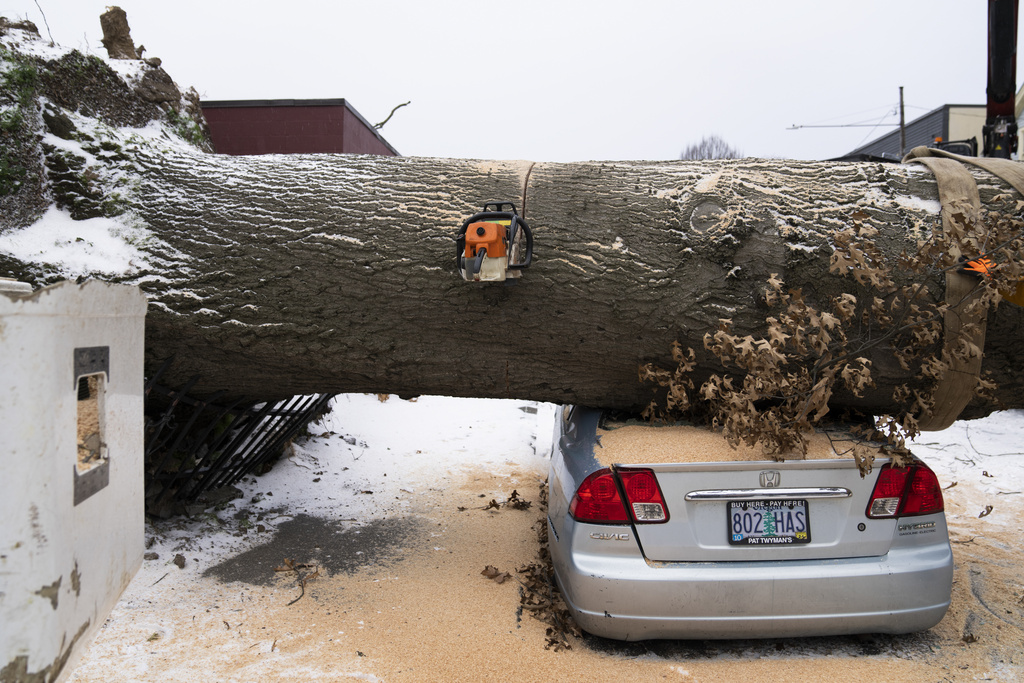
In Oregon, just south of Portland, 100 trees toppled Saturday, including one that fell on a house and killed a man. Two other people died of suspected hypothermia and a fourth died in a fire that spread from an open-flame stove after a tree fell onto an RV.
The snow and gusting winds had let up Sunday in Oregon, but frigid temperatures meant roads remained treacherous and much of Portland was shut down. In nearby Lake Oswego, Glenn Prohaska was looking for a business that had WiFi so he could book a hotel. With the power out, the temperature in his home had dropped to the 20s overnight.
“In the 40 years I’ve been here, this is the worst I’ve seen,” he said.
___
Weber reported from Los Angeles. Associated Press journalists Russ Bynum in Savannah, Georgia; Nathan Ellgren in Des Moines, Iowa; Philip Marcelo in Long Island, New York; Nick Perry in Meredith, New Hampshire; and Julie Walker in New York contributed to this story.