Leanna Crawford Shares Country-Pop Confessions on Sophomore Set ‘Thank God’
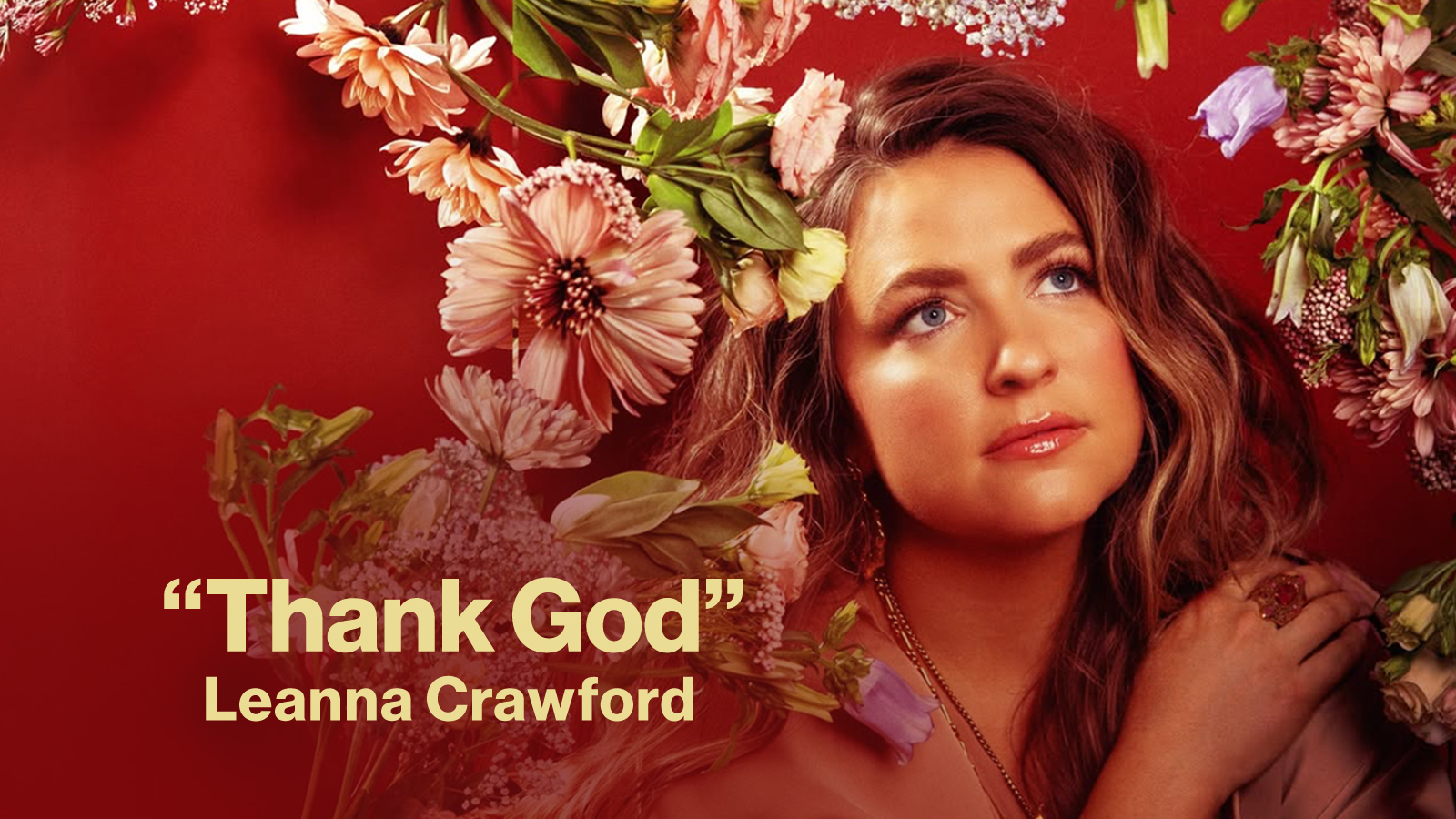
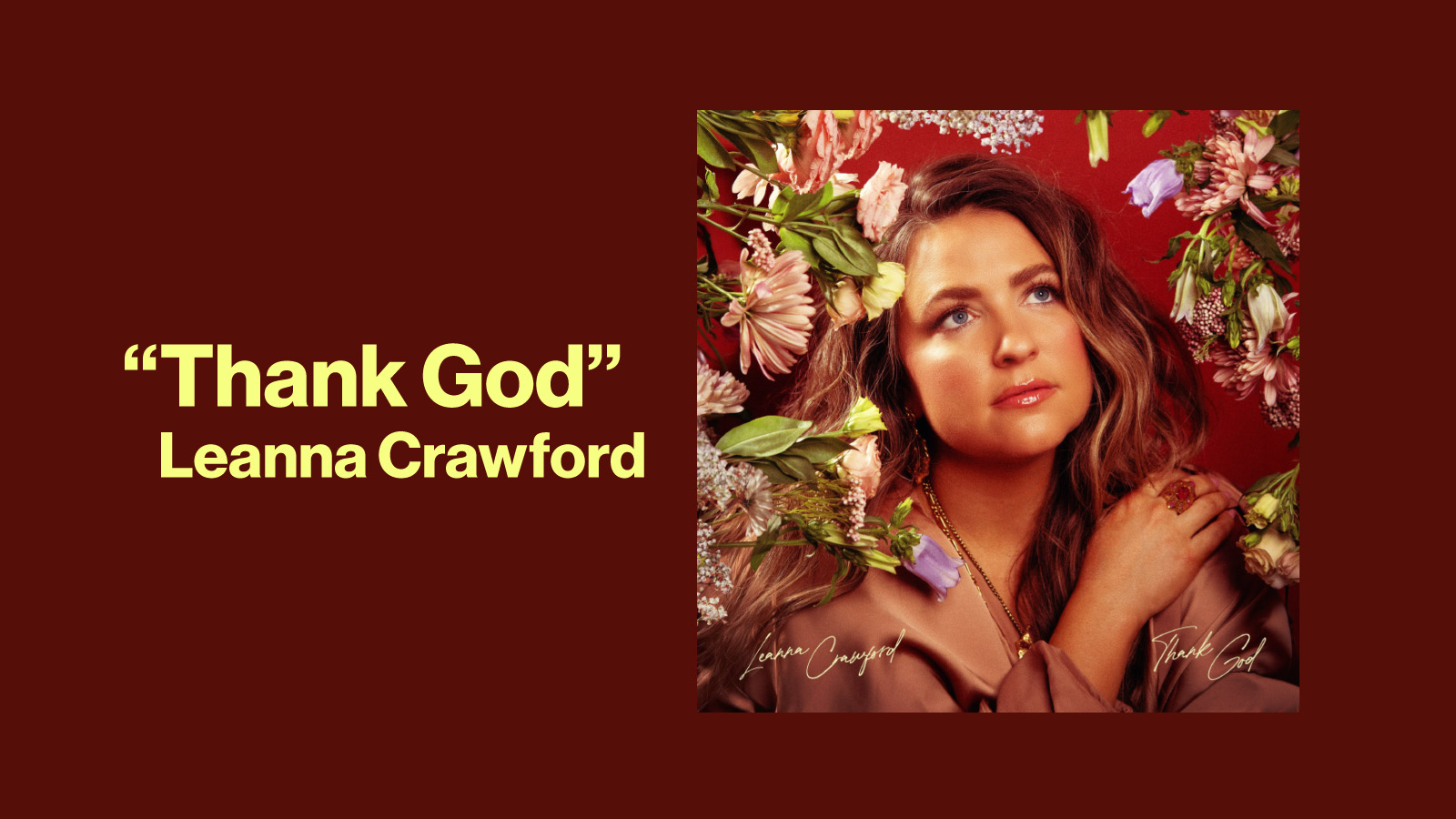
Leanna Crawford performed at CMA Fest for the first time a month-and-a-half before her sophomore album, “Thank God,” officially dropped. Her debut at the premier country music festival felt fitting considering her new project is laced with the kind of gentle acoustic instrumentation and honest storytelling that has defined the country genre for generations.
RELATED CONTENT: K-LOVE Interview With Leanna Crawford
Before you surmise Crawford is making major crossover moves, however, think again. “Thank God” might be infused with subtle banjo and pedal steel, but it’s not an Anne Wilson-size leap. The record simply feels like a natural sonic evolution for the rising songstress. Beyond its country-leaning landscape, the real headline of “Thank God” is Crawford’s ability to set music to songs that feel like intimate diary entries.
Just like her great-aunt Maurine became the memorable heroine on Crawford’s breakthrough hit, “Still Waters (Psalm 23),” her mom assumes a supporting role on “Thank God,” offering her daughter sage advice during a dark season: “Baby, don’t you worry. He’s got this. It’s a process. Just let Him write your story.” The breezy single finds the Washington state native expressing gratitude for all the unexpected detours and unanswered prayers that, ultimately, led to something better. It’s a thread that loosely runs throughout the 11-track collection as Crawford, time and again, emphasizes the upside-down way the Kingdom of God often works, drawing attention to our limited perspective.
RELATED CONTENT: Leanna Crawford Is Grateful for Closed Doors and Delayed Blessings on ‘Thank God’
Early adopters, who discovered Crawford’s music via songs like “Mean Girls” or “Photoshop,” will appreciate the maturation of her confessional songwriting as it blossoms around themes of forgiveness (“Revenge”), comparison (“Her”) and fear (“Do It Afraid”). In fact, “Her” is crafted with such relatable precision, it could easily be cut by empowering female voices like Kelsea Ballerini or Carly Pearce. “I try and fail to change me. Copy pasting isn’t how it’s meant to work. Why should I be insecure when God made me who I am? Can’t be her the way she can,” Crawford perceptively notes, presenting a beautiful commentary on self-worth. “God made her to be herself, not some off-brand someone else. I don’t have to change myself to be who she was first. God made me to be me. He didn’t make me to be her.”
RELATED CONTENT: Leanna Crawford Wins Breakout Single of the Year for ‘Still Waters (Psalm 23)’
Upbeat album opener “Borrow Mine” extends the kind of faith strong enough to weather any storm as Crawford speaks with the authority of a loyal friend and the outlook of an optimist. Equally as poppy, the anthemic “Water Into Wine” opened many of Crawford’s summer concerts. Pairing her with fellow K-LOVE Fan Award Breakout Single of the Year winner and labelmate Seph Schlueter, “Water Into Wine” celebrates new life in Christ.
Meanwhile, selections like “Ask Him Again” and “Miracle By The Morning” address the faith and tenacity necessary in the waiting.
RELATED CONTENT: Leanna Crawford Gets Brutally ‘Honest’ on New Single
Later on, intimate entry “Living Room Floor” delivers a sequel to previous fan favorite “Honest.” While “Honest” found Crawford stripping away the facade of perfection across a vulnerable prayer, “Living Room Floor” reveals her trading relentless busyness for stillness in the form of a quietly earnest ballad that ships a timely song to a culture obsessed with hustle.
Rounding out the collection, Crawford offers a “Somewhere Over The Rainbow” moment with wistful, reflective closer “Green Pastures.”
If “Still Waters (Psalm 23)” put Crawford on the map, “Thank God” reinforces her staying power. Her warm vocal is raw and inviting; but it’s her authentic storytelling that’s really the star of the show. While Crawford’s climb to the top has been slow, the art she’s released over the course of the last two years reveals a singer-songwriter coming into her own. “Thank God” proves the best blooms require the deepest roots.